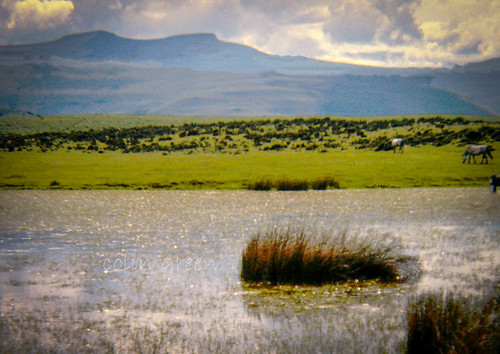
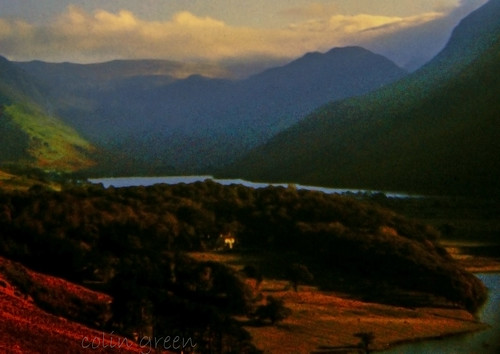
There is a unique magic to a 35mm slide. When you hold it up to the light or hear the mechanical thunk of a carousel projector, you aren’t just looking at a photo; you are looking at a physical window into a specific second in time. This particular frame from my collection, a scan of the River Usk from Llanellen, captures that quintessentially Welsh blend of rugged natural beauty and quiet, pastoral life.

The Subject: The Mighty River Usk
The River Usk (Welsh: Afon Wysg) is one of the most storied waterways in Wales. Rising at an altitude of 500 meters on Mynydd Ddu (the Black Mountain), it meanders over 120 kilometres through the heart of the Usk Valley before reaching the sea at the Severn Estuary. By the time it reaches the village of Llanellen, just south of Abergavenny, it has transformed from an upland stream into a wide, powerful lowland river.
This stretch of the river is particularly significant. The entire length of the Usk is designated as a Site of Special Scientific Interest (SSSI) and a Special Area of Conservation (SAC). Looking at this slide, it’s easy to see why. The water flows over a bed of Old Red Sandstone, which lends the riverbanks a characteristic deep, earthy hue. The lush, riparian vegetation—thick with alder and willow—acts as a natural frame for the sparkling water.
The Setting: Llanellen and its Historic Bridge
Llanellen itself is a village built on the intersection of travel and nature. It sits at a historic crossing point where the Llanellen Bridge—a listed stone structure on the A4042—spans the river. This bridge is a landmark of the area, providing a gateway between the market town of Abergavenny and the rural stretches of Monmouthshire.
In this slide, the view captures the river corridor’s open pastoral setting. The village is nestled against a dramatic backdrop: the steep rural slopes of the Blorenge hillside. Part of the Brecon Beacons National Park, these heights act as a permanent, stoic guardian over the valley floor. The contrast between the flat, patchwork fields of the floodplain and the craggy, open hills is what gives this landscape its high scenic value.
A Haven for Wildlife
While the slide captures the stillness of the landscape, the River Usk is a hive of biological activity. It is famous for its game fish, serving as a vital migration route for Atlantic salmon and brown trout. If you were to sit by these banks at dawn or dusk, you might even spot the elusive otter, a species that has made a triumphant return to these waters.
The river also supports rare species like the twaite shad, river lampreys, and even the white-clawed crayfish. For the keen birdwatcher, the eroding earth cliffs along the Usk provide nesting sites for kingfishers and sand martins, while grey wagtails are a common sight skipping along the shingle banks.
The 35mm Aesthetic: Why Film Still Matters
Looking at this image through the lens of a 35mm slide adds a layer of nostalgia that digital photography often lacks. Slide film (or reversal film) produces a positive image on a transparent base, known for its rich, accurate colours and fine grain.
When this was shot, the photographer would have carefully considered the exposure, knowing they had only 36 frames to capture the essence of the valley. The result is an image with incredible depth. The reds of the sandstone, the deep greens of the Welsh hills, and the silvery reflections on the Usk are rendered with a "glow" that feels tactile. Digitizing these slides at 6000 x 4000 pixels allows us to preserve these details—every leaf on the bank, every ripple in the water—ensuring that the heritage of the Usk Valley is not lost to time or the natural degradation of film.
Heritage and History
Beyond its natural beauty, the area around Llanellen is steeped in history. The Usk Valley has been a strategic corridor since the Iron Age, marked by hillforts and medieval castles like those in nearby Abergavenny and Usk. Historically, the river even served as the old border between England and Wales.
Walking along the river today, you are following in the footsteps of centuries of travellers. Whether it was the Romans who established the settlement of Burrium (Usk) or the Victorians who engineered the nearby Monmouthshire and Brecon Canal, the river has remained the constant pulse of the region.
Final Thoughts
This slide of the River Usk at Llanellen is more than just a landscape; it is a testament to the enduring character of the Welsh countryside. It captures a river that is both a wild ecosystem and a cultural cornerstone. As the water flows endlessly over its red sandstone slabs, it reminds us of the importance of preserving these places—both in the real world and through the archival magic of 35mm photography.
Please take a moment to share this post, follow me on social media, and explore my work on Clickasnap and Photo4Me using the links below. Your support means a lot!