Showing posts with label France. Show all posts

Friday, 21 August 2026

The Salvage Archive: Two Vintage 35mm Slides of the Arc de Triomphe

 Have you ever stumbled upon a forgotten treasure, a glimpse into the past, tucked away in an old shoebox or a dusty drawer?

That's the feeling of discovery we're exploring today. Imagine sorting through a collection of vintage items and finding two intriguing 35mm slides, both capturing the majestic Arc de Triomphe in Paris. These aren't just photos; they're tiny windows into another time, a tangible piece of history.

But as with many antique finds, the story isn't always complete. In this case, the challenge is dating them. With no dates written on the cardboard mounts, it's up to us to become historical detectives, looking for clues in the small details to unlock their secrets.

Join us on this fascinating journey as we delve into the world of vintage photography and architectural change to decipher the mysteries of these two unique slides of the Arc de Triomphe.

The Power of the 35mm Slide

Before we dive into the images, it's worth appreciating the format itself. The 35mm colour slide was a revolution. First introduced in the 1930s (think Kodachrome), it became the dominant way for families and travellers to document their experiences for decades.

Unlike prints that fade, slides hold their vibrant colour, preserving the moment as it was captured. They required a projector to view, making slide shows a social event – a shared viewing experience of distant lands and precious memories. To hold a 35mm slide is to hold a moment in amber, a colourful snapshot of a time long gone.

Slide 1: A Classic Parisian View, with Subtle Clues

A street-level perspective of the Arc de Triomphe framed by leafy green trees, showing classic 1970s cars like a yellow Renault 5 parked along a cobbled Parisian road.

The first slide offers a classic perspective: a detailed shot of the Arc de Triomphe from an adjacent street, likely with some elegant Parisian buildings framing the left side. It’s a powerful image, showcasing the intricate sculptural work and the arch's sheer scale.

So, how can we date it? Our first clue comes from the architecture. Is the stone clean? Does it show the effects of pollution, which became a major issue in Paris in the 1960s? A stark, blackish hue on parts of the monument could suggest a date from the mid-1960s onwards, before the major cleaning efforts of the late 20th century.

Next, look at the vehicles. The cars on the street below are tiny indicators of the era. A line-up of rounded, 1950s-era Citroëns or Peugeots would tell a vastly different story than a mix of boxier, 1970s or 1980s designs. The absence of modern cars with their distinctive shapes and bright colours is a major signifier of a bygone era.

What about the people? Fashion is a powerful time indicator. Wide-brimmed hats and tailored coats might suggest the 1940s or 50s. Shorter skirts, flared trousers, and more casual styles point towards the late 60s and 70s.

Finally, consider the cardboard slide mount itself. Different manufacturers used different colours and fonts over the decades. A classic red and yellow Kodak mount is iconic, but the specific layout of the text can narrow down the timeframe. Sometimes, a tiny serial number or processing date code is hidden on the edge.

Slide 2: An Evening Spectacle and Traffic Troubles

A wide-angle view of the Arc de Triomphe in Paris standing under an overcast sky, taken from an open, paved plaza with green trees framing the left side and streetlamps on the right.

The second slide provides a stunning contrast. It’s an evening shot, with the Arc de Triomphe dramatically bathed in golden floodlights. It highlights the architectural details in a completely different way, with long shadows and brilliant highlights.

Here, the clues are different. The lighting technology itself is a clue. Was it the classic warm glow of tungsten floodlights or the slightly cooler tone of mercury vapor lamps that became more common later? This difference can subtly shift the entire colour palette of the slide.

Look down at the base of the monument. Do you see a dense pattern of long, red and white light streaks? This is a clear sign of traffic in a long-exposure photograph. Is it the dizzying chaos of the modern Place Charles de Gaulle (the official name for the Étoile)? Or is it a slightly less intense pattern of lights from a time with fewer cars?

And what about that pesky detail of the traffic? If you can spot any specific road signs or markings, they can be absolute goldmines for dating. The design of a "One Way" sign or the style of a bus stop can place an image squarely in a specific decade.

Piecing the Puzzle Together: The Art of Comparative Analysis

To get the most accurate date, we have to use all the clues together. If Slide 1 features rounded 1950s cars, but the mount suggests a later date, we must consider that it might be a copy. Or if Slide 2 shows modern traffic patterns but the fashion of people in the foreground seems decades older, it might point to a specific event or a stylized photo shoot.

Our best bet is to look for the most specific and reliable clues:

  • Vehicle ID: The presence of a iconic car like a Citroën DS (introduced 1955) or a Renault 5 (introduced 1972) can create a definitive "earliest date" or a specific era.

  • Archivists and Collectors: There are thriving online communities of vintage slide collectors who are true experts. Posting a high-resolution scan of the slide (including the mount) on forums can lead to incredibly specific dating information based on minor design variations they have catalogued.

  • Parisian History: Sometimes, a subtle clue is hidden in the background. Was there a temporary construction project, a specific advertisement on a nearby building, or an event-related banner that can be cross-referenced with Parisian history?

The Magic of the Unknown

The beauty of vintage slides is often in what we don't know. Who was the photographer? Was this a professional photo or a cherished family snapshot? Whose hands held this slide, carefully loading it into a projector to share their travels?

While the detective work of dating is rewarding, let’s not lose sight of the primary value of these images: they are a direct link to the past. They capture the spirit of an era, the romance of travel, and the enduring grandeur of one of the world's most recognizable monuments.

Conclusion: Your Turn to Unlock a History

So, you've inherited a collection or made a find. Take a closer look. Don't see a date? Don't be discouraged. Embrace the role of the vintage detective.

With patience, a good magnifying glass, and a little bit of historical context, you can peel back the layers of time. You're not just looking at a photo of the Arc de Triomphe; you're uncovering a moment in history that has been silently waiting to be told.

And as for these two slides? While we can make an educated guess, their exact story remains an intriguing mystery. Perhaps, in their small, vibrant frames, they prefer to keep a little of their past all to themselves.

The images below were created by AI and based on the 2nd slide.

Digital painting of the Arc de Triomphe in Paris under a soft pastel brushstroke sky. Pedestrians walk along wet streets surrounded by lush green trees, vintage cars, and classic street lamps, rendered in an painterly, impressionistic style with rich textures and muted hues.

Vintage-style travel poster featuring the Arc de Triomphe in Paris at sunset, with lush green trees in the foreground, warm orange and blue skies, and bold text reading "PARIS ARC DE TRIOMPHE" at the top and "UNFORGETTABLE. HISTORIC." at the bottom.

Tuesday, 19 May 2026

The Salvage Archive: A Vintage Glimpse of Menton’s Golden Coast

There is a specific kind of magic found only in the grain of a 35mm slide. When held to the light, these small windows to the past don’t just show us a place; they transport us to a specific atmosphere—a time when the Mediterranean felt a little wider, the air a little stiller, and the colours of the coast were painted in the warm, saturated hues of Ektachrome or Kodachrome.

In this stunning frame from my personal archive, we find ourselves looking at the "Pearl of France"—the charming town of Menton.

A vibrant, high-angle view of the historic Old Town of Menton on the French Riviera. Colorful yellow and ochre Mediterranean buildings climb up a hillside, topped by the prominent steeple of the Basilica of Saint-Michel-Archange. In the foreground, a stone harbor holds several small sailboats and rowboats, bordered by a promenade lined with lush palm trees. The background features the jagged peaks of the Maritime Alps under a clear blue sky.

Identifying the Scene: The Heart of the Riviera

The standout feature of this image is the majestic bell tower of the Basilique Saint-Michel-Archange. This Baroque masterpiece, with its distinctive yellow and ochre facade, has watched over the harbour since the 17th century. To its right, you can see the slightly shorter tower of the Chapelle des Pénitents Blancs.

The way the houses are stacked like colourful tetris blocks against the steep hillside is a hallmark of Menton's unique topography. Unlike the flatter stretches of the Promenade des Anglais in Nice, Menton feels intimate, squeezed between the turquoise waters of the Mediterranean and the dramatic, rising peaks of the Maritime Alps.

Hints of a Bygone Era

Looking closely at the slide, we can begin to piece together the "when." While the timelessness of the stone architecture can be deceptive, the colour palette and the clarity of the coastal light suggest a mid-century origin.

  • The Date: Based on the density of the harbuor development and the specific saturation of the film, this likely dates to the early to mid-1960s. During this period, the French Riviera was experiencing a post-war boom in "le grand tourisme," yet it still retained a sense of quiet, local dignity before the era of massive modern resorts.

  • The Atmosphere: Notice the lack of modern high-rises in the immediate foreground and the crispness of the mountain backdrop. In the 1960s, Menton was a favourite retreat for those seeking a milder climate and a slower pace than the glitz of nearby Monaco or Cannes.

Why 35mm Slides Capture it Best

Digital photography is precise, but vintage slides are evocative. The chemical process of film from the 1960s had a way of leaning into the warm spectrum. It turned the ochre walls of Menton into deep golds and the Mediterranean Sea into a rich, velvety teal.

When you look at this image, you can almost smell the famous Menton lemons and the salt air drifting off the Plage des Sablettes. You can imagine the photographer standing on the harbour wall, perhaps adjusting their Leica or Nikon, waiting for that perfect moment when the sun hit the bell tower just right.

The Legacy of the "Pearl of France"

Menton has always been a border town—a place where French elegance meets Italian vibrance. Just a few miles from the Italian border, the architecture reflects this dual identity. The "Campanin" (the bell tower) is a landmark for sailors and travellers alike, a beacon of the Côte d’Azur that looks much the same today as it did when this slide was first developed.

Preserving these slides is about more than just keeping old photos; it’s about preserving a perspective. This image isn't just a record of Menton; it’s a record of how we used to see the world—with patience, through a glass lens, captured forever on a tiny strip of celluloid.

Please take a moment to share this post, follow me on social media, and explore my work on Clickasnap and Photo4Me using the links below. Your support means a lot!


Sunday, 6 March 2022

Above the Pyrenees: A Sky-High Glimpse of Spanish Grandeur

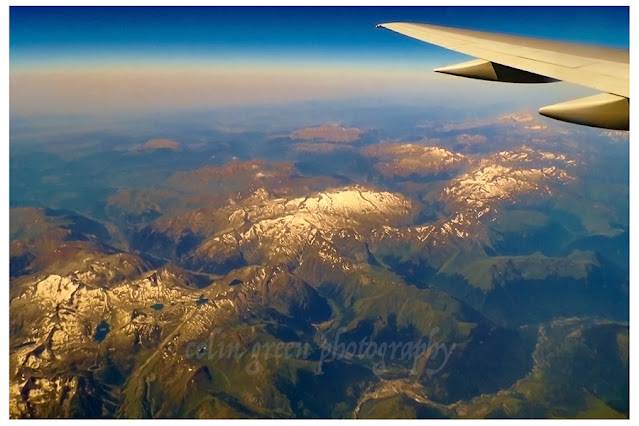
There's something truly magical about seeing the world from above, especially when that world is as majestic as the Pyrenees. In July 2014, I had the incredible opportunity to capture a series of breathtaking aerial views of this iconic mountain range while on a flight.

The Pyrenees, as many know, form a natural boundary between France and Spain, with the charming Principality of Andorra nestled right within its peaks. The specific area I was soaring over when I snapped these five pictures was the Natural Park of Posets-Maladeta, located in the Huesca, Aragon region of Northern Spain.

It was a beautiful Thursday, July 17th, 2014, and the views were simply unforgettable. From my window seat, with my trusty Polaroid is2132 bridge camera in hand, I tried to capture the scale and beauty of the landscape below. The sun glinted off the snow-capped peaks, even in the height of summer, highlighting the rugged terrain and the deep valleys carved out over millennia. You can spot the patchwork of green forests, the winding rivers, and even the hints of human habitation nestled among the giants.

Each photograph tells a part of the story, showcasing the diverse features of this incredible natural park. From the sweeping vistas that reveal the sheer expanse of the mountains to the more detailed shots that highlight the intricate valleys and the remaining patches of snow, it was a privilege to witness such a spectacular panorama.

These images serve as a wonderful reminder of the raw beauty and impressive scale of the Pyrenees. It's a region that truly inspires awe, whether you're exploring its trails on foot or simply admiring its grandeur from thousands of feet up in the sky.

I hope you enjoy these glimpses into the stunning Natural Park of Posets-Maladeta, a true jewel of the Pyrenees!


Please take a minute to share this post, and follow me on social media.

All pictures remain the copyright of Colin Green.

Sunday, 17 January 2021

UK Rugby League Grounds from Above

Rugby League isn't just a hobby for me; it's a deep-rooted passion, particularly when it comes to my beloved Halifax Panthers. For years, they were known as Halifax RLFC, a club steeped in history with a legacy that includes four league championships and five Challenge Cup victories. While our glory days of consistent Super League presence are a little further back – we've been a mainstay of the Championship since our relegation in 2003 – the fire of fandom still burns bright.


A New Perspective: From Spectator to Aerial Documentarian

My journey into a unique creative project began with a pivotal moment in the sport: the Super League's decision to deny Toronto Wolfpack re-entry. This move opened up a fascinating bidding process, creating an opportunity for Championship clubs to ascend to the Super League and for League One clubs to vie for a spot in the Championship. This reshuffling ignited a new curiosity in me, specifically about the grounds of the League One clubs.

What started as a simple interest quickly evolved into an ambitious idea: creating short aerial videos of each club's stadium. My initial plan was to focus solely on the League One grounds. However, I found myself thoroughly engrossed in the process. It was a refreshing departure from my usual creative endeavors, offering a new perspective and a technical challenge I truly enjoyed.


Expanding the Vision: A Full League Showcase

That enjoyment led to an expansion of my project. I realized the potential to create a comprehensive visual record of the sport's infrastructure. Consequently, I extended my aerial tours to include all the Championship clubs and, ultimately, every Super League club's home stadium. The result is a unique collection that not only showcases the diverse venues of Rugby League but also offers a bird's-eye view of the heartlands of this incredible sport. It's been a truly rewarding experience, allowing me to combine my passion for Rugby League with a newfound love for aerial videography.

League 1.


Beyond the familiar Super League and Championship, a vibrant, albeit often overlooked, tier of professional rugby league exists: League 1. This dynamic competition currently comprises ten ambitious clubs, each vying for promotion and a slice of the sport's higher echelons. Far from a static entity, League 1 is a hotbed of potential expansion, with an intriguing array of prospective teams eyeing future admission, hinting at a truly international flavour for the competition.

The whispers of expansion are particularly exciting. Imagine the return of the Toronto Wolfpack, a club that previously disrupted the rugby league landscape with their transatlantic ambitions, bringing a renewed North American presence. Joining them could be the Ottawa Aces, whose 2022 confirmation marked a significant step in the sport's Canadian footprint. The allure of the Big Apple beckons with the potential inclusion of a New York City team, promising to tap into a vast, untapped market. Further afield, the prospect of teams from Belgrade and Valencia speaks to rugby league's burgeoning global appeal, hinting at a truly pan-European competition. Domestically, the sport's grassroots are stirring, with potential new clubs from Bristol and Liverpool signalling a desire to re-establish strongholds in key English cities.

For the upcoming 2021 season, the battle for promotion will be fiercely contested by a diverse group of clubs, each with their own unique history and aspirations. From the Cumbrian strongholds, the Barrow Raiders and Workington Town will bring their traditional rivalry and passionate support. The Midlands will be represented by the Coventry Bears, a club steadily building its presence in a less traditional rugby league heartland. Yorkshire's rich heritage will be on display with the likes of Doncaster RLFC, Hunslet Hawks, and Keighley Cougars, all boasting proud histories and determined to climb the ladder. London's enduring commitment to the sport will be championed by the London Skolars, while the ambition of the North Wales Crusaders highlights the sport's growing footprint across the Celtic nations. Finally, the Rochdale Hornets and West Wales Raiders complete the line-up, each bringing their own brand of resilient rugby to the challenging League 1 arena.

League 1, therefore, is more than just a third tier; it's a melting pot of established clubs, ambitious newcomers, and fascinating international prospects, all contributing to the rich tapestry of professional rugby league. The future of the competition, with its potential for significant expansion and increased geographical diversity, promises to be an incredibly compelling narrative for fans of the sport.

Championship.


The Betfred Championship isn't just a rugby league competition; it's arguably the
most competitive and unpredictable league in the entire British rugby system. Imagine a battlefield where the margins are so fine that a strong opening to the season could be the very thing that propels a team towards promotion to Super League, or conversely, condemn them to relegation. This isn't hyperbole; it's the thrilling, high-stakes reality of the Championship.
The 2021 season, in particular, was a testament to this cutthroat environment. Fourteen formidable clubs lined up, each with aspirations of glory or the desperate need to secure their survival. The roster was packed with storied names and ambitious challengers: Batley Bulldogs, Bradford Bulls, Dewsbury Rams, Featherstone Rovers, Halifax Panthers, London Broncos, Newcastle Thunder, Oldham RLFC, Sheffield Eagles, Swinton Lions, Toulouse Olympique, Whitehaven RLFC, Widnes Vikings, and York City Knights.

Every single fixture in this league carries immense weight. The difference between a promotion playoff spot and the drop zone can often be just a handful of points, or even a single try. This intense pressure cooker environment forces teams to perform at their absolute peak week in and week out, leading to enthralling contests, unexpected upsets, and dramatic season finales. It’s a league where grit, determination, and tactical prowess are just as crucial as individual brilliance, making it a compelling watch for any rugby league enthusiast.

Super League.


The Super League stands as the pinnacle of professional rugby league in the United Kingdom, holding the prestigious position of being the second-highest-ranked competition globally. Its intensity and passionate fanbase make it a captivating spectacle for sports enthusiasts.

Following the unfortunate withdrawal of the Toronto Wolfpack, the Leigh Centurions earned their promotion to the Super League, ensuring a robust 12-club competition for the 2021 season. These twelve formidable teams battle it out annually for ultimate glory, each boasting a rich history and dedicated supporters.

The line up of clubs that make up this elite league includes:

  • Castleford Tigers: Known for their fiercely loyal fanbase and attacking flair.

  • Catalans Dragons: The sole French representative, bringing a unique international flavour and a powerful, physical game.

  • Huddersfield Giants: A club with a long history in the sport, always a tough opponent.

  • Hull FC: One half of the passionate Hull derby, renowned for their strong forward pack.

  • Hull Kingston Rovers: The other half of the Hull rivalry, often characterized by their tenacious defence.

  • Leeds Rhinos: One of the most successful clubs in Super League history, boasting multiple titles and a reputation for exciting rugby.

  • Salford Red Devils: A resilient team known for their attacking ambition and never-say-die attitude.

  • St Helens RFC: Widely regarded as one of the most dominant forces in modern rugby league, with a consistent record of success.

  • Wakefield Trinity Wildcats: A club with a strong community presence and a history of passionate performances.

  • Warrington Wolves: Often contenders for major honours, playing an expansive and entertaining brand of rugby.

  • Wigan Warriors: Another titan of the sport, with a storied past and a reputation for developing top-tier talent.

Each season delivers thrilling matches, fierce rivalries, and incredible displays of skill and athleticism as these clubs vie for the coveted Super League trophy.

Please take a moment to share this post, and follow me on social media.

Sunday, 6 December 2020

From My Postcard Collection: A Glimpse of Van Gogh's "Fishing Boats on the Beach"

 Part of a series of paintings by Vincent Van Gogh created in June 1888, when he took a trip to the area from Arles where he was then living. He was there for a week long trip to recover from health problems he had suffered from at the time.

There's something uniquely captivating about postcards. They are not just pieces of paper; they are miniature time capsules, carrying images and messages across distances, often hinting at stories far beyond their printed surface. Today, I wanted to share a particularly evocative postcard from my collection, depicting a scene that might be familiar to art lovers: "Fishing Boats on the Beach at Saintes-Maries-de-la-Mer."

As a collector, I'm always drawn to the stories behind the images, and this one certainly has a rich one. This vibrant scene of fishing boats resting on the shore, with the sea stretching out to the horizon, immediately brings to mind the unmistakable brushwork of Vincent van Gogh. And indeed, a quick delve into its history confirms its origin.

The painting, also known by the longer title "Fishing Boats on the Beach at Saintes-Maries-de-la-Mer," captures a moment in time from Van Gogh's stay in the south of France. What makes this piece, and this postcard reproduction, even more fascinating are Van Gogh's own words about its creation.

He famously described his experience to his brother, Theo, shedding light on his artistic process and his deep connection to the subjects he chose:

"I made the drawing of the boats when I left very early in the morning, and I am now working on a painting based on it, a size 30 canvas with more sea and sky on the right. It was before the boats hastened out, I had watched them every morning, but as they leave very early I didn't have time to paint them."

This quote offers such an intimate glimpse into the artist's world. Imagine Van Gogh, an early riser, observing these boats day after day, their silhouettes against the dawn sky, the rhythm of the fishermen preparing for their journeys. He was so keen to capture this fleeting moment, this daily ritual, that he sketched them before they even had a chance to set sail. The painting, then, became a more considered, developed interpretation of those initial, hurried observations.

Looking at this postcard, you can almost feel the morning light, hear the gentle lapping of the waves, and sense the quiet anticipation before the day's work truly begins. It's a testament to Van Gogh's ability to imbue everyday scenes with profound emotion and vivid life.

This little piece of art, tucked away in my collection, serves as a beautiful reminder of an artist's dedication, the allure of the sea, and the simple beauty of a fishing village waking up. It's moments like these, discovering the narrative behind a simple image, that truly make collecting postcards such a rewarding hobby.

Please take a moment to share this post, and follow me on social media.

Sunday, 24 May 2020

Vintage Postcards, Aspremont. Meggen, Jaffa and the Taj Mahal

Whilst sorting through my large postcard collection I have decided to digitise them all and share occasionally in addition to my own pictures.

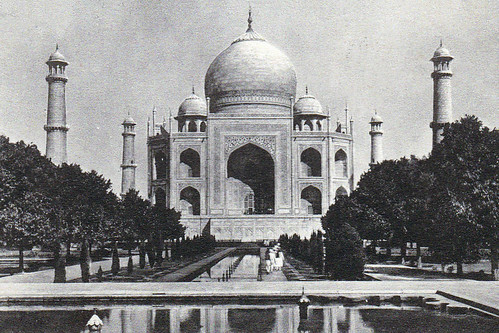
The pictures in this post are unposted and undated but I am told they are from between the wars from the 1920's - 30's. Clicking any of the images should open a link in another window to my Colin Green Photography store on Zazzle.

Aspremont Apartments, France
Aspremont is a small village in south-east France, 10km north of Nice with a population of approx. 2190. I have searched for the tower in the background beyond the apartment blocks and I believe it is the tower of the Church of Saint-Jacques le Mejeur.

Jaffa, Isreal
Jaffa (Yafo Hebrew, Yafa Arabic) is a port city in Tel-Aviv, Israel. The picture on the postcard which is unposted so not dated shows the coastline from what is the modern day Tel-Aviv Promenade.

Meggen im Sauerland
Meggen is a mining community of approx. 2900 residents in Lennestadt, Western Germany.

Taj Mahal, India
The Taj Mahal, the most famous picture of the postcards featured. The "Crown of Peace" is a mausoleum close to the Yamuna River, Agra, Indian. Built between 1632 -53 as a tomb by Mughal Emperor Shah Jahan for his favourite wife Mumtaz Mahal.

A late addition to the postcards I uploaded on the 23rd May 2020, is the following one, I missed when writing the post.
Paradise Bathing Beach, Bahamas

Please take a moment to share this post, follow me on social media and explore my work on Photo4Me and Clickasnap using the links below, Your support means a lot!