Showing posts with label Hollins Mill. Show all posts

Friday, 6 February 2026

Chasing Winter Light: A Sunday Stroll in Sowerby Bridge

 Date: December 1, 2019 Location: Sowerby Bridge, West Yorkshire Gear: Nikon D3300

There is something uniquely crisp about the first day of December. It marks the meteorological start of winter, where the light sits lower in the sky, the shadows stretch longer, and the air bites just enough to make you walk a little faster.

Back in 2019, I took my Nikon D3300 out for a Sunday wander through Sowerby Bridge. This corner of the Calder Valley is a photographer's playground, offering a perfect triad of subjects: the industrial stillness of the Rochdale Canal, the raw power of the River Calder, and the skeletal beauty of Dixon Scar Woods.

Join me on a walk through the frost and the history of West Yorkshire.

The Glassy Stillness of the Cut

The walk began on the towpath of the Rochdale Canal. One of the joys of canal photography in winter is the lack of boat traffic, which turns the water into a near-perfect mirror. The greenery of summer has faded, revealing the structural "bones" of the landscape—the stone walls and the bare branches.

The long view along the Rochdale Canal. The blue sky reflects perfectly in the water, creating a peaceful, leading line through the valley.

Moving closer to the town centre, the relationship between the waterway and the industrial heritage becomes clearer. Sowerby Bridge was built on wool and engineering, and the old mills still tower over the water.

Where industry meets leisure. A boat sits quietly moored beneath the towering stone walls of the converted mills.

Crossing the Canal

Crossing over the Rochdale Canal, I headed toward the River Calder. Unlike the man-made tranquillity of the canal, the river is untamed and energetic. To get there, you often have to traverse the old infrastructure that stitches this town together.

I’ve always had a soft spot for the "Co-Op Bridge." It isn’t pretty in the conventional sense—it’s rusted, covered in graffiti, and utilitarian—but it has character. It frames the transition from the urban streets to the wilder woods perfectly.

The texture of the city. The rusted iron lattice and stone steps of the Co-Op Bridge provide a gritty contrast to the nature that surrounds it.

The Roar of Hollins Mill

Just downstream, the sound of water dominates the air. The weir at Hollins Mill is a reminder of the power that once drove the industry here. Even on a calm day, the water rushes over the stone steps with impressive force.

A wide view of Hollins Mill Weir. You can see how the houses cling to the hillside, overlooking the tumbling water.

I spent some time here playing with the shutter speed on the Nikon D3300 to capture the movement of the water crashing over the historic stonework.

The power of the Calder. The intricate stonework of the weir breaks the water into white foam as it heads downstream.

Into Dixon Scar Woods

Crossing the river leads you into Dixon Scar Woods. This area feels ancient, especially in winter. The leaves had mostly fallen, carpeting the floor in varying shades of brown and gold, allowing the low winter sun to pierce through the canopy in spectacular fashion.

Looking back at the river from the edge of the woods. The mossy trees dip their branches into the cold, blue water.

The highlight of the walk, however, was the light in the clearing. The sun was positioned just behind the tree line on the ridge, creating a stunning "starburst" effect that illuminated the frosty mist clinging to the meadow. It was one of those moments you have to be quick to capture before the clouds shift.

The golden hour strikes at midday. A perfect sunburst through the trees illuminates the frosty grass and a dog enjoying a morning run.

The quiet meadow. The frost lingers in the shadows of the valley floor, creating a cool, textured foreground against the wooded hill.

Final Thoughts

Looking back at these photos from 2019, I'm reminded that you don't need to travel far to find beautiful landscapes. Sowerby Bridge offers a density of photographic opportunities—from gritty industrial textures to ethereal woodland light—all within a mile's walk.

If you ever find yourself in West Yorkshire on a crisp winter day, take a walk down the cut and into the woods. Just don't forget your camera.

Please take a moment to share this post, follow me on social media, and explore my work on Clickasnap and Photo4Me using the links below. Your support means a lot!


All the images remain the copyright of Colin Green.

Wednesday, 18 July 2018

Dixon Scar Woods: A Hidden Gem in the Calder Valley

Nestled near the historic town of Sowerby Bridge, West Yorkshire, lies Dixon Scar Woods, affectionately known to locals as "Dixy Woods." This unassuming woodland, a sliver of green clinging to the steep hillside, offers a surprising escape into nature within a bustling industrial valley. Its unique topography, stretching from the tranquil banks of the River Calder at Hollins Mill up towards the solemn heights of Sowerby Bridge Cemetery, creates a diverse habitat and a captivating walking experience.

The woods are a testament to the region's industrial past, with the mainline railway slicing through its heart via the evocative Dixy Tunnel (or Cemetery Tunnel, as it's also known). This juxtaposition of nature and infrastructure adds a layer of historical intrigue to the landscape. Below, the valley floor reveals a patchwork of fields, the manicured expanse of Sowerby Bridge Cricket Club, and the ever-flowing River Calder, all overlooked by the verdant embrace of the woodland.

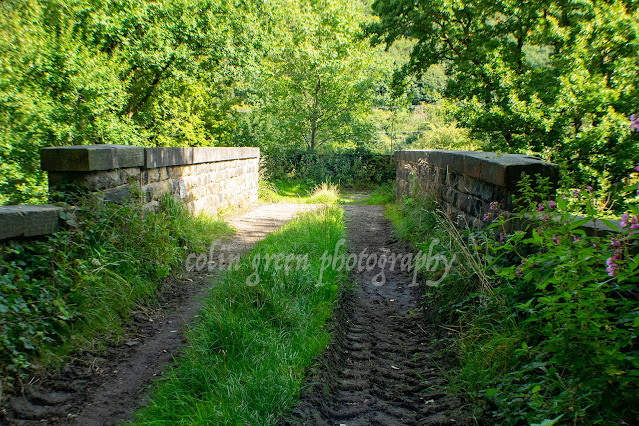
Exploring Dixy Woods reveals a network of paths, weaving through a tapestry of trees that change with the seasons. On September 7th, 2017, using a Nikon D3300, I embarked on a journey that began at the bridge spanning the River Calder at Hollins Mill. The path, initially hugging the river's edge, offered glimpses of the water's gentle flow and the valley's industrial heritage.

The lower reaches of the woods are characterized by a mix of mature deciduous trees, likely including oak, ash, and sycamore, providing a shaded canopy. The undergrowth, though perhaps dense in places, offered glimpses of wildflowers and the subtle signs of wildlife. The air, thick with the scent of damp earth and decaying leaves, carried the distant rumble of trains echoing through the tunnel.

As the path progressed, it led towards Tenterfields Business Park, a modern development marking the transition between Sowerby Bridge and Luddenden Foot. This section of the walk offered a contrast between the natural beauty of the woods and the more structured environment of the industrial park.

The journey culminated at Monkey Tunnel, a pedestrian passage that facilitates access from Tenterfields Bridge up towards the village of Boulderclough. This tunnel, a portal connecting different elevations and communities, symbolizes the way Dixy Woods acts as a bridge between landscapes and histories.

Clicking any of the images below should open a link in another window to my Colin Green Photography store on Zazzle.


Wood Lane Railway Bridge.


Hollins Mill Weir, this was damaged in the 2015 Calder Valley Boxing Day floods.


The tunnel, which can be found near Tenterfields Business Park is known locally as Monkey Tunnel.


Another of the damaged Hollins Mill Weir.


Footbridge over the River calder at Hollins Mill.


Footbridge over the River Calder at Tenterfields.


Thanks for looking, please take a moment to share and follow me on social media, and check out my portfolio's on Photo4Me and ClickAsnap via the links below.


All the pictures remain the copyright of Colin Green.

Scaling the Skies: A Visit to the Iconic Redcar Beacon

 Nestled on the rugged and beautiful North Yorkshire coastline lies a vertical pier that has sparked conversation, divided opinions, and ult...