I recently unearthed a fascinating piece of history and turned it into a short YouTube video titled "The Nation's Shrines." It features a complete set of 25 cigarette trading cards released in 1929 by Player's Cigarettes, also called "The Nation's Shrines."
What Makes These Cards Special?
Each card in this collection showcases an image of a historic place from England, Ireland, Scotland, and Wales. It's a real time capsule, offering a look at some of the most significant abbeys, cathedrals, castles, and other points of interest across the United Kingdom almost a century ago.
A Tour Through Time and Place
The video, which features every card in the set, takes you on a visual journey. You'll see stunning depictions of historical landmarks. Interestingly, while the complete set is there, Kenilworth Castle only makes a fleeting appearance, nestled briefly between John Milton's Cottage and Manorbier Castle due to the video software.
Breaking down the representation, the collection heavily features England with 17 sites. Wales and Ireland each have 3 sites, while Scotland is represented by just 2. It's safe to say that if this collection were curated today, we'd likely see a much more balanced representation, especially with more sites from the Celtic nations!
Why Check Out the Video?
If you're a history buff, a fan of vintage ephemera, or simply curious about how these iconic locations were viewed nearly a century ago, this video is a must-watch. It's a charming and unique way to connect with the past and appreciate the enduring beauty of the UK's heritage.
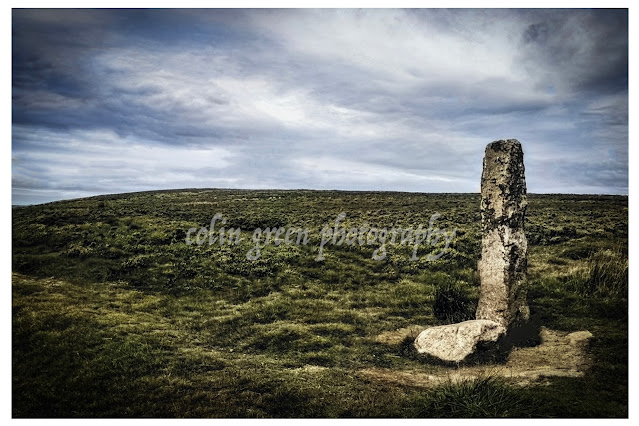
Standing sentinel on Midgley Moor, overlooking the breathtaking Calder Valley, is a stone steeped in history and legend. Known by many names – Churn Milk Joan, Churn Milk Peg, and Nelmires Stoop – this imposing 7ft monolith has watched over the valley for centuries, its origins shrouded in time.
First recorded in the 17th century, the stone is believed to have served as a boundary marker, a silent witness to the ebb and flow of life across the moors. But its more colourful name, Churn Milk Joan, didn't appear until the early 1800s, and with it came a tale as chilling as the moorland wind.
Local legend whispers of a milkmaid, caught in a ferocious snowstorm, who tragically froze to death while crossing the treacherous moor from Peckett Well to Luddenden. They say the stone was named in her memory, a poignant reminder of the harsh beauty and unforgiving nature of the landscape.
But Churn Milk Joan isn't just a monument to tragedy. It's also a source of local folklore and superstition. Legend has it that placing a penny in the hollow atop the stone will bring you good luck. And if you're brave enough to venture to the moor on New Year's Eve, you might witness a truly magical spectacle. They say that as the bells of St. Michael's Church in Mytholmroyd echo across the valley, the stone itself spins three times! A captivating thought, especially considering the stone predates the church by a couple of hundred years. What secrets has it witnessed in its long vigil?
So, the next time you find yourself exploring the Calder Valley, take a detour to visit Churn Milk Joan. Stand in its shadow, feel the wind whipping across the moor, and let your imagination wander. Is it just a boundary marker? A memorial to a lost milkmaid? Or a magical stone with the power to grant good fortune? Perhaps it's a little bit of all three, a testament to the rich tapestry of history and folklore woven into the very fabric of the Yorkshire landscape.
The picture was taken on the 5th April 2021.
Please take a moment to share this post, and follow me on social media.
Like many of you, I've been spending more time at home due to the current lockdown restrictions here in the UK. With my own camera unable to venture out as much as I'd like, I've been diving into a different kind of photographic adventure: my collection of vintage pictures and postcards. It's a slow process, but I'm gradually working my way through them and sharing some of the fascinating glimpses into the past that I uncover.
Today, I wanted to share two recent finds from my collection:
The Eads Bridge Disaster
The first picture I pulled out was tucked away in a sleeve with a stark note: "St Louis and Illinois Bridge disaster. Eads Bridge."
This immediately piqued my interest. The Eads Bridge is an iconic landmark, a marvel of 19th-century engineering that spans the Mississippi River. While the note offers a dramatic hint, I'm still researching the specifics of this "disaster." It's a powerful reminder of the challenges and dangers inherent in the early days of such monumental construction projects.
Outdoor Games at the Organ Festival in Sweden (1920s)
The second gem I discovered today transports us to a completely different scene, titled "Outdoor Games at the Organ Festival" and dating back to the 1920s in Sweden.
This image offers a charming peek into leisure activities from nearly a century ago. One can almost hear the laughter and feel the festive atmosphere. It's fascinating to imagine what kind of "outdoor games" were popular at such an event back then.
Sadly, beyond the notes on their sleeves, I don't have much more information to share about these particular pieces. That's often the nature of collecting these historical artifacts – sometimes their stories remain a mystery.
Clicking any image should open a link in another window to my Colin Green Photography store on Zazzle.
Please take a moment to share this post, and follow me on social media.
Ever wonder what life was like in your local village decades or even centuries ago? There's something truly captivating about seeing old photographs and postcards that transport you back in time. I've been diving into my collection of images, both personally taken and carefully gathered, to create a series of video slideshows that offer a unique look at three distinct Northern English locations.
Brotton: From Domesday to Decline
First up, we travel to Brotton, a village nestled in the borough of Redcar and Cleveland. With a history stretching back before the 1086 Domesday Book – its name literally meaning "Brook Farm" – Brotton holds centuries of stories within its ancient boundaries.
Today, Brotton has a population of around 5,400, a significant decrease from its peak. This decline directly correlates with the fading of its once-thriving ironstone mining industry. The early 20th century saw a downturn, and by 1954, the last mine had closed its doors. The images in this slideshow are a fascinating mix of collected postcards and public domain treasures, offering a visual narrative of Brotton's past.
Skipton: A Market Town's Enduring Charm
Next, we journey to Skipton, a bustling market town in North Yorkshire. Home to approximately 14,600 residents, Skipton is a hub of activity, intersected by the River Aire, the Leeds and Liverpool Canal, and the Airedale Railway Line.
My slideshow of Skipton is another collection built from vintage postcards I've gathered over time. These images capture the essence of a vibrant market town, showcasing its enduring charm and how its key transportation routes have shaped its development.
Walsden: A West Yorkshire Village with Lancashire Roots
Finally, we head to Walsden, a village in the Metropolitan Borough of Calderdale, West Yorkshire. With a population of roughly 5,200, Walsden is characterized by the flow of Walsden Water (which feeds into the River Calder), the Rochdale Canal, and the A6033 Rochdale Road. It even boasts its own railway station on the Caldervale Line.
What's particularly interesting about Walsden is its historical identity. While it's now firmly part of West Yorkshire, it was once historically part of Lancashire and administered by Rochdale Corporation. Unlike the other two slideshows, all the pictures in the Walsden video were taken by me in August 2017, offering a more contemporary, yet still reflective, look at the village.
Please take a moment to share this post, and follow me on social media.
In 2013, during a memorable holiday to Lanzarote with my daughter, I embarked on an unexpected venture into filmmaking. While I was just beginning to explore the world of photography, videography was entirely new territory for me. Yet, armed with a Samsung Galaxy Tablet, I was determined to capture more than just still images; I wanted moving memories of our adventures and the breathtaking landscapes we encountered. These short recordings are a testament to that initial, enthusiastic attempt.
Panoramic Vistas from Peñas del Chache
Our cinematic journey begins high above the island at Peñas del Chache, Lanzarote's highest public viewing point. Though a slightly loftier, militarily restricted area existed nearby, the sweeping panorama from our vantage point – a restaurant car park – was utterly unobstructed. Standing approximately 670 meters above sea level, I filmed the mesmerizing descent to the ocean below. This particular clip was captured during an organized island tour, providing a perfect opportunity to immortalize the island's dramatic topography. Peñas del Chache isn't just a daytime spectacle; it's a magnet for stargazers. With minimal light pollution, the summer nights here reveal a celestial tapestry where the constellations of Sagittarius and Scorpius blaze with particular brilliance.
Underwater Wonders at Aquarium Lanzarote
Our next series of clips transports us to the fascinating depths of Aquarium Lanzarote, conveniently located in Costa Teguise, just a short stroll from our hotel. While not sprawling in size, the aquarium offered a thoroughly enjoyable experience. Beyond housing a diverse array of marine life, it thoughtfully emphasizes species native to the Canary Islands, providing a unique glimpse into the local underwater ecosystems.
Wild Encounters at Rancho Texas Park
The adventure continued at Rancho Texas Park, where my recordings capture some of its animal inhabitants. This popular park offers engaging daytime shows, including captivating displays by sea lions and majestic birds of prey – thankfully, not together!
The Volcanic Heart of Timanfaya
Finally, the concluding clip in this collection takes us to the raw, untamed beauty of Timanfaya National Park, an iconic symbol of Lanzarote's volcanic soul.
There are also some slideshow videos of the island that can be seen on my YouTube channel, just search Lanzarote on my clips.
Please take a moment to share this post, and follow me on social media.