Showing posts with label Huddersfield. Show all posts

Sunday, 12 October 2025

Stone, Steeple, and Stories: The Enduring Heart of Huddersfield, St Peter's Parish Church

The sunlit stone and towering steeple of St Peter's Parish Church, or Huddersfield Parish Church, are an unmissable landmark in the heart of the town. These pictures, taken on a beautiful clear day, showcase the Grade II* listed building in all its Gothic Revival glory, a monumental presence at the junction of Kirkgate and Byram Street. But this is more than just a magnificent building; it is a repository of history and some truly fascinating tales.

Roots in the 11th Century

The church you see today, with its impressive 135-foot clock tower dominating the skyline, is actually the third church to stand on this venerable site. Its origins date all the way back to the 11th century, shortly after the Domesday Book.

Legend has it that the very first church was established around 1090-1100 by Walter de Lacy, a Norman nobleman, who vowed to build a church after surviving a terrifying fall from his horse into a swampy marsh between Huddersfield and Halifax. A dramatic promise for a dramatic building site!

The Victorian Rebuild and a Cost-Saving Secret

The current, grand structure was built between 1834 and 1836 by the renowned York architect James Pigott Pritchett. The previous 16th-century church had simply become too small for Huddersfield's rapidly expanding population during the Industrial Revolution, and it was also structurally unstable.

In an interesting, and perhaps cautionary, piece of history, Pritchett was tasked with keeping costs down. To do this, he reused bricks from the dismantled 16th-century church in the new construction. While admirable for the effort to recycle, the quality of the old materials was poor, which unfortunately led to the church needing regular, extensive maintenance work almost from the start!

Architectural Highlights and Unique Features

The church is an excellent example of Gothic Revival architecture, characterised by its pointed arches, ornate tracery, and crenellated (battlemented) parapets. But its interior holds some of the most compelling stories and facts:

  • The Highest Clock: The prominent west tower, with clocks on all four sides, was deliberately built to an unusual height of 135 feet to ensure the time could be seen from all parts of the burgeoning industrial town.

  • The War Memorial Masterpiece: The sanctuary is dominated by a gilded timber Baldachino (a ceremonial canopy over the altar) and the East Window, which together form the parish's First World War Memorial. They were installed in 1923 and designed by the famous early 20th-century architect, Sir Ninian Comper.

  • Underground Dining: The church's large crypt now hosts "The Keys" cafĂ©/restaurant, providing a wonderfully quirky and atmospheric venue for visitors and locals alike, continuing the church's role as a true community hub.

From a dramatic rescue in the 11th century to a cost-cutting compromise in the 19th, and from architectural mastery to a hidden mouse, St Peter's Parish Church is a place that truly weaves the spiritual, social, and industrial history of Huddersfield into its very stone. Next time you're in the town centre, take a moment to step inside and appreciate the stories held within this magnificent building.

I took these pictures with a Nikon d3300 on the 27th May 2023, clicking any of them should open a link in another window to my Colin Green Photography store on Zazzle.


Please take a moment to share this post, follow me on social media, and explore my work on Clickasnap and Photo4Me using the links below. Your support means a lot!


All the pictures remain the copyright of Colin Green.

Sunday, 5 October 2025

Behind the Stands: A Glimpse of Huddersfield's Accu Stadium on a Quiet Day

On a bright late-May day in 2023, with a Nikon D3300 in hand, I took a stroll around the perimeter of what is currently known as the Accu Stadium in Huddersfield. The gates were closed, meaning no peek inside at the hallowed turf, but even from the outside, the stadium's distinctive architecture and the quiet hum of its surroundings offered plenty to appreciate and reflect upon.

Currently known as the Accu Stadium, and previously known as the John Smith's Stadium, Kirklees Stadium, the Galpharm Stadium and the Alfred McAlpine Stadium, this multi-purpose venue is a true landmark for Huddersfield. It's the proud home of two significant sporting institutions: Huddersfield Town AFC, affectionately known as "The Terriers," and the Huddersfield Giants Rugby League Football Club.

The stadium's design is striking, particularly its curved roofs and distinctive white trusswork that arch over the stands. This architectural flair isn't just for show; it's a testament to modern stadium design when it opened. The images capture these arches beautifully against the clear blue sky, hinting at the vastness within, even when empty. Opened in 1994, it was initially a ground-breaking venture, moving both clubs from their historic but aging homes – Leeds Road for Huddersfield Town and Fartown for the Huddersfield Giants. This move was a significant step forward, providing state-of-the-art facilities for both clubs and their fans.

One of the most interesting facts about the stadium is its innovative funding model. It was developed through a unique partnership between Kirklees Metropolitan Council, Huddersfield Town AFC, and Huddersfield Giants. This collaborative effort ensured that the town retained significant ownership and control, a model that has since been emulated by other clubs. The stadium company, Kirklees Stadium Development Ltd (KSDL), manages the venue, overseeing everything from match days to conferences and concerts.

Even on a quiet Saturday, with no match-day crowds or roaring fans, the stadium exudes a certain presence. The surrounding pathways and car parks, usually teeming with activity, were empty, allowing for a different perspective on the venue. You can imagine the roar of the crowd emanating from within the stands, where a glimpse of the blue seating is visible through the gates. The towering floodlights, stand sentinel, ready to illuminate evening games and create that special atmosphere under the lights.

The external signage, such as "THE CORE STAND" and "THE TERRIERS,", proudly displays the stadium's identity and its connection to its sporting tenants. It's a reminder that this isn't just a building; it's a home, a place of shared memories, triumphs, and sometimes, heartbreaks for thousands of supporters.

Driving around the stadium, as captured in the various images, you get a sense of its integration into the local landscape. Nestled amongst trees and green spaces, it's a substantial structure that nonetheless blends with its surroundings. The approach roads and parking areas, while functional, are softened by the greenery, where the stadium peeks out from behind lush foliage.

While I couldn't step onto the pitch or sit in the stands this time, these external shots offer a valuable insight into the Accu Stadium (or Kirklees Stadium, as it is widely known). They showcase its architectural significance, its role as a dual-sporting arena, and the quiet dignity it holds even on a non-match day. It's a place that buzzes with life and passion, and even from the outside, you can feel the echoes of countless sporting moments.

Clicking any of the images below should open a link in another window to my Colin Green Photography store on Zazzle.


Please take a moment to share this post, follow me on social media and explore my work on Clickasnap and Photo4Me using the links below. Your support means a lot!


All the pictures remain the copyright of Colin Green.

Sunday, 16 March 2025

Capturing History: The Turnbridge Lift Bridge, Huddersfield - A Photographer's Delight

 Huddersfield, a town steeped in industrial heritage, holds many hidden gems for photographers. One such gem is the fascinating Turnbridge Lift Bridge, a testament to the town's canal-based past. Officially known as simply "Turnbridge," and designated as bridge number 17 on the Huddersfield Broad Canal, this unique structure offers a blend of historical charm and mechanical intrigue that's perfect for capturing striking images.

Located on Quay Street, just a short stroll from the town centre, the Turnbridge Lift Bridge (often referred to colloquially as a Locomotive lift bridge) spans the Huddersfield Broad Canal, providing a tangible link to a bygone era. Built in 1865, replacing an earlier swing bridge, its design speaks volumes about the ingenuity of Victorian engineers.

What Makes it Photogenic?

  • The Mechanical Marvel: The bridge's lifting mechanism, a combination of wheels, chains, and counterweights, is a visual feast. Whether you're capturing the intricate details of the machinery or the grand sweep of the bridge deck rising, there's a compelling story to tell.
  • Historical Context: The canal setting, with its narrowboats and towpaths, provides a rich backdrop for your photographs. The contrast between the weathered brickwork of the bridge and the tranquil water of the canal creates a captivating visual narrative.
  • Light and Shadow: The bridge's structure casts interesting shadows throughout the day, offering opportunities for dramatic compositions. The golden hour, just before sunset, is particularly magical, as the warm light illuminates the bridge's intricate details.
  • The Lifting Action: If you're lucky enough to witness the bridge in action, you'll have the chance to capture a truly dynamic scene. The slow, deliberate movement of the bridge as it lifts to allow a narrowboat to pass is a mesmerizing sight. Previously windlass operated, it was updated in 2002 and is now electrically powered, making the lifting action smooth and reliable.

Photography Tips:

  • Explore Different Angles: Don't be afraid to experiment with different perspectives. Try shooting from ground level, from the towpath, or even from a higher vantage point if you can find one.
  • Capture the Details: Focus on the intricate details of the bridge's mechanism, such as the chains, gears, and counterweights. These elements tell the story of the bridge's history and functionality.
  • Use a Tripod: A tripod will allow you to capture sharp images, especially in low-light conditions. It will also allow you to use longer exposures to capture the movement of the water or the bridge.
  • Consider Black and White: The bridge's industrial aesthetic lends itself well to black and white photography. This can help to emphasize the bridge's texture and form.
  • Time Your Visit: Check the canal's schedule to see if you can time your visit to coincide with a narrowboat passing. This will give you the opportunity to capture the bridge in action.
  • Consider the surrounding area: The area around the bridge also lends itself to photography, with the canal, and the surrounding buildings providing extra context to your images.

The Turnbridge Lift Bridge is more than just a functional structure; it's a piece of living history. Whether you're a seasoned photographer or simply looking for a unique subject to capture, this fascinating bridge is sure to inspire you. So, grab your camera and head to Huddersfield to discover the photographic potential of this hidden gem.

I took the following images on the 27th May 2023 with a Nikon d3300 camera, clicking any images should open a link in another window to my Colin Green Photography store on Zazzle.


Please take a moment to share this post, follow me on social media, and explore my work on Clickasnap and Photo4Me using the links below. Your support means a lot!


All the images remain the copyright of Colin Green.

Sunday, 31 March 2024

A Quick Stop on the Huddersfield Line - Deighton Railway Station

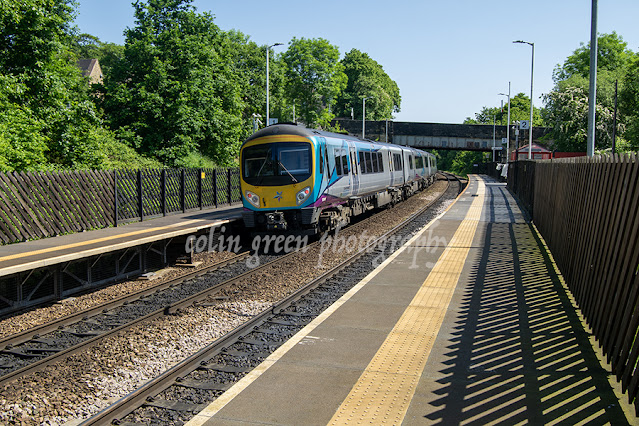
Deighton Railway Station serves the Deighton area of Huddersfield, West Yorkshire, England. It's a handy little station for those needing a quick and convenient connection to Huddersfield or Leeds.

Interestingly, there have actually been two stations at Deighton! The first station opened in 1871 and served a branch line to Kirkburton. Sadly, that station closed in 1930. The current Deighton Station we see today is a much younger addition, having opened in 1982.

Deighton Station is located roughly two miles northeast of Huddersfield Station on the Huddersfield Line towards Leeds. Trains are frequent, with journeys to Huddersfield taking a mere 4 minutes on average. Trans Pennine Express is the main operator on this route.

While the station itself is compact, there are two platforms and a ticket office. There are no waiting rooms or toilets at the station, but there are shelters on both platforms for waiting passengers.

For onward journeys after your train ride, bus stops are located a short walk from the station on Leeds Road, with connections to both Leeds and Huddersfield. Taxis are also readily available.

Deighton Station might be a small station, but it offers a vital service for the Deighton community and surrounding areas.

Whether you're a local resident or just visiting, Deighton Station is a great way to get around Huddersfield and beyond. So next time you're in the area, consider hopping on a train and checking it out!

I took these pictures on the 27th May 2023 with a Nikon d3300. Clicking any of them should open a link in another window to my Colin Green Photography store on Zazzle.


Please take a moment to share this post, follow me on social media, and explore my work on Clickasnap and Photo4Me using the links below. Your support means a lot!


Thanks for looking, all the images are the copyright of Colin Green.

Saturday, 9 March 2024

Discovering the Charm of the Huddersfield Broad Canal: Aspley to Turnbridge

The Huddersfield Broad Canal, also known as Sir John Ramsden's Canal, is a hidden gem winding its way through Kirklees, England. This 3.75-mile waterway, adorned with nine wide locks, boasts a rich history dating back to the 18th century.

Originally built to serve the thriving textile industry, the canal played a crucial role in transporting coal and finished goods. Nicknamed the "Broad Canal" to distinguish it from its narrower counterpart, the Huddersfield Narrow Canal, it witnessed the industrial revolution unfold along its banks. Today, the canal stands as a testament to the region's industrial heritage, offering a glimpse into the past.

While its industrial days may be behind it, the Huddersfield Broad Canal has found a new purpose as a haven for leisure activities. Whether you're a keen boater, a cyclist seeking a scenic route, or simply someone looking for a peaceful walk, the canal caters to all.

For boaters, the canal offers a tranquil journey, connecting the Calder and Hebble Navigation at Cooper Bridge with the Huddersfield Narrow Canal near Aspley Basin. For those who prefer dry land, the towpath alongside the canal offers a scenic walking or cycling path. The gentle incline makes it suitable for all fitness levels, allowing you to soak in the picturesque surroundings at your own pace.

The Huddersfield Broad Canal is a reminder of the transformative power of historical waterways. From its industrial roots to its current role as a leisure destination, the canal continues to offer a unique and enriching experience for visitors and locals alike. So, next time you're in West Yorkshire, take a step back in time and explore the charm of the Huddersfield Broad Canal.

The pictures shown below were taken while walking the canal on the 27th May 2023, the first set featured were taken on the stretch between the Narrow Canal at Wakefield Road Bridge to the historic Turnbridge. Clicking any of them should open a link in another window to my Colin Green photography store on Zazzle.

Aspley Marina from Wakefield Road Bridge.


The end - beginning of the Huddersfield Narrow Canal, a short distance to the west of Wakefield Road Bridge and Aspley Marina.

Underneath Wakefield Road Bridge, Aspley Wharf at the tunnels end.

Aspley Wharf Moorings.


Please take a moment to share this post, follow me on social media, and explore my work on Clickasnap and Photo4Me using the links below. Your support means a lot!


All the images remain the copyright of Colin Green.

Saturday, 16 September 2023

The Whitacre Mill Viaduct

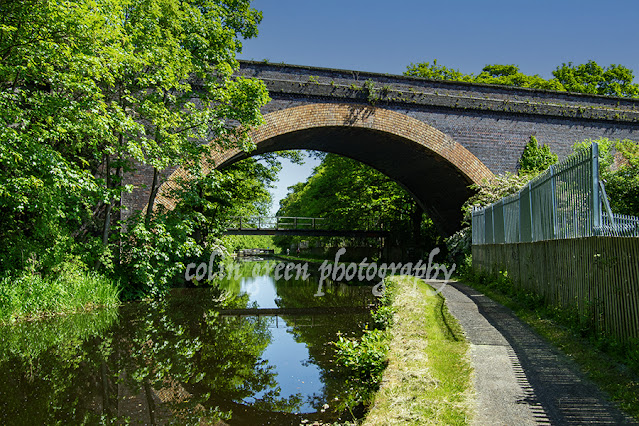
Nestled in the green landscape of Deighton, near Huddersfield, the Whitacre Mill Viaduct is a silent witness to a bygone era of railway expansion. This impressive, disused railway bridge stands as a testament to the ambitions of the London & North Western Railway and its plan to connect Huddersfield with the Barnsley coal mines via the Kirkburton Branch Line.


A Bridge with a Story

Construction on the viaduct began in March 1865. Despite a partial collapse in February 1866, the viaduct was completed in time for the line's opening in October 1867. Although the grand plan for the railway was never fully realized, the viaduct served a short section of the line until its final closure in December 1971. Today, it stands as a monument to its industrious past, crossing the Huddersfield Broad Canal, the River Colne, and the valley below.


A Path Less Traveled

While the viaduct is largely overgrown on one side, it offers a unique walking experience from the Deighton side. Although challenging to navigate, the path provides a sense of adventure and a connection to the area's history. There are plans by Kirklees Council to transform the viaduct into a greenway, much like the nearby Bradley Viaduct, which would open this piece of history to a wider audience. Until then, it remains a secluded and beautiful spot, waiting to be rediscovered.

The pictures below were taken on the 27th May 2023 with a Nikon d3300.

The viaduct crossing the Huddersfield Broad Canal.

The top of the viaduct is supposed to be blocked off, I took this from the access point that has been removed. You can get approx. 2/3 of the way across before the bushes become to thick to pass, walking along the top of the wall would have allowed me to get further but I'm not great with heights, so I thought better of that idea.

Huddersfield Broad Canal pictured from the viaduct, Longlands Lock number 4 is just visible at the top of the picture.

The Huddersfield Broad Canal from Whitacre Mill Viaduct. The picture was taken in the direction of Huddersfield.

The overgrown former track bed looking towards the fence off access. The hole in the fence can be seen to the right of the picture if you follow the wall to the trees.


Please take a moment to share this post, follow me on social media, and explore my work on Clickasnap and Photo4Me using the links below. Your support means a lot!'


All the pictures remain the copyright of Colin Green.

Uncovering the Urban Wild: A Stroll Along a Stretch of Halifax's Hebble Trail

There’s a unique charm in finding pockets of forgotten beauty amidst the urban sprawl. On June 13th, 2015, armed with a Polaroid is2132 came...