Sunday, 5 August 2018

Halifax Station: A Journey Through Time, Tracks, and Transformations

Halifax. A town steeped in industrial history, and like many northern towns, its story is inextricably linked to the railways. But the tale of Halifax Station is more than just tracks and timetables; it's a fascinating journey through Victorian ambition, wartime adjustments, and modern-day revitalization hopes.

Let's rewind to 1844. Imagine a single track, snaking its way to the edge of Halifax, terminating at a humble spot called Shaw Syke, near where the roar of the Shay's football and rugby crowds echo today. This was Halifax's first taste of the railway age. A rudimentary connection, but a connection nonetheless.

Fast forward to 1855, and a significant upgrade. The line connecting Halifax to the burgeoning industrial powerhouse of Bradford was established, and a new station was built in its current location. Shaw Syke, the original terminus, transitioned into a goods yard. And here's a delightful twist: the original 1855 station building still stands, a proud relic of Victorian engineering, now cleverly incorporated into the vibrant Eureka! Children's Museum, a testament to how history can be repurposed for modern enjoyment.

But the station's story doesn't stop there. The following decades witnessed a flurry of development. A new road bridge provided a higher entrance, reflecting the town's growing prominence. Platforms multiplied, reaching a peak of seven, buzzing with activity. A restaurant and even a pub catered to the bustling crowds of travellers. This was a station at its zenith, a hub of commerce and connection.

And then, the names began to change, mirroring the shifting tides of the times. From the simple "Halifax," it became "Halifax Old Station" in 1890, perhaps to distinguish it from other railway developments. In 1951, it was christened "Halifax Town," reflecting a sense of civic pride. Finally, in 1961, it reverted to "Halifax," a return to simplicity.

However, this final name change coincided with a gradual decline in services. Platforms were decommissioned, leaving only the island platform to serve the reduced traffic. The grand station, once a symbol of progress, began to shrink.

But the story isn't over. There's a spark of hope, a plan to breathe new life into this historic space. A proposed £40 million project aims to bring the platform adjacent to the 1855 building back into use and remove the bridge access, returning the station to a more pedestrian-friendly configuration. Will this ambitious plan come to fruition? Only time will tell.

Halifax Station's journey is a microcosm of British railway history, reflecting the ebb and flow of progress, decline, and potential renewal. It's a reminder that even the most solid structures are subject to change, and that history, like a railway line, is a continuous journey. Whether the planned revitalization takes place or not, the station remains a fascinating chapter in Halifax's rich tapestry.
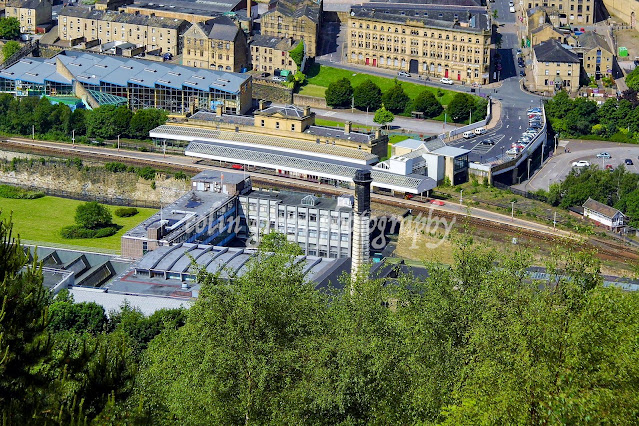


The picture above was taken on the 1st June 2014 with a Polaroid is2132 from Beacon Hill, the following 5 pictures were taken with a Nikon d3300 on the 3rd October 2017.


The signal box has closed since I took this picture.

The next 5 pictures were taken on the 27th May 2018 with a Nikon d3300.


The bridge may be demolished under current plans being discussed. The spire is all that remains of Square Church.

Thanks for looking, please take a moment to share and follow me on social media.

All the pictures remain the copyright of Colin Green.

Chasing the Golden Hour: My Scammonden Sunset Experiment

Sometimes, the most beautiful moments are fleeting. A perfect sunset, a burst of vibrant colour, a gentle transition from day to night. Capturing that magic is a challenge, but one I decided to take on back in August 2018.

On Saturday, August 4th, I found myself perched near the serene Scammonden Reservoir, nestled in the heart of the Ryburn Valley. The air was alive with a restless wind, a constant reminder of nature's untamed energy. My mission? To track the setting sun as it dipped behind the distant hills, painting the valley in hues of orange and gold.

"Scammonden Sunset" is the result of that evening's endeavour. I set up my tripod, pointed my camera, and let the sun dictate the scene. For a full 20 minutes, I patiently recorded the slow, mesmerizing descent. The wind, however, had other plans. It buffeted my tripod, causing a few wobbles that, while a tad frustrating at the time, now add a touch of raw authenticity to the final product.

The real magic happened in the editing room. I compressed those 20 minutes of real-time sunset into a mere 37 seconds, transforming the gradual shift into a breathtaking, accelerated spectacle. The result is a short, punchy video that captures the essence of the sunset's beauty in a blink.

To enhance the experience, I added a musical score, carefully chosen to complement the visual journey. The music, I believe, adds an emotional layer, amplifying the sense of awe and tranquility that the sunset evokes.

This was my first attempt at filming a sunset in this way, and while it wasn't without its challenges (thanks, wind!), I'm quite pleased with the outcome. It's a reminder of the simple beauty that surrounds us, and the power of time-lapse to condense those moments into something truly captivating.

Sometimes, imperfections add character. Those little tripod wobbles, the gusts of wind – they’re part of the story, a testament to the real, unfiltered experience of capturing nature's fleeting beauty.

If you've ever found yourself mesmerized by a sunset, I hope "Scammonden Sunset" resonates with you. It's a small window into a moment in time, a reminder to pause and appreciate the natural wonders that surround us.

Perhaps this inspires you to capture your own sunset, or simply to take a moment to appreciate the next one you witness. After all, every sunset is a unique masterpiece, painted across the canvas of the sky.

The video was filmed using a Nikon d3300 SLR camera.


Please take a moment to share and follow me on social media.

The video remains the copyright of Colin Green.

Aspinall Street: Where Ted Hughes Began

Nestled in the heart of Mytholmroyd, West Yorkshire, a seemingly ordinary terraced house holds an extraordinary secret. 1 Aspinall Street, with its unassuming facade, is the birthplace of one of England's most celebrated poets, Ted Hughes. Born on August 17th, 1930, Hughes's early years within these walls, and the wild, dramatic landscape surrounding them, would forever shape his poetic vision.

Imagine a young Ted, his imagination ignited by the rugged beauty of the Calder Valley. The wind whistling through the hills, the dark, brooding moors, the rushing waters of the River Calder – these were the raw materials that would later be forged into the powerful imagery of his poetry. He lived here until he was eight, a formative period that imprinted the very essence of this place onto his soul, even after his family moved to Mexborough, South Yorkshire.

It's fascinating to consider how this small, terraced house, a humble beginning, could nurture such a towering literary figure. The landscape of Mytholmroyd, with its blend of industrial grit and untamed nature, is palpable in Hughes's work. You can almost feel the dampness of the stone, hear the cries of the curlews, and sense the ancient, elemental forces that he so masterfully evoked.

Today, 1 Aspinall Street stands as a testament to Hughes's legacy, thanks to the dedicated work of the Elmet Trust. Established in 2006, the Trust is a passionate advocate for Hughes's life and work. They took on the responsibility of restoring the house, meticulously recreating its 1930s ambiance. In June 2008, their efforts culminated in a beautifully preserved piece of literary history.

But 1 Aspinall Street isn't just a museum piece. It's a living, breathing space, a retreat for writers seeking inspiration in the very place where Hughes's own journey began. Imagine yourself, pen in hand, sitting by the window, gazing out at the same vistas that fuelled his imagination. The very air seems charged with creative energy.

The Elmet Trust has transformed this modest dwelling into a sanctuary, a place where words can flow freely, where the echoes of Hughes's voice can still be heard. It's a reminder that even the most extraordinary journeys often begin in the most ordinary of places.

If you're a writer, a poet, or simply a lover of literature, consider a pilgrimage to 1 Aspinall Street. It's more than just a house; it's a portal to the past, a connection to the roots of a literary giant, and a chance to experience the very landscape that shaped his genius.

Perhaps, within those walls, you too will find your own voice, inspired by the whispers of Aspinall Street.

I took these pictures on the 21st July 2018 with a Nikon d3300.


I wanted to add the sepia & black and white versions to age the pictures a little, i felt they gave the photo's a bit more character than the colour versions.

The picture below features a copy of Hughes poem the Harvest Moon, no copyright infringement is intended and I will remove if required.

Thanks for looking and please take a moment to share and follow me on social media,.

All pictures remain the copyright of Colin Green.

Saturday, 28 July 2018

A Winter's Whisper: Copley Riverside in a Blanket of Snow

The River Calder, a lifeline through West Yorkshire, paints a different picture with each passing season. But there's a particular magic in its winter guise, a serene beauty that I was fortunate enough to capture on a crisp December day.

On December 29th, 2017, I embarked on a walk along the path that hugs the River Calder near Copley, a charming village nestled in the heart of the region. The day was draped in a fresh layer of snow, the first of the season, if my memory serves me correctly, transforming the familiar landscape into a winter wonderland.

These seven photographs, taken along the riverbank near Copley Cricket Ground, stretching towards the newly opened Wilson Bridge, tell a story of quiet beauty. They offer a glimpse into a world where the river's gentle flow meets the stillness of a snow-covered landscape.

A Winter's Tale in Seven Frames:

  • The Silent River: The Calder, usually a bustling waterway, flowed with a hushed tranquillity, its surface reflecting the soft, grey sky.
  • Snow-Dusted Trees: The bare branches of the riverside trees were delicately outlined in white, creating intricate patterns against the winter backdrop.
  • The Path Less Travelled: The walking path, usually well-trodden, bore only the faint imprints of my own footsteps, a testament to the quiet solitude of the day.
  • Copley Cricket Ground's Winter Rest: The familiar green of the cricket ground was transformed into a pristine expanse of white, a silent witness to the winter's arrival.
  • Wilson Bridge's Debut: The newly constructed Wilson Bridge, replacing the older stone structure, stood as a modern counterpoint to the timeless beauty of the surrounding landscape. The bridge itself was a stark contrast to the natural beauty around it.
  • A Landscape Refreshed: The snow had softened the edges of the landscape, creating a sense of peace and tranquillity.
  • Winter's Light: The soft, diffused light of the winter day bathed the scene in a gentle glow, highlighting the subtle textures of the snow and the river.

The Magic of a Snowy Walk:

There's something uniquely captivating about a winter walk along a riverside. The crisp air, the crunch of snow underfoot, and the quiet beauty of the landscape create a sense of peace and tranquillity. This walk along the Copley Riverside, captured in these seven photographs, was a reminder of the simple beauty that can be found in the heart of winter.

The recent construction of Wilson Bridge, although a needed improvement, does not distract from the natural beauty of the area. It is a testament to the progression of the town, while the river itself remains a constant.

These pictures are a snapshot of a moment in time, a winter's whisper along the River Calder. They serve as a reminder of the beauty that can be found in even the simplest of landscapes, especially when touched by the magic of snow.


Thanks for looking, please take a moment to share and follow me on social media.

All the pictures remain the copyright of Colin Green.

Tuesday, 24 July 2018

Where Lancashire Met Yorkshire: The Majestic Todmorden Town Hall

Nestled in the heart of the Calder Valley, Todmorden boasts a jewel of architectural grandeur: its Town Hall. This neo-classical masterpiece, a Grade I listed building, stands as a testament to ambition, rivalry, and the enduring legacy of the Fielden family.

The story of Todmorden Town Hall is as fascinating as the building itself. Construction began in 1860, with architect James Green at the helm. However, the project was soon plagued by legal and financial woes, grinding to a halt. The unfinished structure stood as a silent testament to these early struggles.

Enter the Fielden family, local industrialists with a vision. In January 1866, they purchased the land and the incomplete hall at auction, breathing new life into the project. They appointed John Gibson of Westminster to redesign the building, and under his guidance, the hall was transformed into the architectural marvel we see today.

On April 3rd, 1875, the grand Todmorden Town Hall was officially opened, a culmination of years of effort and a staggering £54,000 investment. Its imposing facade and intricate detailing spoke of the town's prosperity and the Fieldens' commitment to their community.

But the hall's significance extends beyond its architectural beauty. It was deliberately built across the historic Lancashire-Yorkshire county boundary, a symbolic gesture intended to bridge the rivalries between the two counties. This unique positioning reflected the town's desire for unity and harmony. However, in a twist of fate, the boundary was later adjusted on January 1st, 1888, bringing the entire town, including the hall, firmly within Yorkshire.

A Visual Journey:

I had the privilege of capturing the hall's grandeur on April 22nd, 2017, using my Nikon D3300 SLR camera. The images I took serve as a visual record of its timeless beauty, showcasing the intricate details of its facade, the imposing columns, and the overall sense of historical significance.

Why Todmorden Town Hall Matters:

  • Architectural Significance: The neo-classical design, with its grand columns and symmetrical facade, is a prime example of Victorian architecture.
  • Historical Significance: The hall's construction story, marked by challenges and eventual triumph, reflects the town's resilience and the Fielden family's legacy.
  • Symbolic Significance: The initial placement across the county boundary highlights the town's desire for unity and its unique position in British history.
  • Community Hub: Even today, the town hall serves as a vital community space, hosting events and gatherings.

Todmorden Town Hall is more than just a building; it's a living piece of history, a symbol of ambition, and a testament to the enduring spirit of the town. Whether you're an architecture enthusiast, a history buff, or simply someone who appreciates beautiful buildings, a visit to Todmorden Town Hall is a must.


The town hall roof pictured from the railway station. Stoodley pike Monument can be seen in the distance.

Thanks for looking, please take a moment to share and follow me on social media.

All the pictures remain the copyright of Colin Green.