Showing posts with label Snow. Show all posts

Wednesday, 31 December 2025

Ghostly Waterfalls and Frozen Memories: The River Calder in Winter

On a crisp, snow-dusted day—January 17, 2016—I followed the course of the River Calder through the heart of Calderdale, capturing the raw, wintry beauty of this vital Yorkshire waterway. From the ancient stones of Mearclough near Sowerby Bridge to the industrial echoes at Sterne Mill in Copley, the river transformed the familiar landscape into something stark, silent, and deeply atmospheric.

The Calder, the lifeblood of this valley, has always been inextricably linked to the textile mills and industry that built Sowerby Bridge and Halifax. In summer, its flow is vibrant and green; in mid-winter, with a dusting of snow, it takes on a formidable, historical character.


1. Mearclough: Where Stone Meets Snow

Near Sowerby Bridge, the river bends beneath the arches of Mearclough Bridge . This substantial stone structure, framed by leafless, snow-dusted trees, speaks of centuries of crossings. The bridge itself, with its deep-set arches, stands as a testament to the engineering required to manage the Calder’s often-ferocious flow.

Further upstream, the river widens, rushing over the Mearclough Weir . The water takes on a dark, heavy hue, reflecting the grey winter sky. The snow clinging to the banks and the roofs of the old brick buildings across the water perfectly encapsulates the classic, rugged industrial landscape of the Pennines—a landscape of grit, stone, and water.


2. Sterne Mill, Copley: A Powerful Halt

A short distance downriver, the landscape shifts at Copley, dominated by the wide expanse of the Sterne Mill Weir.

Here, the water is held in a glassy, mirror-like pool before cascading over the structure . The snow-covered riverbanks and the backdrop of bare hills make the still water a perfect reflector, doubling the ghostly, winter-silhouetted trees.

The weir itself is a spectacular sight in this weather . The churning, white foam of the waterfall contrasts sharply with the still, dark water held back by the concrete and metal works. It's a reminder of the sheer power of the water that was harnessed to turn the wheels of Copley's mills.

  • The dark, rusted metal sheeting alongside the river channel hints at the modern flood defences and infrastructure required to control the river today .

  • Looking across the wider river, the faint track of a railway line is visible, another line of transport that runs parallel to the Calder, reinforcing the valley’s role as a key transport corridor .

The view of the wide bend near Copley captures the essence of the valley's quiet power: the smooth, purposeful flow of the river, framed by the white snow and the dark, bare trees . It is a river that has seen centuries of human endeavour, and on a frozen January morning, it feels like it is waiting patiently for spring, its history suspended in the cold air.


Please take a moment to share this post, follow me on social media, and explore my work on Clickasnap and Photo4Me using the links below. Your support means a lot!


All the pictures remain the copyright of Colin Green.

Wednesday, 29 May 2024

A Walk in Winter: The Calder and Hebble Navigation

These black and white photos capture the stark beauty of a winter scene along the Calder and Hebble Navigation. The path, blanketed in snow, winds its way alongside a still waterway. The trees lining the bank are bare, their branches reaching out like skeletal fingers towards the inky sky.

The absence of color in this photo only heightens the sense of tranquility. The world seems hushed, blanketed in a peaceful silence. Footprints visible in the snow are likely those of lonely hikers, making the viewer feel as though they are a remote person in this isolated landscape.

The Calder and Hebble Navigation is a 21-mile canal in West Yorkshire, England. It was built in the late 18th century to connect Sowerby Bridge with Wakefield. Today, the canal is a popular spot for walking, cycling, and boating.

This photo is a reminder that even in the depths of winter, there is beauty to be found in the natural world. The stark contrast of the black and white tones highlights the simple elegance of the scene. The stillness of the river and the bare branches of the trees create a sense of peace and tranquility.

If you're looking for a place to escape the hustle and bustle of everyday life, the Calder and Hebble Navigation is a great option. A walk along the canal towpath is a chance to connect with nature and appreciate the beauty of the season, whatever the weather.

In addition to its natural beauty, the Calder and Hebble Navigation is also steeped in history. The canal was an important transportation artery during the Industrial Revolution, and there are a number of old mills and warehouses along its banks. Today, these buildings have been converted into homes, businesses, and arts centers.

Whether you're interested in history, nature, or simply looking for a place to relax, the Calder and Hebble Navigation is a great place to visit. So next time you're in West Yorkshire, be sure to take a walk along this historic waterway. You might just be surprised by the beauty you find.

The pictures below were taken on the 17th January 2016 with a Nikon D3300 Camera, clicking any of them should open a link in another window to my Colin Green Photography store on Zazzle.

The canal pictured looking away from Walker Lane Bridge towards Chain Bridge. The Sowerby Bridge Gas Works and Gasometers used to occupy a site to the left of the picture just beyond the trees, the gasometers have long since been removed.

The canal is pictured here between Hollas Lane Bridge (Sterne Mills Bridge) and Edwards Road Bridge (Canal Mills Bridge). Both Bridges tend to known by either name, the land to the left of the picture has been redeveloped in to Copley Valley a mixed use zone of housing, industry and nature areas since this picture was taken. The land to the right of the picture may also face redevelopment in the coming years, it was for a number of years a car park for the Halifax Bank's Copley Data Centre, this has been closed for a while now with the data set to close and be sold off in the near future.

The canal towards Mearclough Canal Bridge, the waterway narrows a little here, often wondered why.

The colour versions can be seen below.


Please take a moment to share this post, follow me on social media, and explore my work on Clickasnap and Photo4Me using the links below. Your support means a lot!


All the pictures remain the copyright of Colin Green.

Sunday, 28 January 2024

A Winter Ascent to Stoodley Pike

Towering over the Calder Valley, Stoodley Pike is more than just a hill overlooking the town of Todmorden, West Yorkshire. It's a monument, a beacon, a challenge, and a gateway to breathtaking panoramas. I recently embarked on my own Stoodley Pike adventure, and let me tell you, it was an experience of stunning vistas.

There are several routes to the summit, each offering its own unique charm. I opted for the Shaw Wood Road trail, starting from the A646 Burnley Road. The trail leaves Burnley Road almost immediately, crossing over the Rochdale Canal alongside Lock No. 15 Shawplains. The road winds through woodlands before reaching a housing estate at Lee Bottom Road, which runs eastward, offering glimpses of the imposing Pike as you ascend. The road steadily gains elevation, so be prepared for a good workout.

After conquering the final incline, the reward arrives. The 39-step spiral staircase beckons, leading you up another 40 feet to the balcony of the monument. A torch is highly recommended, as the narrow passage is often plunged in darkness, despite a grill that is meant to offer a light source.


Views for Days

The views from the top are nothing short of magnificent. The hill, at a height of 1,300 feet, shows rolling fields in every direction, dotted with villages, reservoirs, and the distant Pennine peaks. On a clear day, you can even see Manchester and the Irish Sea! Take a deep breath, soak it all in, and let the sense of accomplishment wash over you.


A Monument to History

Stoodley Pike is steeped in history, dating back to the Iron Age. Explore the monument's intriguing inscriptions and weathered stones, which whisper tales of the past. The original monument was built to commemorate the Napoleonic Wars and then rebuilt to remember the Crimean War.

Above the north-facing door, a faded inscription tells the story of the monument's creation and dramatic rebuilding:

STOODLEY PIKE A BEACON MONUMENT ERECTED BY PUBLIC SUBSCRIPTION COMMENCED IN 1814 TO COMMEMORATE THE SURRENDER OF PARIS TO THE ALLIES AND FINISHED AFTER THE BATTLE OF WATERLOO WHEN PEACE WAS ESTABLISHED IN 1815. BY A STRANGE COINCIDENCE THE PIKE FELL ON THE DAY THE RUSSIAN AMBASSADOR LEFT LONDON BEFORE THE DECLARATION OF WAR WITH RUSSIA IN 1854. WAS REBUILT WHEN PEACE WAS RESTORED IN 1856. RESTORED AND LIGHTNING CONDUCTOR FIXED IN 1889.

This adventure to Stoodley Pike was a chilly one, but the light dusting of snow made the landscape even more beautiful. These pictures were taken on November 19, 2016, and really capture the unique atmosphere of the hike. It's a journey I won't soon forget.

Clicking any of the images below should open a link in another window to my Colin Green Photography store on Zazzle.

The path up to Stoodley Pike, the monument visible at the summit.

I think the snow clinging to the side of the structure gives the monument a completely different feel to its usual look.


The Calder Valley and beyond towards Lancashire, taken from the base of the monument.

Looking west away from the monument, I have always liked this picture as it's gives the impression the clouds will shortly fall over the edge of the hill.

Please take a moment to share this post, follow me on social media, and explore my work on Clickasnap and Photo4Me using the links below. Your support means a lot!


All the pictures remain the copyright of Colin Green.

Thursday, 30 December 2021

The Ruined Church of St. Thomas à Becket, Heptonstall

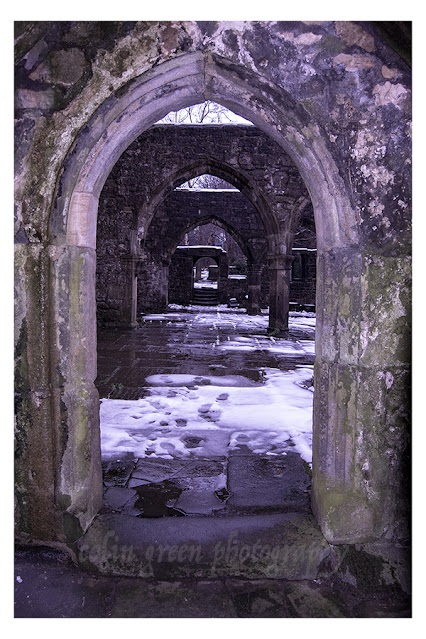
There's something uniquely captivating about ancient ruins, especially when they stand sentinel amidst the everyday. Tucked away in the picturesque village of Heptonstall, nestled in the Upper Calder Valley, are the hauntingly beautiful remains of the original Heptonstall Parish Church, also known as the Church of St. Thomas à Becket, or at times, The Chapel of St Thomas the Martyr. I had the privilege of capturing these atmospheric scenes on a snowy day, November 19th, 2016, with my Nikon D3300.

The images transport you to a place where history whispers from every crumbling stone and frost-kissed archway. You can almost feel the chill wind that must have swept through its open spaces for centuries.

Originally constructed sometime in the late 12th to early 13th Century, this venerable church was a vital hub, serving the communities of Heptonstall, Erringden, Langfield, Stansfield, and Wadsworth. Its priests, appointed and funded by the Vicar of Halifax, ministered to the people living west of Halifax, a testament to its significant role in the spiritual life of the region.

The church's long history wasn't without its dramatic moments. Around the turn of the 16th Century, it was even closed for a period due to the murder of a priest, reportedly after he performed an illicit marriage ceremony – a tale that adds a layer of intriguing mystery to its past. Over the centuries, the church saw numerous renovations and additions, undergoing significant changes in the 14th, 15th, 16th, and 17th centuries. In 1810, a new clock was installed, a detail that now connects it to its successor.

However, fate had a different plan for this ancient structure. In 1847, a devastating storm swept through, tearing off the roof, damaging the tower, and causing considerable havoc in the churchyard. The "church rate," a tax intended to support the parish church, simply wasn't enough to cover the extensive repairs needed.

Rather than restoring the damaged church, the community rallied together through voluntary subscriptions and built a brand new church right in the same churchyard, which officially opened its doors in 1854. This new church stands proudly beside its older, ruined counterpart, a poignant reminder of continuity and change.

Today, the ruins of the Church of St. Thomas à Becket remain, a majestic and poignant landmark. Walking through its snow-dusted nave, beneath its skeletal arches, is a truly evocative experience. It’s remarkable to think that occasionally, outdoor services are still held within these ancient walls, bringing new life to a place steeped in so much history.

These photographs capture the raw beauty and quiet dignity of the ruins, particularly striking against the winter snow. The interplay of light and shadow, the starkness of the stone against the white landscape, and the enduring strength of the remaining structure all tell a story of centuries past.

If you ever find yourself in Heptonstall, I highly recommend a visit to these incredible ruins. They are a powerful testament to time, resilience, and the enduring spirit of community.

Clicking any of the images below should open a link in another window to my Colin Green Photography store on Zazzle.


Please take a moment to share this post, follow me on social media, and explore my work on Clickasnap and Photo4Me using the links below. Your support means a lot!


All the pictures remain the copyright of Colin Green.

Friday, 22 March 2019

A Winter's Tale at Willow Hall Dam

Looking back a year, I'm reflecting on a set of pictures I captured at Willow Hall Dam in Sowerby Bridge. The winter of 2018 felt like it would never end, delivering snow and cold seemingly endlessly. Now, after a much milder UK winter, I can honestly say I have no nostalgia for how truly awful the weather was! It's funny how a few inches of snow can bring the entire country to a standstill, isn't it? We Brits do have a unique obsession with the weather, even when it's just a bit out of the ordinary.


More Than Just a Dam

Willow Hall Dam is actually two distinct bodies of water. The lower dam serves as a popular fishing lake, while the upper one, looking somewhat overgrown, primarily feeds it. I'm not entirely sure of the dam's original purpose, but with a number of now-vanished mills nearby, I'd hazard a guess it was once crucial for powering local industry.

Surrounded by woodland on three sides, the dam is a favourite spot for locals out walking their dogs. Dam Head Road runs directly across the top of the dam, with terraced housing flanking both sides of the dam head, adding to the picturesque, quintessentially British landscape.

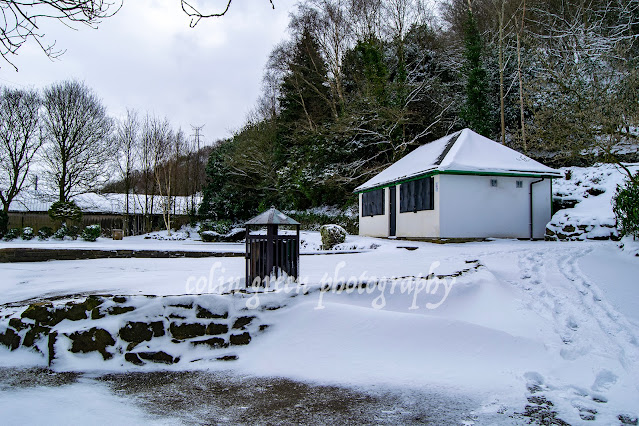
These particular photos were taken on the 18th of March, 2018, using my Nikon D3300 SLR camera. Despite the lingering winter chill, there's a certain beauty to the stark, snow-dusted scenery. It's a reminder of a winter that certainly made its mark, even if we're all happier with the milder weather this year!

Clicking any of the images below should open a link in another window to my Colin Green Photography store on Zazzle.


Please take a moment to share this post, follow me on social media, and explore my work on Photo4Me and Clickasnap using the links below. Your support means a lot!


All the pictures remain the copyright of Colin Green.

From Cooper Bridge to Brighouse on the Calder & Hebble

 The Calder & Hebble Navigation isn't just a stretch of water; it's a living timeline, carving its way through the heart of Wes...