Wednesday, 5 December 2018

A Gentle Giant Glides into Venice: An Unexpected Encounter with the MSC Lirica

The early morning air in Venice holds a unique kind of magic. On the 2nd of November, 2018, I found myself on the Riva degli Schiavoni, that iconic waterfront promenade stretching before the magnificent St. Mark's Square. My mission? To witness the legendary Venetian sunrise paint the city in hues of gold and rose. Alas, the capricious autumn skies had other plans, draping a soft blanket of cloud across the horizon.

While the sun remained stubbornly hidden, a different kind of spectacle began to unfold on the tranquil waters of the Venetian Lagoon. A hush fell over the early risers as a majestic form emerged in the distance – the unmistakable silhouette of a cruise ship. It was the MSC Lirica, gracefully making her way towards the heart of Venice, a floating city within a city.

Intrigued, I abandoned my sunrise vigil and instead focused my Nikon D3300 on this impressive arrival. The Lirica, a vessel that first graced the seas in 2003 at a cost of around $250 million, possesses a certain grandeur as she navigates these historic waterways. Capable of carrying up to 2,600 passengers, she's a testament to modern engineering against the timeless backdrop of Venice.

Watching her glide through the lagoon was a captivating experience. The gentle lapping of the water against her hull, the distant hum of her engines, and the sheer scale of the ship against the familiar landmarks of Venice created a striking juxtaposition. It sparked a sense of wonder, imagining the perspectives of the passengers on board as they approached this unique and enchanting city from the sea. Oh, how I wished I were on deck, capturing the intricate details of the Venetian skyline from that vantage point!

The MSC Lirica's journey into the port was a reminder of the constant interplay between Venice's rich history and its contemporary reality. While debates about the impact of large cruise ships on the delicate ecosystem and infrastructure of Venice continue, there's no denying the visual impact of these modern behemoths against the ancient stones.

This unexpected encounter transformed a cloudy morning into a memorable one. It served as a reminder that even when nature doesn't cooperate with our plans, there are always other wonders to behold, if only we remain open to them.

You can witness this gentle giant's arrival for yourself in the short video I captured that morning. It's available to view [here - insert your link] and also on my YouTube channel [insert your YouTube link]. I hope it offers you a glimpse into the unique beauty of Venice and the impressive sight of a cruise ship making its grand entrance.


Thanks for looking and you can follow me on Facebook, Flickr, Pinterest, Twitter, and Tumblr via the links in the sidebar. You can subscribe to my YouTube channel here. You can also follow my photo sharing on Clickasnap here. I have over a 1000 images to view there.

All links open in another window.

Whispers of Coal and Controversy, Walker Pit: Unearthing the Story of Miss Lister's Lost Mine

Imagine strolling through the verdant landscape of Shibden Park, the gentle incline of the path leading you upwards towards the panoramic vistas from Beacon Hill. As you walk, you might pass a curious, ornate structure – a seemingly out-of-place piece of architectural flourish amidst the natural beauty. This, my friends, is more than just an interesting relic; it's a silent testament to ambition, partnership, and a touch of Yorkshire grit. This is all that remains of a coal pit with a fascinating story, a pit quite literally paid for by the indomitable Anne Lister and named in honour of her beloved partner, Ann Walker.

Step back to 1835. Shibden Hall, the ancestral home of Anne Lister, needed fuel for its hearths and industry. To meet this demand, the resourceful "Gentleman Jack" commissioned John Mann to dig a pit, strategically located to serve both the Hall and the burgeoning community nearby. This wasn't just any excavation; it was a venture spearheaded by a woman of vision, a woman who dared to engage in the traditionally male-dominated world of industry.

The pit, affectionately (or perhaps with a hint of knowing respect) known as "Miss Lister's Mine," was a tangible symbol of Anne and Ann's life together, a shared enterprise rooted in practicality and perhaps even a touch of shared ambition. It speaks volumes about their partnership, a bond that defied societal norms and extended into the economic realities of their lives.

However, the story of Miss Lister's Mine wasn't without its drama. The competitive world of coal mining in the 19th century often led to friction, and our intrepid landowner found herself embroiled in a dispute with a neighbouring colliery owner, the formidable Christopher Rawson. We can only imagine the spirited exchanges and perhaps even the legal wrangling that ensued as these two strong personalities clashed over resources and territory beneath the Yorkshire soil.

Today, the bustling activity of the mine is long gone. The dark seams of coal have been exhausted, the clanging of tools silenced. Yet, the elegant ventilation shaft stands as a poignant reminder of this industrious past. Its ornate design, perhaps a reflection of Anne Lister's own refined tastes, hints at a level of care and even pride in this venture. It's a beautiful anomaly in the landscape, a whisper of a time when the ground beneath our feet was a source of energy and contention.

So, the next time you find yourself traversing that path from Shibden Park to Beacon Hill, take a moment to pause at this intriguing structure. Let your imagination conjure the scene: the busy workers, the carts laden with coal, the determined figure of Anne Lister overseeing her enterprise, and the quiet support of Ann Walker. This isn't just a walk through picturesque scenery; it's a journey through history, a tangible link to the remarkable lives and enduring legacy of the women who once shaped this very landscape. It's a reminder that even in the quietest corners of our world, fascinating stories lie waiting to be unearthed.


The first set shown below was taken on the 1st June 2014 using a Polaroid is2132 bridge camera. 


On this occasion i'd never heard of Walker pit and thought that the tower was part of the ventilation for the Beacon Hill railway tunnel that runs beneath the ground here.

I was passing by again in August 2018 and took the following pictures of the tower, it was largely covered by the hedges that run alongside the path at this time. The tower itself is on private land and I understand the landowner would rather have people keep away from it, which is understandable.


Thanks for looking and please take a moment to share and follow me on social media.

All the images remain the copyright of Colin Green.

Monday, 26 November 2018

Settle: More Than Just a Stop on the Iconic Carlisle Line

Settle Railway Station. The very name conjures images of windswept Yorkshire Dales, the rhythmic chug of a diesel engine, and the promise of adventure along one of Britain's most celebrated railway lines – the Settle to Carlisle. But this unassuming station, nestled approximately a mile west of the charming market town of Settle, holds a history far more intriguing than its present-day modest appearance might suggest.

For those who simply see it as a convenient gateway to the Dales, it's worth knowing that Settle Station is actually the second to bear that name. The original "Settle" station, which opened its doors way back in 1849, is the very stop we now know as Giggleswick. Imagine the confusion for early travellers! It wasn't until May 1st, 1876, that our current Settle station came into being, initially grandly christened "Settle New Station." The original then became "Settle Old" before finally settling on the name Giggleswick in November 1877 – the same moment "New" was quietly dropped from Settle's title. A little bit of railway renaming trivia to impress your fellow passengers!

While the hustle and bustle of a major city station is absent here, Settle retains a certain charm. Staffed part-time, it offers a glimpse into a more traditional era of rail travel. And speaking of tradition, the connection between the platforms has its own fascinating tale. For years, passengers and porters alike relied on a simple barrow crossing at the northern end. But in 1993, progress arrived in an unexpected form. A bridge, made redundant by the electrification of the line at Drem Railway Station in East Lothian, was carefully dismantled and reassembled here in Settle. It's a testament to resourceful engineering, and as the author rightly notes, it blends in so seamlessly, you'd be forgiven for thinking it had stood there since the station's inception. Interestingly, the old barrow crossing still sees occasional use by station staff and wheelchair users, a tangible link to the station's past.

The historical significance of Settle Station hasn't gone unnoticed. In March 1984, it proudly gained Grade II listed status, recognizing its architectural and historical importance. Adding another layer to this historical tapestry is the beautifully restored signal box. Although it ceased operation in 1984, the dedicated efforts of the Friends of the Settle - Carlisle line have brought it back to its former glory, a silent sentinel overlooking the tracks.

These glimpses into Settle Station's past were captured on a sunny August day in 2016, through the lens of a Nikon D3300 SLR camera. These images likely tell their own story, freezing moments in time at a station that has witnessed generations of travellers embarking on their Dales adventures.

So, the next time you find yourself waiting on the platform at Settle, take a moment to appreciate the layers of history beneath your feet. It's more than just a stop; it's a living testament to the enduring legacy of the Settle to Carlisle Railway and a charming piece of Yorkshire's railway heritage.


Thanks for looking, please take a moment to share and follow me on social media.

All the pictures remain the copyright of Colin Green.

Thursday, 22 November 2018

Cross Stone (St Pauls) Church, Todmorden.

The Calder Valley, a ribbon of green winding through the heart of West Yorkshire, holds its secrets close. Amongst its picturesque towns and alongside the tranquil flow of the Rochdale Canal, I'd often glimpsed a solitary silhouette perched high above Todmorden. This was Cross Stone Church, also known as St Paul's, a place that had long piqued my curiosity. Little did I know, the story held within its weathered stones was far more captivating than its distant view suggested.

Finally, on a crisp April day in 2017, armed with my trusty Nikon D3300, I made the climb. What I found wasn't a bustling place of worship, but a silent sentinel, a defunct church with a history etched into its very fabric. Built in 1832, St Paul's wasn't the first sacred space to grace this commanding spot. For centuries before, since at least 1450, earlier churches had stood watch over the valley, their stories now layered beneath the current structure like geological strata.

The year 1978 marked a poignant turning point. Declared unsafe, the church was abandoned, the ominous whisper of it "sliding down the hill" sealing its fate as a place of active worship. This sense of precariousness only added to the air of mystery that clung to the site.

But the history of Cross Stone Church extends beyond its structural woes. Imagine a time when Todmorden was a town divided, straddling the ancient border between Yorkshire and Lancashire. Perched on its hilltop, St Paul's served the spiritual needs of the Yorkshire community, while St Mary's catered to their Lancashire neighbours. The boundary changes of 1888 unified the town under the White Rose of Yorkshire, yet the legacy of this division lingers in the stories of these two churches.

As I wandered the grounds, the silence was broken only by the rustling of leaves and the distant murmur of the valley below. It was then that I noticed the curious details that hinted at the church's long and varied past. And then there were the lower walls, where a certain "spooky setting" did indeed prevail, the weathered stone hinting at tales untold.

Perhaps the most intriguing discovery was tucked away on the east wall: a set of ancient stocks, now embraced by the untamed beauty of a wild garden. These silent restraints spoke of a time when public punishment was a visible part of community life, a stark reminder of the social structures of centuries past. To see them now, softened by moss and surrounded by wildflowers, was a powerful juxtaposition of harsh history and gentle nature.

My long-awaited visit to Cross Stone Church wasn't the vibrant exploration of a living parish I had perhaps naively envisioned. Instead, it was a journey into the quiet dignity of a forgotten place, a poignant encounter with history etched in stone and whispered on the wind. It served as a powerful reminder that even in abandonment, places hold their stories, waiting for a curious eye and an open heart to listen. The view from the hilltop, overlooking Todmorden and the valley beyond, was breath taking, but the true beauty lay in the silent testament of Cross Stone Church, a steadfast landmark bearing witness to centuries of change.


Thanks for looking, please take a moment to share and follow me on social media.

All the pictures remain the copyright of Colin Green.

Tuesday, 20 November 2018

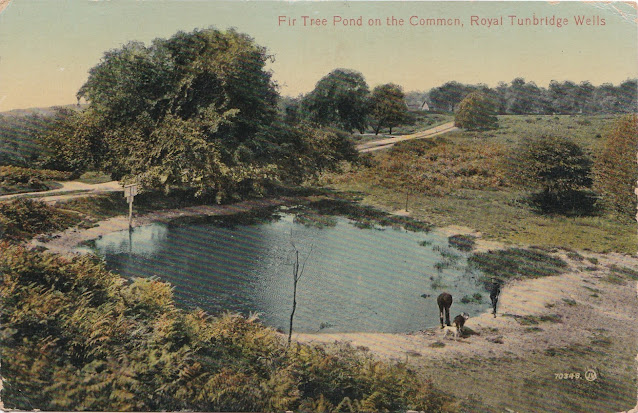
Postcard's fom the Past. Fir Tree Pond, Royal Tunbridge Wells, Kent.

Our final glimpse into the past today takes us to the serene waters of Fir Tree Pond, nestled on the common in the elegant Royal Tunbridge Wells. This isn't just any picture postcard; it's a tangible link to a summer day over a century ago, a fleeting moment captured in ink and paper.

Imagine holding this very card, its edges softened by time and handling. It bears the indelible mark of its journey through the postal system: a clear postmark dated 3rd July 1913. Think of the world as it was then, just a year before the outbreak of the Great War, a world powered by horses and early automobiles, where communication relied on the steady rhythm of the postal service.

Affixed to the back is a humble yet significant detail: a King George V half penny green stamp. This small piece of adhesive paper, bearing the profile of the reigning monarch, speaks volumes about the era. It's a tiny window into the visual language and currency of the time.

This particular postcard wasn't merely a scenic view; it served its intended purpose. It was posted, embarking on a journey from the genteel surroundings of Royal Tunbridge Wells to a Miss Ratcliffe residing at 4 Market Street, Nottingham. One can almost picture the postman, perhaps on a bicycle, delivering this small piece of news.

And what news did it carry? Here, the story becomes a little more enigmatic. The handwritten message, faded and perhaps smudged over the years, proved a challenge to decipher. Yet, through the veil of time, fragments emerge. A polite acknowledgment: "thanks for a previous letter". This simple phrase hints at an ongoing correspondence, a connection between two individuals separated by distance.

Then, a universal observation, one that transcends time and place: "the weather was raining". A quintessential British summer's day, it seems, even in 1913! This small detail grounds the image, making the scene feel more real, more relatable. We can almost feel the dampness in the air, see the raindrops dimpling the surface of Fir Tree Pond.

Who was the sender? What were the contents of that "previous letter"? What were Miss Ratcliffe's thoughts upon receiving this damp missive? These are the silent questions that echo from this small piece of ephemera.

This postcard of Fir Tree Pond is more than just a pretty picture. It's a snapshot of a specific moment in time, carrying echoes of human connection and the everyday realities of life over a hundred years ago. It reminds us that even the simplest of objects can hold fascinating stories, waiting to be pieced together from the faint whispers of the past.


Thanks for looking, please take a moment to share and follow me on social media.