Showing posts with label Abandoned. Show all posts

Friday, 12 September 2025

The Subterranean Secret of Holmfield: A Glimpse into Queensbury Tunnel

Deep within the verdant landscape near Holmfield, a submerged secret lies hidden beneath a seemingly ordinary field. The Queensbury Tunnel, a monumental relic of Victorian engineering, is a testament to the ambition of the railway age and a captivating glimpse into a world now lost to time and water. These photographs, captured in July 2015, offer a rare and fascinating look at a section of this extraordinary structure, revealing both its forgotten surface features and its silent, waterlogged entrance.


The first image captures a curious concrete disc, a solitary manhole cover in the middle of a sun-drenched, grassy field. The long grass sways around it, creating a natural camouflage that would easily allow it to go unnoticed by the casual observer. This disc is no ordinary cover; it's a cap over one of the tunnel's ventilation shafts. These shafts were a vital part of the tunnel's design, providing much-needed air and allowing smoke from the steam locomotives to escape. In its quiet existence, this concrete cap is a powerful symbol of the colossal effort that went into building this tunnel. It speaks of a deep, unseen world, a world of iron and steam, that lies directly below. It’s a literal and figurative lid on history, hinting at a vast, dark space that has been sealed off from the world above for decades.


The other two images transport us to a different scene, one of profound stillness and mystery. Here, the tunnel's entrance is not a grand, arched portal but a tranquil, flooded chasm. The water, a striking shade of turquoise, reflects the sky and the surrounding foliage, creating a deceptive sense of serenity. Looking closer, we see the remnants of the tunnel's mouth. Two rusty pipes, possibly part of a former drainage system, emerge from the brickwork, their corroded ends facing the glassy water. The brick lining, discoloured and weathered by time, forms the backdrop to this aquatic scene. The water level is high, completely obscuring the track bed and swallowing the entrance in a liquid embrace.

These two photographs, seemingly identical but for the subtle shifts in light and reflection, capture a moment of perfect stasis. The tunnel is no longer a path for roaring trains but a calm, silent pool, a final resting place for its industrial past. The small trees and shrubs that have taken root around the entrance are a powerful symbol of nature's relentless reclamation. They are weaving themselves into the man-made structure, blurring the line between the natural world and the engineering marvel that once existed here. The reflection in the water adds a ghostly dimension, mirroring the overgrown surroundings and creating an ethereal portrait of a place in transition.

Together, these images paint a compelling picture of the Queensbury Tunnel at Holmfield. The concrete disc in the field and the flooded entrance at the hillside's edge are two sides of the same coin—one represents the hidden infrastructure on the surface, while the other reveals the silent, submerged reality of the tunnel itself. They are not merely pictures of a forgotten place but an invitation to contemplate the passage of time, the power of nature, and the fascinating stories that lie just beneath our feet. The Queensbury Tunnel, in its quiet, waterlogged state, continues to hold its secrets, inspiring a sense of wonder and curiosity about a remarkable chapter in our industrial heritage.

I took these pictures with a Polaroid is2132 camera on the 5th July 2015, clicking any of them should open a link in another window to my Colin Green Photography store on Zazzle.

Please take a moment to share this post, follow me on social media, and explore my work on Clickasnap and Photo4Me using the links below. Your support means a lot!


All the pictures remain the copyright of Colin Green.

Monday, 28 July 2025

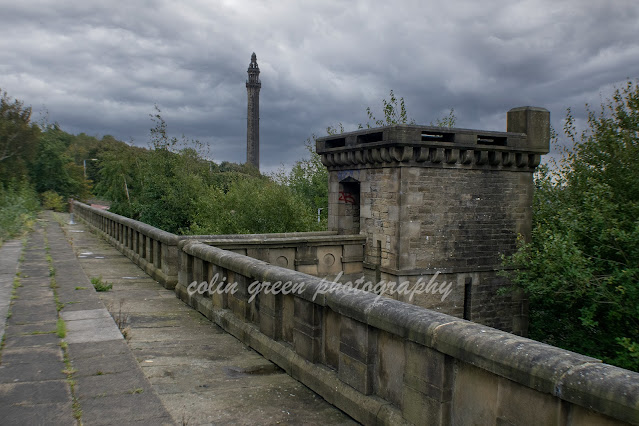
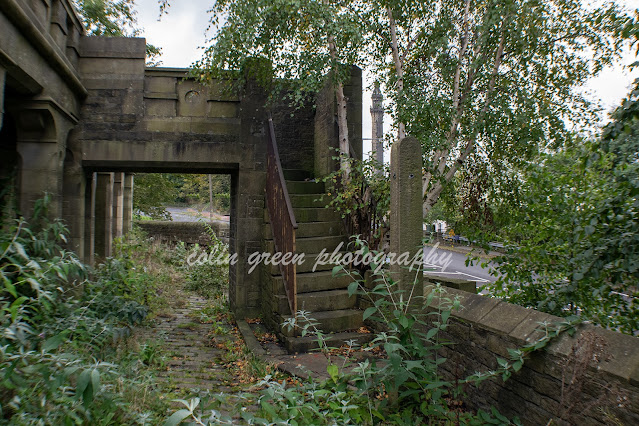
Echoes in Stone: Exploring the Forgotten Beauty of Wainhouse Terrace

 There are places that whisper stories of the past, their stones imbued with the echoes of lives lived and forgotten. Wainhouse Terrace in King Cross, Halifax, is one such place. Tucked away near the impressive Wainhouse Tower, this intriguing structure, often overlooked, offers a captivating glimpse into Victorian ambition and nature's relentless embrace.

Walking along what was once a grand promenade, you can't help but feel a sense of serene melancholy. The sturdy stone walls, once meticulously maintained, now bear the marks of time and weather. Overgrown pathways, with creeping vines and wild grasses reclaiming the carefully laid bricks, lead you deeper into its forgotten corridors. Sunlight filters through the leafy canopy, casting dappled shadows on decaying facades and hinting at the structure's former glory.

The architectural details are still striking – the robust columns, arched doorways, and intricate stonework speak of a time when craftsmanship was paramount. Yet, juxtaposed against this solid construction is the pervasive sense of decay. Broken flagstones lie scattered, testament to the years of neglect. Staircases, some spiralling into hidden depths, beckon the curious, while others lead to nowhere, their purpose long since lost to the overgrowth.

Perhaps the most poignant aspect is the way nature has intertwined itself with the man-made. Trees sprout from unexpected crevices, their roots slowly but surely asserting their dominance. Greenery cascades over walls and through empty window frames, transforming the rigid lines of the architecture into a softer, wilder landscape. It's a powerful reminder of nature's ability to reclaim, to soften edges, and to eventually, gracefully consume.

Even with its current state of disrepair, Wainhouse Terrace holds a unique allure for those drawn to urban exploration, forgotten places, and the beauty of decay. It’s a photographer's dream, with its dramatic contrasts of light and shadow, the starkness of stone against the vibrancy of green. And in the distance, often peering through the trees, the iconic Wainhouse Tower stands as a stoic sentinel, a silent witness to the passage of time and the changing fortunes of its smaller, more intimate neighbour.

Wainhouse Terrace isn't just a collection of old buildings; it's a testament to history, a canvas for nature's artistry, and a place that invites contemplation about the transient nature of human endeavours. If you find yourself in Halifax, venture off the beaten path and discover the quiet, captivating beauty of this forgotten gem. You might just find yourself lost in its echoes, and all the richer for the experience.

I took these pictures on the 3rd October 2017 with a Nikon d3300, clicking on any of them should open a link in another window to my Colin Green Photography store on Zazzle.


Please take a moment to share this post, follow me on social media, and explore my work on Clickasnap and Photo4Me using the links below. Your support means a lot!


All the pictures remain the copyright of Colin Green.

Sunday, 28 July 2024

The Duke of Lancaster: North Wales' Ghost Ship

There's something undeniably captivating about a ship stranded on land. It's a scene straight out of a maritime fantasy, a relic of the past frozen in time. And in the heart of North Wales, there's a perfect example of this: the Duke of Lancaster.

Once a proud passenger ferry, the Duke of Lancaster now rests on the banks of the River Dee, a silent sentinel on the Welsh coastline. Beached in 1979 with grand plans to become a floating leisure complex, the ship's destiny took a different course. Legal battles and financial woes halted the project, leaving the vessel abandoned and decaying.

Despite its forlorn state, the Duke of Lancaster has an undeniable allure. Its imposing silhouette against the Welsh sky is a striking image, and it has become a local landmark, drawing curious visitors and photographers alike. The ship is a time capsule, a tangible link to a bygone era of ocean liners and grand voyages.

While the ship's future remains uncertain, one thing is clear: it has captured the imagination of the public. Countless stories and legends surround the Duke of Lancaster, adding to its mystique. Some say it's haunted, others believe it's a symbol of lost dreams and unfulfilled potential.

Whether you're a history buff, a photography enthusiast, or simply someone who appreciates the unusual, the Duke of Lancaster is a must-see. It's a reminder that even in the face of adversity, there's beauty to be found in the unexpected.

The pictures below were taken from the North Wales Coast walk, the path running around the Lancaster's berth, which is where I took these pictures from, the site clearly guarded against unwelcome visitors. I respected this and kept to the path, they were taken on the 27th July 2024 with a Nikon d3300. Clicking any of them should open a link in another window to my Colin Green Photography store on Zazzle.


Please take a moment to share this post, follow me on social media, and explore my work on Clickasnap and Photo4Me using the links below. Your support means a lot!


All the images remain the copyright of Colin Green.

Thursday, 21 September 2023

A Winter Walk Along the Spen Valley Greenway: From the M62 to Cleckheaton

The Spen Valley Greenway, a linear park stretching for roughly 8 miles across West Yorkshire, offers a unique blend of nature, history, and urban convenience. It follows the former route of the Spen Valley Railway, a line that once connected Low Moor to Ravensthorpe. Having already explored the section from Low Moor to the M62, I recently ventured out on a crisp December day to walk the next stretch: from the motorway bridge to the old site of Cleckheaton Central Railway Station. The journey proved to be a quiet, reflective ramble through a landscape transformed.


A Ghost of a Railway

The Spen Valley Railway, originally known as the Mirfield and Low Moor Railway, was a vital artery for the region. It first opened in 1848, with a branch line added a year later. At its peak, it served eight stations, connecting bustling towns like Cleckheaton, Liversedge, and Heckmondwike. Passenger services ceased in 1965, a casualty of the Beeching cuts, and freight traffic ended in the late 1980s. The track bed, left to nature, became a linear wilderness until Sustrans acquired it in 1998, transforming it into the greenway we know today.

As you walk this section, the history of the line is ever-present. You pass beneath a series of bridges—some rust-stained steel girders, others crafted from brick or stone—that once carried roads and people over the railway. These structures, including the one at Whitcliffe Road, are a powerful reminder of the route’s industrial past, now softened by time and greenery. Occasional remnants of the railway, like old sleepers and signal posts, are still visible if you look closely, adding to the feeling of walking through a living museum.


From M62 to Cleckheaton Central

Starting just north of the colossal M62 bridge, the path narrows and the air grows quiet. This initial stretch feels more enclosed, with thickets of trees and undergrowth creating a natural tunnel. Graffiti-covered concrete walls flank the path, a modern counterpoint to the area's history. As you proceed, the path gently meanders, and the sound of traffic fades into the background.

The walk is surprisingly flat, a testament to the engineering of the original railway. The route's gentle curves take you past open fields and through wooded sections where the winter sun casts long shadows across the gravel track. It’s here you can appreciate the work that went into converting the overgrown trackbed into a smooth, accessible route for cyclists and walkers. You'll see locals out for a stroll or a bike ride, proving the greenway's success as a community resource. Before you know it, you arrive at the former site of Cleckheaton Central Railway Station. There's no grand station building here anymore; instead, you find a paved platform area with benches and railings. It's a poignant space, as if the ghosts of commuters and steam trains still linger. Adjacent to the site is a large supermarket, a stark symbol of how the landscape has evolved. The railway has been replaced by a new form of commerce, but the greenway ensures the corridor itself remains a vital link for the community.


The Future of the Line

It’s interesting to note that there are ongoing discussions about reopening parts of the line. With a population of over 50,000 people along the Spen Valley route and limited rail access, both heavy and light rail proposals are being considered. Walking the greenway, it’s easy to see the potential. The track bed is largely clear and unbuilt upon, offering a tantalizing glimpse of what a restored rail service could be. It's a testament to the foresight of those who preserved this route that such a conversation is even possible.

For now, the Spen Valley Greenway stands as a perfect example of repurposing. It’s a route for commuters, a place for exercise, a corridor for nature, and a living piece of history all in one. Whether you’re a local or just passing through, it's a fantastic way to spend a few hours, connecting with the past while enjoying the present.

Clicking any of the images below should open a link in another window to my Colin Green Photography store on Zazzle.

The M62 Chain Bar Railway Bridge, pictured from the north (Low Moor) side. The line closed here whilst the M62 was constructed, this stretch of track remained open until 1981 as far south as Heckmondwike.

The southern end of the M62 Chain Bar Bridge. Laithe Hill Footbridge can be seen a sort distance down the cutting.

Laithe Hill Bridge.

Whitechapel Road Bridge,

A row of railway sleepers to the north of Cleckheaton, I'm guessing these were placed here as a nod to the greenways railway heritage.


The Spen Valley Greenway on a slight climb up to Whitcliffe Road Bridge. The line started to pen up just beyond the bridge to enter Cleckheaton Central Station and goods yard.

Whitcliffe Road Bridge from the opposite side.

The former trackbed away from Whitcliffe Road Bridge in the direction Cleckheaton Central Station.


The previous 2 pictures show the site of Cleckheaton Central Railway Station, the goods yard was off to the right of the picture and is now a Tesco Supermarket.

The former Cleckheaton Central Railway Station, which first welcomed passengers in 1847, met an untimely end in June 1965, a casualty of the infamous Beeching cuts. While goods traffic continued for a few more years, ceasing in May 1969, the station itself seemed to be on a clear path to demolition. But the story of its end took a truly bizarre and unexpected turn.

In a tale that sounds like something from a mystery novel, British Rail's demolition crew arrived at the site in August 1971, only to find nothing but an empty plot. The station had vanished. It turns out, a different contractor had already "cleared" the site over three weeks, a job for which they were never paid.

This remarkable incident led to a court case in 1972 at Wakefield Crown Court, where a contractor was accused of stealing the station—or, more accurately, its stone, timber, and metal fittings. He claimed he had been hired by an untraceable third party, a story the court believed. He was found not guilty, a victim of a very unusual scam that left him out of pocket but free of a criminal record.

To this day, the case of Cleckheaton Central remains a unique footnote in British history: the only time a railway station was stolen. It's a fittingly strange end for a piece of industrial heritage that has been so beautifully repurposed into the Spen Valley Greenway.

Please take a moment to share this post, follow me on social media, and explore my work on Clickasnap and Photo4Me using the links below. Your support means a lot!


All the images remain the copyright of Colin Green.

Sunday, 13 August 2023

A Glimpse into the Past: Old Lane Mill's Enduring Legacy

 Towering over Ovenden, Old Lane Mill stands as a powerful, silent witness to the industrial revolution that forged the identity of Halifax. Built in 1825, this mill is more than just an old building; it is a vital piece of history—the oldest surviving multi-storey, steam-powered, iron-framed textile mill in Halifax, and quite possibly, the entire UK.


A Monument to Innovation

The mill was the brainchild of James Akroyd, a true visionary who was unafraid to embrace new technology. He incorporated ground breaking features for the time, including an iron frame and stone floors, which were essential to support the massive weight of the Jacquard looms he installed just two years after the mill's construction in 1827. These looms were the very first of their kind in Britain, and their arrival at Old Lane Mill marked a significant leap forward in textile production.

Despite its innovative, "fireproof" design, the mill was not invincible. A large fire tore through the building in 1905, causing extensive damage. Yet, the mill persevered, changing hands and purposes throughout the 20th century, even becoming part of the larger Dean Clough Mill complex.


The Mill Today

Today, Old Lane Mill stands in a state of dereliction, its empty shell a haunting reminder of a bygone era. The ravages of time and vandalism are evident, but the building still whispers stories of its past. The stripped-out machinery and the distinctive features of the large engine house offer a compelling glimpse into the heart of what was once a thriving, bustling hub of industry.

The future of Old Lane Mill is uncertain, with its historical significance making it a subject of ongoing preservation efforts. Whether it will be lovingly restored or repurposed for a new life, the mill undoubtedly deserves to be cherished as an integral piece of Halifax's textile heritage.

Please note: The building is in an unsafe state. It is not recommended to enter or explore Old Lane Mill. The exterior photos featured in this post were taken from a safe, ground-level position. For a look inside, you can find excellent videos and photos from urban explorers online.

I was in the area on the 15th April 2015 and visited the mill. The pictures were taken using a polaroid is2132 bridge camera, clicking on any of them should open a link in another window to my Colin Green Photography store on Zazzle.


Please take a moment to share this post, follow me on social media, and explore my work on Clickasnap and Phot4Me using the links below. Your support means a lot!


All the pictures remain the copyright of Colin Green.

Sunday, 4 June 2023

A Forgotten Farmhouse: A Walk Along the Calder and Hebble Navigation

Sometimes the best discoveries are made by accident. While walking from Cooper Bridge to Brighouse, tracing a route along the scenic Calder and Hebble Navigation, I stumbled upon a building that time seems to have left behind. Tucked away on a track that crosses the railway, I found this abandoned farmhouse, a poignant and beautiful relic of a forgotten past.

With the gates clearly locked, I didn't want to trespass. Instead, I stood on the track and took these pictures from a distance, capturing the building's quiet dignity. The stone walls and weathered roof told a story of a life that once thrived here, now replaced by an eerie silence. The building stands in a state of decay, with broken windows and overgrown foliage hinting at the years of neglect.

Despite its condition, the farmhouse retains a powerful, melancholic beauty. It's a reminder of a time before the railway and the canal dominated the landscape, when this place was a home, a farm, a living part of the countryside. This unexpected find was a highlight of my walk, a chance encounter with a piece of local history that invites you to wonder about the people who once lived and worked here.

These photos, taken in May 2023, capture the essence of this solitary building, a peaceful and compelling monument to the passage of time.

Clicking any of the images below should open a link in another window to my Colin Green Photography store on Zazzle.


Please take a moment to share this post, follow me on social media, and explore my work on Clickasnap and Photo4Me using the links below. Your support means a lot!


All the pictures remain the copyright of Colin Green.

Uncovering the Urban Wild: A Stroll Along a Stretch of Halifax's Hebble Trail

There’s a unique charm in finding pockets of forgotten beauty amidst the urban sprawl. On June 13th, 2015, armed with a Polaroid is2132 came...