Showing posts with label Rural. Show all posts

Saturday, 3 December 2022

The Charm of Castleton Moor Railway Station

In an age of bustling, modern transport hubs, there's a unique and quiet beauty to a place like Castleton Moor Railway Station. Tucked away on the scenic Esk Valley Line, this stop in North Yorkshire feels like a step back in time. It’s a place where the journey is as much about the destination as the space in between.

Castleton Moor, which connects Middlesbrough with the coastal town of Whitby, has a history that stretches back over 160 years. Opened on April 1, 1861, as simply "Castleton," the station was once a much busier place. Originally, it was a two-platform station with a passing loop, complete with a signal box and a goods warehouse. But like many small stations across the UK, its facilities were streamlined over the years, with these features being removed in the early 1980s. The station was renamed Castleton Moor in March 1965, a subtle change that reflects its quiet, moorland surroundings.

Today, the station retains a charming simplicity. Its main building, a handsome stone structure with classic Victorian railway architecture, is no longer a ticket office or waiting room. It has been beautifully converted into a private residence, watched over by a row of traditional chimney pots. This transformation adds to the station's unique character, creating a sense of a living, breathing history.

For the traveler, the station offers a peaceful waiting experience. A basic shelter, information boards, and a ticket machine are all that's needed here. This low-key functionality is a far cry from the crowded stations of major cities and is a key part of its appeal.

The numbers tell a story of a station serving its local community. With 4,732 passengers in the last full year of recorded stats, the station sees an average of around 91 people a week. It's a modest but vital link for the village, with 11 trains per day—five heading towards the dramatic coast at Whitby and six making the journey towards Middlesbrough.

These photos, taken on a sunny day in August 2022, capture the station's tranquillity perfectly. The bright blue sky, the meticulously maintained buildings, and the lush greenery and wildflowers growing along the tracks all contribute to its picturesque charm. Castleton Moor Railway Station is a beautiful reminder that sometimes, the most interesting stories are found not in grand, sweeping gestures, but in the quiet, enduring places that connect us to the past.


Clicking any picture should open a link in another window to my Colin Green Photography store on Zazzle.

Please take a moment to share this post, follow me on social media, and explore my work on Clickasnap and Photo4Me using the links below. Your support means a lot!


All the pictures remain the copyright of Colin Green.

Saturday, 24 September 2022

Baitings Reservoir at Low Water

On September 24th, 2022, a remarkable sight awaited visitors to Baitings Reservoir—a place where history, normally hidden beneath millions of gallons of water, was laid bare for all to see. These photographs, taken on that very day with a Nikon D3300, document an extraordinary moment when the reservoir's water levels dropped to a near-historic low, revealing long-submerged secrets of the valley.

A Monument to Engineering

Baitings Reservoir, completed in 1956, is an impressive feat of civil engineering. Built to supply fresh water to the city of Wakefield, it's the higher of two dams that harness the flow of the River Ryburn in this scenic part of Yorkshire. The lower dam, Ryburn Dam, was constructed earlier in 1933. The creation of Baitings was an immense undertaking, costing approximately £1.4 million and taking 8 years to complete.

The project transformed the landscape, intentionally flooding a small hamlet known as Baitings. Perhaps the most poignant part of this history is the submersion of a centuries-old packhorse bridge—a vital road link that once connected Lancashire and Yorkshire. This historic bridge, normally lost to view, becomes a stark and beautiful reminder of the past whenever the reservoir's water levels fall. The photographs show the old stone bridge, its arch still perfectly intact, exposed by the receding water. It stands as a testament to the village that was sacrificed for progress. The modern, concrete Back O'th Heights Bridge stands high above the exposed valley floor, a powerful visual cue of the reservoir's immense depth when it's at full capacity. At its highest, the dam holds over 113,000,000 cubic feet of water, or about 703,858,407 gallons.

The River Ryburn's Journey

Baitings Reservoir is a crucial part of the local water system. It's fed by runoff from the surrounding moorland and serves as the official start of the River Ryburn. The river flows six miles down the valley, passing the lower Ryburn Dam and eventually joining the River Calder at Sowerby Bridge. The photographs show the river's path through the exposed reservoir bed, a serpentine channel carved into the dried mud.

The exceptionally low water level in September 2022 revealed another fascinating piece of infrastructure: a sluice gate near the dam head. It's a structure that predates the reservoir itself, likely used to regulate the flow of water into the Ryburn Dam before Baitings was even built. This low water level also sparked a question: would an old footpath bridge, once located between the sluice gate and the dam, be revealed? While the water hadn't dropped quite enough on that day, it hinted at more hidden history waiting to be discovered.

The images offer a unique perspective, capturing not just the dam and bridges but also the powerful, arid landscape left behind. A photograph from the dam's spillway looks down into the channel below, showcasing the engineering that controls the water's release. Another shot provides a beautiful view of the lush, rolling green hills of the Ryburn Valley, a stunning contrast to the cracked, desolate reservoir bed. These pictures are a stark visual representation of the effects of low rainfall and a poignant reminder of the hidden history that lies beneath the surface of our landscapes.

Clicking any of the images below should open a link in another window to my Colin Green Photography store on Zazzle.


The packhorse bridge appearing from beneath the water has gone from a once in decade or so event to every couple of years.

Whilst it's likely that levels have been low enough before for the original dam and sluice gate to appear, this was the first time I had seen them.


The original packhorse bridge, often submerged seen through the legs of it's modern replacement.


Please take a moment to share this post, follow me on social media, and explore my work on Clickasnap and Photo4Me using the links below. Your support means a lot!


All the images remain the copyright of Colin Green.

Sunday, 18 September 2022

A Stone Sanctuary in the Moors: Our Lady of the Sacred Heart, Lealholm

Nestled in the picturesque North York Moors, the village of Lealholm holds a quiet treasure: Our Lady of the Sacred Heart Church. While many ancient churches dot the English landscape, this small Catholic church has a more modern, yet no less significant, story. It stands not as a remnant of medieval times, but as a testament to the faith and determination of a dedicated local community in the early 20th century.

The church's story began with a simple need for a permanent place of worship. Until the 1930s, the local Catholic community had no church of their own, but their faith was strong. Through persistent fundraising efforts, they gathered the necessary funds to build a modest, yet beautiful, church. Their hard work came to fruition when Bishop Shine laid the foundation stone in September 1931. Just a year later, in 1932, the doors of Our Lady of the Sacred Heart were opened to the public.

What makes this church so compelling is its architecture. Built of local stone, it blends seamlessly with the rugged, rolling landscape of the moors. The design is simple and elegant, featuring a gabled roof and arched windows that evoke a sense of timelessness. The stepped buttresses on the front facade and the cross on the roof are subtle but powerful architectural details.

The building is not just a place for worship; it is a spiritual anchor for the rural community of Lealholm. The graveyard surrounding the church, visible in the pictures, is a quiet space of reflection. The small stone walls and gated entrance complete the picture of a peaceful sanctuary, a place of peace and continuity in a changing world. Our Lady of the Sacred Heart, Lealholm, is a powerful example of how faith and community can build a lasting legacy. It is a modern church with a timeless feel, serving as a reminder that even in an era of rapid change, some things—like faith and community spirit—remain constant.

These 3 pictures were taken on the 27th August 2022 using a Nikon d3300 SLR camera, clicking any of them should open a link in another window to my Colin Green Photography store on Zazzle.


Please take a moment to share this post, follow me on social media, and explore my work on Clickasnap and Photo4Me using the links below. Your support means a lot!


All the pictures remain the copyright of Colin Green.

Monday, 29 August 2022

A Snapshot of Village Life: Lealholm Post Office & Service Station

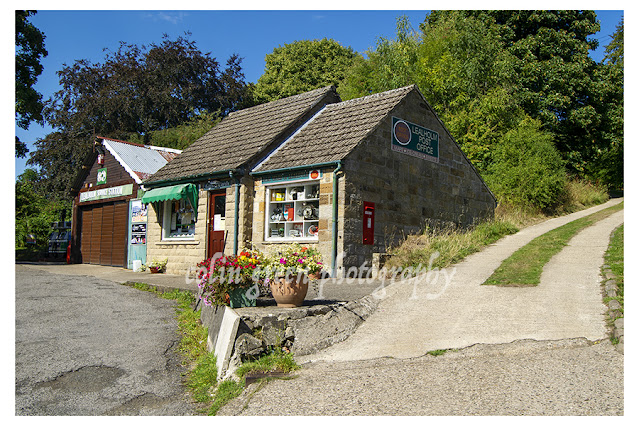
Lealholm is a village that seems to exist at its own pace, a peaceful hamlet nestled in the heart of the Esk Valley. On a sunny day in August 2022, I found myself exploring this tranquil corner of North Yorkshire, having just visited the quaint Lealholm Railway Station. As I walked back towards the village centre, I stumbled upon a truly charming sight: the Lealholm Post Office and Service Station.

What immediately caught my eye was how a seemingly ordinary stone house had been transformed into what is undoubtedly a central hub for the local community. It’s a place that feels as if it has grown organically from the landscape, serving the needs of the village's approximately 380 residents and the surrounding rural communities.

The photographs, taken with my Nikon D3300 SLR camera, capture the essence of this little building. There's a certain timeless quality to it. The stone exterior, the traditional roof tiles, and the potted flowers by the front door all contribute to a sense of warmth and welcome. The vibrant red of the post box stands out against the muted tones of the stone, a small but powerful symbol of connection.

This place isn't just a post office; it's a vital service station as well, a testament to its role in a rural area where such amenities are a lifeline. In a world of digital communication and big-box stores, there's something incredibly reassuring about seeing a place that combines these essential services under one roof. It speaks to a way of life that values convenience and community in equal measure.

The art-style versions of the photograph, with their textured, painterly effect, add another layer of charm. They transform the scene into something more than just a snapshot; they make it feel like a cherished memory or a piece of folk art. They highlight the rustic, lived-in quality of the building and the lush, green backdrop of the surrounding hills.

This image, and the feeling it evokes, reminds me of the unique character of rural life. It’s a world where a single building can be a post office, a shop, and a place to fill up your car, all at once. It’s a place where neighbours likely know each other by name and where a trip to the post office is not just an errand but a chance for a chat. The Lealholm Post Office and Service Station is more than just a building; it’s a heartbeat of the community, a humble yet essential hub of village life.

Clicking the images below should open a link in another window to my Colin Green Photography store on Zazzle.


Please take a moment to share this post, follow me on social media, and explore my work on Clickasnap and Photo4Me using the links below. Your support means a lot!


All the images remain the copyright of Colin Green.

Wednesday, 27 July 2022

Timeless Beauty: The Watermill at Ixworth

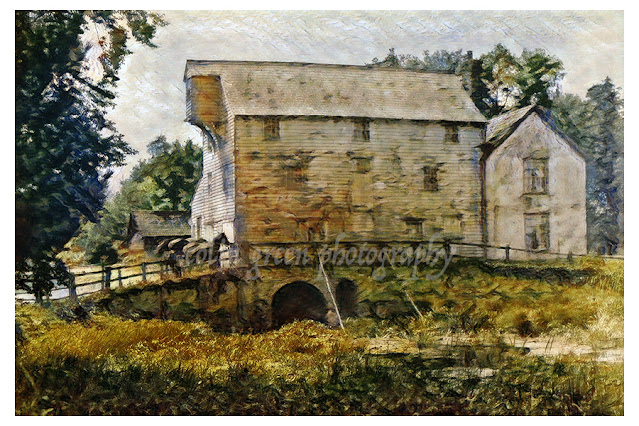
There's a certain magic to an old watermill. It speaks of a time when life moved at a different pace, powered by the gentle, tireless flow of a river. The watermill at Ixworth, Suffolk, is one such place, a beautifully preserved piece of history that seems to exist outside of time.

This image, with its painterly, almost impressionistic quality, captures the mill's rustic charm. The weathered timber siding and the solid stone foundation tell a story of centuries of hard work and quiet endurance. You can almost hear the rhythmic groan of the mill wheel and the rush of water as it turns. The soft, muted colors and the textured feel of the photograph give it the quality of an old painting, as if it were a scene plucked from a history book and brought to life.

Surrounded by lush green foliage and golden grasses, the mill blends seamlessly into the Suffolk countryside. The small bridge leading to the main building invites you to cross, to step into a world of simple, rural life. It's a reminder of a time before modern machinery, when communities relied on the power of nature to grind their grain and sustain their lives.

This image is a tranquil escape, a moment of peace and reflection. It reminds us of the importance of preserving these historical treasures, not just as buildings but as living testaments to our past.

Please take a moment to share this post, follow me on social media, and explore my work on Clickasnap and Photo4Me using the links below. Your support means a lot!


Sunday, 24 July 2022

Walking the Rochdale Canal from Walsden to Todmorden

In the heart of Northern England, winding through valleys and past old mill towns, lies the Rochdale Canal. More than just a waterway, it's a testament to the region's industrial heritage, a ribbon of water that once powered the economy and has since been reborn as a haven for walkers and nature lovers. Completed in 1804, this historic canal once served as a vital trade route, connecting the bustling hubs of Sowerby Bridge and Manchester.

For a time, the canal fell into disuse and disrepair, officially closing in 1952. Sections became overgrown, and some were even filled in, a quiet echo of the end of an era. But thanks to a dedicated restoration effort, the canal was fully reopened in 2002, giving new life to this historic corridor.

Inspired by this story of rebirth, I took a walk along a particularly scenic stretch of the canal in November 2013, trekking approximately 1.5 miles from Walsden to Todmorden. The photos, taken on a Samsung Galaxy Tablet, capture the essence of a tranquil autumn day on the towpath.


A Walk Through Autumn

The journey revealed a landscape painted in the golden hues of autumn. The canal waters, a deep, reflective blue, mirrored the clear sky and the scattered clouds. Along the banks, fallen leaves created a vibrant carpet of gold and red, rustling underfoot.

The walk passes a number of fascinating landmarks. Pinnel Lock 26 and Smithyholm Lock 25 are working relics of the canal's past, their weathered stone and wooden gates standing strong against the flow of time. Further along, the towering Gauholme Railway Viaduct looms over the canal, a striking black-and-white image that shows the intersection of two different transport histories.

The path also winds through the charming village of Walsden, where the spire of St. Peter's Church rises elegantly above the trees and rooftops, a quiet sentinel watching over the canal. The walk ends as you approach Todmorden, with the canal curving past old mill buildings, their red brick and stone a warm contrast to the green and gold of the surrounding hills.

Along the way, I stumbled upon a curious, carved stone chair, a unique piece of art that invites walkers to pause and reflect on the journey. This simple seat embodies the spirit of the canal today: a place of peace, reflection, and quiet beauty.

Clicking any of the images below should open a link in another window to my Colin Green Photography store on Zazzle.

Gauxholme Viaduct

Pinnel Lock


Smithyholm Lock

Walsden from the canal, St Peter's Church seen in the distance.

This stone chair was near Gauxholme Locks, no idea if it is still there.

Please take a moment to share this post, follow me on social media, and explore my work on Clickasnap and Photo4Me using the links below. Your support means a lot!


All the images remain the copyright of Colin Green.

Great Scots, Part V: The Final Ten—Reformers, Field Marshals, and Polar Pioneers

We've reached the end of our exploration into the captivating 1933 Mitchell's Cigarettes "Great Scots" collection. This f...