Showing posts with label Artist. Show all posts

Monday, 29 August 2022

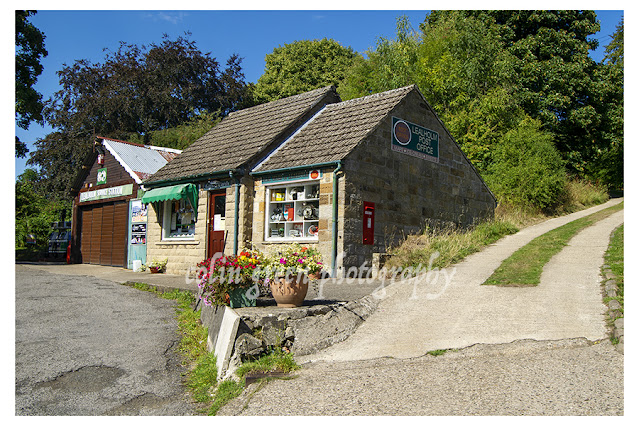
A Snapshot of Village Life: Lealholm Post Office & Service Station

Lealholm is a village that seems to exist at its own pace, a peaceful hamlet nestled in the heart of the Esk Valley. On a sunny day in August 2022, I found myself exploring this tranquil corner of North Yorkshire, having just visited the quaint Lealholm Railway Station. As I walked back towards the village centre, I stumbled upon a truly charming sight: the Lealholm Post Office and Service Station.

What immediately caught my eye was how a seemingly ordinary stone house had been transformed into what is undoubtedly a central hub for the local community. It’s a place that feels as if it has grown organically from the landscape, serving the needs of the village's approximately 380 residents and the surrounding rural communities.

The photographs, taken with my Nikon D3300 SLR camera, capture the essence of this little building. There's a certain timeless quality to it. The stone exterior, the traditional roof tiles, and the potted flowers by the front door all contribute to a sense of warmth and welcome. The vibrant red of the post box stands out against the muted tones of the stone, a small but powerful symbol of connection.

This place isn't just a post office; it's a vital service station as well, a testament to its role in a rural area where such amenities are a lifeline. In a world of digital communication and big-box stores, there's something incredibly reassuring about seeing a place that combines these essential services under one roof. It speaks to a way of life that values convenience and community in equal measure.

The art-style versions of the photograph, with their textured, painterly effect, add another layer of charm. They transform the scene into something more than just a snapshot; they make it feel like a cherished memory or a piece of folk art. They highlight the rustic, lived-in quality of the building and the lush, green backdrop of the surrounding hills.

This image, and the feeling it evokes, reminds me of the unique character of rural life. It’s a world where a single building can be a post office, a shop, and a place to fill up your car, all at once. It’s a place where neighbours likely know each other by name and where a trip to the post office is not just an errand but a chance for a chat. The Lealholm Post Office and Service Station is more than just a building; it’s a heartbeat of the community, a humble yet essential hub of village life.

Clicking the images below should open a link in another window to my Colin Green Photography store on Zazzle.


Please take a moment to share this post, follow me on social media, and explore my work on Clickasnap and Photo4Me using the links below. Your support means a lot!


All the images remain the copyright of Colin Green.

Saturday, 23 July 2022

Bridging the Gap: A Photographer's Journey

As a photographer, I've always been drawn to bridges. They're more than just structures connecting two points; they’re symbols of human ingenuity, history, and a connection to the world around us. Recently, I've been exploring different ways to capture these marvels, playing with filters and post-processing to create a painterly, almost dreamlike effect. The result is a series of images that feel both real and fantastical, blurring the lines between photography and art.

In this collection, I've focused on some of the UK's most iconic bridges. Each one has its own story and a unique aesthetic.

Connel Bridge, Oban, Scotland.


Nestled in the breath taking landscape of Western Scotland, the Connel Bridge is a remarkable feat of engineering with a storied past. Originally built as a railway crossing over the narrow mouth of Loch Etive, the bridge was officially opened in August 1903. Constructed at a cost of £43,000, it served the Ballachulish Branch Line of the Callander and Oban Railway, a vital link for the region's transport network.

For many years, the bridge was exclusively for rail traffic. However, in 1914, a new chapter began when a roadway was added, allowing both cars and trains to use the same crossing. This dual-purpose use was managed with a unique set of rules: trains were given priority, and the roadway was closed to vehicles whenever rail traffic was scheduled to pass. This continued until the railway line was closed in the late 1960s, at which point the bridge became solely for road use. Today, the A828 road still runs across the single-track bridge, with traffic lights managing the flow of cars and ensuring a smooth passage for all.


Engineering and the Falls of Lora

The design of the Connel Bridge is as fascinating as its history. It is a cantilever bridge, a style chosen specifically to withstand the unique natural forces of the area. The bridge's impressive 524-foot span was a necessary measure to clear the challenging waters below. Just to the west of the bridge are the Falls of Lora, a series of tidal rapids created by the strong flow of water in and out of Loch Etive. These powerful currents were a significant consideration for the original engineers, who designed the bridge's structure to handle the immense pressures and prevent any obstructions in the water below.

Rising to a height with a 14-foot restriction, the bridge is perfectly positioned to offer a stunning view of the surrounding scenery. Just to the north, you can see the nearby Oban Airport, a modern landmark in an area rich with historical and natural wonders.

The Forth Bridge


Opened in 1890, the Forth Bridge is more than just a crossing; it's a defining symbol of Scotland's industrial might and a globally recognized feat of engineering. Located just east of Edinburgh, this monumental structure spans the Firth of Forth, connecting the communities of North and South Queensferry. While it's commonly known as the Forth Rail Bridge, its official name is simply the Forth Bridge, as it was the first of the three crossings to be built here.

The bridge's history is as impressive as its scale. Designed by the visionary engineers Sir John Fowler and Sir Benjamin Baker, construction began in 1882. At the peak of its construction, the project was a massive undertaking, employing a workforce of over 4,600 men. Their collective efforts culminated in the bridge's completion in December 1889. Following extensive testing, the bridge was officially opened on March 4, 1890, by the Duke of Rothesay, who marked the occasion by driving in the final gold-plated rivet.


Design, Scale, and Legacy

The Forth Bridge's distinctive cantilever design was a revolutionary choice for its time, built to handle the immense forces of a railway crossing. The bridge has a total length of 8,094 feet, with a maximum width of 120 feet at its piers. It soars to a height of 316 feet, providing a staggering 150 feet of clearance for ships to pass safely beneath at high tide.

In recognition of its historical and architectural significance, the Forth Bridge was designated a UNESCO World Heritage Site. It remains one of the most famous man-made structures in Scotland, a powerful testament to the ingenuity and sheer hard work of the men who built it.

Albert Bridge, Belfast, Northern Ireland

Spanning the River Lagan in the heart of Belfast, the Albert Bridge is a testament to the city's resilience and a graceful example of 19th-century engineering. Completed in 1890, this elegant structure was designed by the esteemed J.C. Bretland to replace a previous bridge that had tragically collapsed in 1886. This earlier failure underscored the need for a robust and reliable new crossing, and Bretland's design delivered on that promise.

Constructed at a cost of £36,500—an astronomical sum at the time, equivalent to approximately £5.2 million in today's currency—the bridge was a significant investment in the city's infrastructure. Its name honors Prince Albert Victor, the grandson of Queen Victoria, connecting the bridge to the rich history of the British monarchy.

With its striking architectural features and a vital role in connecting the city, the Albert Bridge is more than just a crossing; it's a piece of Belfast's history, a silent witness to the city's transformation over more than a century.

Clicking any of the images should open a link in another window to my Colin Green Photography store on Zazzle.

Please take a moment to share this post, follow me on social media, and explore my work on Clickasnap and Photo4Me using the links below. Your support means a lot!


All the images remain the copyright of Colin Green.

Friday, 6 May 2022

The Tees Transporter Bridge: An Icon at a Crossroads

The Tees Transporter Bridge, a colossal symbol of industrial heritage, holds the distinction of being the longest remaining transporter bridge in the world. Yet, this magnificent structure, a testament to early 20th-century engineering, currently faces an uncertain future, standing closed and in dire need of significant repairs.

Opened in October 1911 at an impressive cost exceeding £68,000, the bridge revolutionized crossings over the River Tees. It replaced a long-standing ferry service, providing a more efficient and reliable link between Middlesbrough and Port Clarence. The decision to build a transporter bridge, rather than a conventional one, was a stroke of genius. This design allowed large ships to navigate the Tees unhindered, preserving vital shipping routes to industries further upstream—a crucial consideration for the burgeoning industrial landscape of the era. Interestingly, when first constructed, the bridge sported a vibrant red hue, only to adopt its now-iconic blue livery in 1961.

The bridge's historical and engineering significance has been formally recognized on several occasions. It was granted Grade II listed status on June 21, 1985, acknowledging its architectural and historical importance. Further recognition came in December 1993 with a Heritage Plaque from the Institution of Mechanical Engineers, celebrating its ingenious design and construction.

Despite its storied past and undeniable significance, the Tees Transporter Bridge has been closed to the public since August 2019 due to safety concerns. Its continued closure casts a shadow over its future, raising questions about the extensive work required to bring it back to a safe and operational state. Will this grand dame of engineering be restored to its former glory, or will it remain a static monument to a bygone era? Only time will tell if this vital piece of the Tees Valley's identity will once again carry passengers and vehicles across the river it has faithfully served for over a century.


Clicking on either picture should open a link in another window to my Colin Green Photography store on Zazzle.

Please take a moment to share this post, follow me on social media, and explore my work on Clickasnap and Photo4Me using the links below. Your support means a lot!


All the pictures remain the copyright of Colin Green.
Saturday, 26 March 2022

Churn Milk Joan: A Calder Valley Mystery (Artwork)

High on Midgley Moor, with the stunning Calder Valley sprawling below, stands a silent sentinel known as Churn Milk Joan. This impressive standing stone, also called Churn Milk Peg or Nelmires Stoop, reaches a height of approximately 7 feet, a towering testament to centuries of history.

Thought to have been erected as a boundary marker, its presence has been documented as far back as the 17th century. Imagine, for a moment, the countless generations who have walked past this stone, each with their own stories and their own connection to this rugged landscape.

The name "Churn Milk Joan" itself is steeped in local legend, believed to have originated in the early 19th century. It's said to be a poignant tribute to a milkmaid who tragically froze to death while attempting to cross the treacherous moor during a severe snowstorm, making her way from Peckett Well to Luddenden. A sombre reminder of the harsh realities faced by those who lived and worked on these unforgiving lands.

But Churn Milk Joan isn't just a historical relic; it's also a focal point for some fascinating local legends. One popular belief is that leaving a penny in the depression on top of the stone will bring you good luck. So, if you ever visit, perhaps try your luck and contribute to this ongoing tradition!

Another intriguing claim, steeped in mystery, suggests that the stone spins three times on New Year's Eve. This magical rotation is said to occur when the bells of St. Michael's Church in Mytholmroyd can be heard echoing around it. What makes this even more remarkable is that the stone is thought to predate the church by a couple of hundred years, adding another layer to the mystique surrounding this ancient monument.

Churn Milk Joan is more than just a stone; it's a window into the past, a keeper of local folklore, and a testament to the enduring spirit of the Calder Valley. Next time you're exploring the moors, keep an eye out for this captivating landmark and perhaps even leave a penny for good measure!

Clicking the image should open a link in another window to my Colin Green Photography store on Zazzle.

Please take a moment to share this post, follow me on social media, and explore my work on Clickasnap and Photo4Me using the links below.


Sunday, 18 November 2018

Raphael Kirchner.. Pin Ups and Vintage Girls.

Sometimes, the most unexpected discoveries land right in your lap. Recently, I stumbled upon a fascinating collection of images, a veritable time capsule brimming with the echoes of bygone eras. I'm told these pictures are copyright free, and as they sat there, a silent testament to forgotten artistry and cultural moments, I couldn't shake the feeling that they deserved more than just gathering dust.

Imagine leafing through a stack that includes vibrant old travel posters, each a miniature invitation to a world long past. Then there are the delicate autographs, whispers of famous hands and personalities. And let's not forget the captivating pin-up girls, each a unique expression of artistic style and societal ideals. The collection even holds a glimpse into the more discreet world of Victorian erotica, offering a fascinating, albeit perhaps blush-inducing, peek into the sensibilities of the time. Rounding it all off are portraits of celebrities, frozen moments of fame and recognition.

It felt like a disservice to keep these intriguing snapshots locked away. So, I decided to bring a small portion of this treasure trove to life. My first foray into sharing this collection focuses on the captivating work of Raphael Kirchner.

For those unfamiliar, Raphael Kirchner was an incredibly prolific Austrian artist, born on May 5th, 1875. Despite a tragically short life – he passed away on August 2nd, 1917, at the young age of 42 – Kirchner left behind an astonishing legacy of over a thousand paintings and drawings. His distinctive style, often characterized by elegant lines and a certain romanticism, captured the spirit of his era.

I've carefully selected 30 images from the Raphael Kirchner part of the collection and transformed them into a short slideshow video, now available for your viewing pleasure on YouTube. It's a small window into the artistry of Kirchner and a chance to appreciate the beauty and detail of his work.

This is just the beginning of exploring this fascinating collection. I'm excited to delve deeper into the other categories – the allure of vintage travel, the stories behind the autographs, the artistry of the pin-ups, the intrigue of the Victorian era, and the faces of fame.

Stay tuned for more glimpses into this unearthed world


Thanks for looking, please take a moment to share and follow me on social media.

Saturday, 8 October 2016

The Church of St John the Baptist, Rogerstone, South Wales.

The Church of St John the Baptist is a beautiful and historic church located in the village of Rogerstone, Wales. It was opened in 1888 and designed by the architect E.A. Johnson. The church is dedicated to St John the Baptist, and its foundation stone was laid by Lord Tredegar in August 1887.

The church is built in the Gothic Revival style, and it is made of red sandstone. The church has a nave, chancel, aisles, and a tower. The interior of the church is decorated with stained glass windows, wood carvings, and stonework.

The Church of St John the Baptist is a popular place for weddings and baptisms. It is also a busy community centre, and it hosts a variety of events throughout the year.

The need for a new church in Rogerstone arose in the mid-19th century as the population of the village grew rapidly. The existing church, St Peter's Church, was too small to accommodate the growing congregation.

In 1885, a committee was formed to raise funds for the building of a new church. The committee was successful in raising £2,370, and the foundation stone for the new church was laid in August 1887.

The new church was opened in 1888, and it was consecrated by the Bishop of Llandaff. The church was originally a Church of England church, but it became a Church of Wales church in 1920.

The Church of St John the Baptist is a thriving church community. It has a congregation of over 200 people, and it offers a variety of services and activities for all ages.

The church is also a busy community center. It hosts a variety of events throughout the year, including coffee mornings, concerts, and fundraising events.

The Church of St John the Baptist is a beautiful and historic church that is an important part of the community of Rogerstone. It is a place of worship, a community centre, and a symbol of hope for the future.

In addition to the information above, here are some other interesting facts about the Church of St John the Baptist:

  • The church has a peal of six bells, which were cast in 1888.
  • The church has a churchyard, which is home to the graves of many local people.
  • The church is a Grade II listed building.
 
These pictures were taken with my Nikon d3300 SLR camera on May 23, 2016. Clicking any of the pictures below should open a link in another window to the image for sale on my Zazzle store as a poster or Download. The image can also be added to a number of products to suit your requirements in addition to the products I offer with the image on, which include, mugs, postcards and wall art.


Thanks for looking, and please take a moment to share and follow me on social media, and check out my stores on Zazzle and portfolio on Photo4Me via the links below.


All links open in another window, all the pictures remain the copyright of Colin Green.

A Glimpse into the Past: Brotton Railway Station and Its Story

This beautifully colorized postcard of Brotton Railway Station truly brings a piece of history to life. It’s more than just a picture of a b...