Showing posts with label Victorian. Show all posts

Monday, 28 July 2025

Echoes in Stone: Exploring the Forgotten Beauty of Wainhouse Terrace

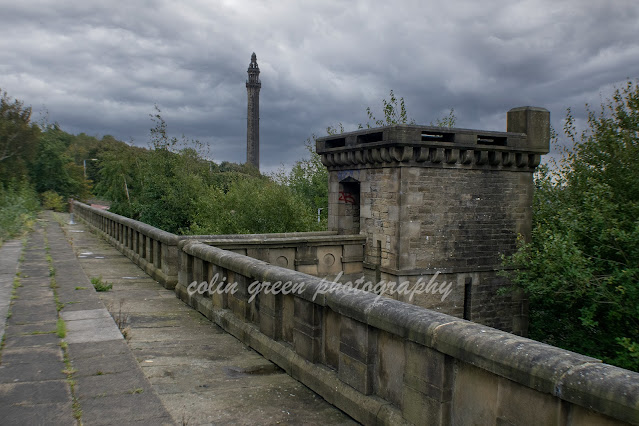
 There are places that whisper stories of the past, their stones imbued with the echoes of lives lived and forgotten. Wainhouse Terrace in King Cross, Halifax, is one such place. Tucked away near the impressive Wainhouse Tower, this intriguing structure, often overlooked, offers a captivating glimpse into Victorian ambition and nature's relentless embrace.

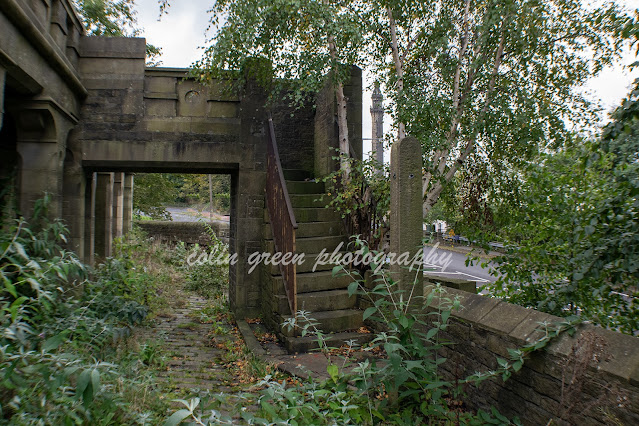
Walking along what was once a grand promenade, you can't help but feel a sense of serene melancholy. The sturdy stone walls, once meticulously maintained, now bear the marks of time and weather. Overgrown pathways, with creeping vines and wild grasses reclaiming the carefully laid bricks, lead you deeper into its forgotten corridors. Sunlight filters through the leafy canopy, casting dappled shadows on decaying facades and hinting at the structure's former glory.

The architectural details are still striking – the robust columns, arched doorways, and intricate stonework speak of a time when craftsmanship was paramount. Yet, juxtaposed against this solid construction is the pervasive sense of decay. Broken flagstones lie scattered, testament to the years of neglect. Staircases, some spiralling into hidden depths, beckon the curious, while others lead to nowhere, their purpose long since lost to the overgrowth.

Perhaps the most poignant aspect is the way nature has intertwined itself with the man-made. Trees sprout from unexpected crevices, their roots slowly but surely asserting their dominance. Greenery cascades over walls and through empty window frames, transforming the rigid lines of the architecture into a softer, wilder landscape. It's a powerful reminder of nature's ability to reclaim, to soften edges, and to eventually, gracefully consume.

Even with its current state of disrepair, Wainhouse Terrace holds a unique allure for those drawn to urban exploration, forgotten places, and the beauty of decay. It’s a photographer's dream, with its dramatic contrasts of light and shadow, the starkness of stone against the vibrancy of green. And in the distance, often peering through the trees, the iconic Wainhouse Tower stands as a stoic sentinel, a silent witness to the passage of time and the changing fortunes of its smaller, more intimate neighbour.

Wainhouse Terrace isn't just a collection of old buildings; it's a testament to history, a canvas for nature's artistry, and a place that invites contemplation about the transient nature of human endeavours. If you find yourself in Halifax, venture off the beaten path and discover the quiet, captivating beauty of this forgotten gem. You might just find yourself lost in its echoes, and all the richer for the experience.

I took these pictures on the 3rd October 2017 with a Nikon d3300, clicking on any of them should open a link in another window to my Colin Green Photography store on Zazzle.


Please take a moment to share this post, follow me on social media, and explore my work on Clickasnap and Photo4Me using the links below. Your support means a lot!


All the pictures remain the copyright of Colin Green.

Wednesday, 16 October 2024

Margate Jetty Art: A Glimpse into the Victorian Past

A vintage postcard depicting Margate Pier in its heyday, likely from the late 19th or early 20th century. The pier stretches out into the sea, bustling with activity, with people strolling along its wooden planks and enjoying the seaside views.

The Victorian Pier:

Margate, a charming seaside town in Kent, England, has a rich history intertwined with its iconic pier. Initially constructed of wood in 1824, it was rebuilt with iron in 1855 and extended over the following years, the pier was a marvel of Victorian engineering, attracting visitors from far and wide. It served as a popular destination for leisure, entertainment, and transportation.

A Hub of Activity:

The pier was more than just a walkway; it was a vibrant hub of activity. Visitors could enjoy a variety of attractions, including:

  • Bandstands: Listen to live music performances from talented musicians.
  • Pavilions: Explore shops, arcades, and tea rooms.
  • Fishing: Cast a line and try your luck at catching fish.
  • Horse-drawn carriages: Take a leisurely ride along the promenade.

A Symbol of Seaside Pleasure:

The pier's popularity peaked during the Victorian era when seaside holidays became a fashionable pastime. Families and couples flocked to Margate to escape the hustle and bustle of city life and enjoy the fresh sea air and scenic views.

A Changing Landscape:

Over the years, Margate Pier has faced challenges, including storms and structural damage. It closed in 1976, was badly damaged in 1978 and underwent occasionally demolition until the final section was completely removed in 1998.

Clicking the image should open a link in another window to my Colin Green Photography store on Zazzle.

Please take a moment to share this post, follow me on social media, and explore my work on Clickasnap and Photo4 Me using the links below. Your support means a lot!


Saturday, 28 October 2023

Washer Lane Aqueduct: A Hidden Relic of Halifax's Industrial Past

Tucked away at the entrance to the Washer Lane Industrial Estate in Halifax, a remarkable piece of local history stands as a silent sentinel. The Washer Lane Aqueduct, built between 1856 and 1873, is a striking relic from the town's booming industrial era. These images, captured on a lush June day in 2023, reveal its unique character and the fascinating story behind it.


A Landmark Built by an Industrialist

The aqueduct was constructed during the period when John Edward Wainhouse owned the Washer Lane Dyeworks. Wainhouse, a prominent figure in Halifax's industrial landscape, is perhaps best known for building the Wainhouse Tower, a flamboyant folly that dominates the local skyline . The aqueduct, while far less ornate, shares a similar connection to his industrial legacy.

The initials "J.E.W." are visible carved into the keystone of the arch, a personal touch that marks the structure as Wainhouse's creation. The aqueduct was originally built to carry water across the access road, a crucial component for the dyeworks which required a constant and clean supply of water for their operations.


A Quiet End to an Era

The dyeworks closed in 1896, and with its closure, the aqueduct's purpose came to an end. It has stood since as a picturesque, if unused, feature of the landscape. Without access to the top of the structure and with limited information available, it's safe to assume that the aqueduct no longer carries water.

Today, the aqueduct spans the top entrance road to the industrial estate, which runs down from Upper Washer Lane. The old cobbled road, flanked by high, moss-covered stone walls, passes directly beneath its stone arch. The entire scene feels like a journey back in time, a quiet corner of the valley where nature is slowly reclaiming the old industrial stonework.

The aqueduct is a hidden gem, a small but significant piece of Halifax's history that reminds us of the ingenuity and ambition of the industrialists who shaped the Calder Valley. It's a testament to a time when water was the lifeblood of industry and a reminder that even the most functional of structures can become a thing of beauty over time.

Clicking any of the images below should open a link in another window to my Colin Green Photography store on Zazzle.


The initials of John Edward Wainhouse can be seen on the centre stone of the aqueduct. Wainhouse owned the dye works from 1856 when he inherited them until he sold it to Henry Mossman in 1873. Because of the initials I think the aqueduct must date from this 17 year period.


Please take a moment to share this post, follow me on social media, and explore my work on Clickasnap and Photo4Me using the links below. Your support means a lot!


All the pictures remain the copyright of Colin Green.

Sunday, 21 August 2022

An Autumnal Walk: All Saints Church, Salterhebble

The crisp air, the rustle of fallen leaves underfoot, and the warm, low light of an autumn day create the perfect atmosphere for a journey back in time. On October 24, 2014, I found myself drawn to the timeless beauty of All Saints Church in Salterhebble, Halifax. Armed with my Polaroid is2132 bridge camera, I set out to capture the essence of this historic place, and the resulting images tell a story of faith, community, and the passage of time.

As you approach the church, the first thing that strikes you is the sheer presence of the building. The tall, elegant spire reaches towards the sky, a beacon of faith built from the local stone. It’s no wonder that a significant part of its construction was a community effort, with Samuel Rhodes generously providing over 400 cartloads of stone from his own quarry. This collaborative spirit is etched into the very fabric of the church.

Designed by the prolific architects James Mallinson and Thomas Healey, whose work can be seen in several other churches in the area, All Saints Church is a testament to the Victorian Gothic Revival style. The pointed arches, intricate stonework, and stained-glass windows are all hallmarks of this architectural movement, designed to evoke a sense of awe and reverence. The foundation stone was laid on August 26, 1857, and the church was consecrated and opened for worship the following year, in 1858. It has been a continuous place of worship ever since, its walls having witnessed generations of baptisms, weddings, and funerals.

Walking through the churchyard is a contemplative experience. It’s an overgrown, verdant space, where ancient headstones, some leaning and weathered with time, are partially reclaimed by nature. The sepia tones of the photographs capture this sense of history and quiet decay, highlighting the ornate crosses and memorials that stand as silent sentinels. A path, strewn with fallen leaves, winds its way between the graves, inviting you to wander and reflect.

One of the most remarkable sights in the churchyard is a large, ornate memorial, a striking contrast to the more traditional headstones. This is a mausoleum, a grand statement of remembrance and a captivating piece of architecture in its own right. With its intricate arches and detailed carvings, it stands as a testament to a significant person or family from the parish's past.

Another discovery was a hidden gateway, a small archway in a stone wall, half-covered in thick foliage. It felt like a portal to another world, a secret entrance to a part of the church grounds less travelled. The vibrant greens of the leaves, still holding onto their colour in the autumn light, create a beautiful frame for the simple stone steps that lead you through.

The images taken that day, some in rich colour and others in a timeless black and white, capture the dual nature of All Saints Church. It is both a functioning place of worship and a living, breathing piece of history. The autumn colours highlight the beauty of the surrounding nature, while the monochrome images emphasize the architectural details and the solemnity of the graveyard.

As I left All Saints Church that day, I felt a deep appreciation for its enduring presence. It’s more than just a building; it’s a repository of stories, a link to the past, and a quiet haven in the bustling world. It stands as a powerful reminder of the community that built it and the history that continues to unfold within its walls.

Clicking any of the images below should open a link in another window to my Colin Green Photography store on Zazzle.


Please take a moment to share this post, follow me on social media, and explore my work on Clickasnap and Photo4Me using the links below. Your support means a lot!


All the images remain the copyright of Colin Green.

Saturday, 21 May 2022

Built on Generosity: The Story of Crossley Heath School

There's something special about a New Year's Day walk. The air is crisp, the world feels quiet, and it's a perfect time to reflect and discover. While out for a stroll on January 1st, 2019, I came across a magnificent Victorian building on the edge of Savile Park Moor—the Crossley Heath School. The images I captured, taken with my Nikon d3300 SLR, don't just show a school; they show a piece of living history.

This stunning architectural gem, with its intricate details and imposing presence, has a fascinating past. The story begins with the philanthropic Crossley family—John, Joseph, and Francis—who had a significant impact on the town of Halifax. They commissioned architects Paull & Aycliffe and John Hogg to design the Crossley Orphan School and Home, which opened its doors on June 29, 1864. Built at the impressive cost of £65,000, the orphanage was a sanctuary for children in need.

It provided free lodging, clothing, and education for 400 to 500 children. Boys could stay until age 15 and girls until 17, giving them a chance at a better future.

The school's name changed over time, reflecting its evolving purpose and benefactors. In 1879, a generous £50,000 donation from Manchester merchant Thomas Porter led to a new name: the Crossley & Porter Orphan Home and School. The school's mission continued to adapt, and in 1919, it began admitting day pupils, becoming simply the Crossley & Porter School.

The final chapter in its name change came in 1985 when it merged with Heath Grammar School to become the Crossley Heath School we know today.

Standing before this building, you can't help but feel a sense of awe at the vision of its founders and the many lives it has touched. It's a powerful reminder of how a single structure can hold so many stories.

Clicking any of the images below should open a link in another window to my Colin Green Photography store on Zazzle.


The artwork below is the result of a play about with the neural filters on photoshop.


Please take a moment to share this post, follow me on social media, and explore my work on Clickasnap and Photo4Me using the links below. Your support means a lot!


All the pictures remain the copyright of Colin Green.

A Glimpse into the Past: Brotton Railway Station and Its Story

This beautifully colorized postcard of Brotton Railway Station truly brings a piece of history to life. It’s more than just a picture of a b...