Showing posts with label British Rail. Show all posts

Monday, 13 October 2025

A Journey Through Time: Unpacking a 35mm Slide of Brocklesby Junction Station

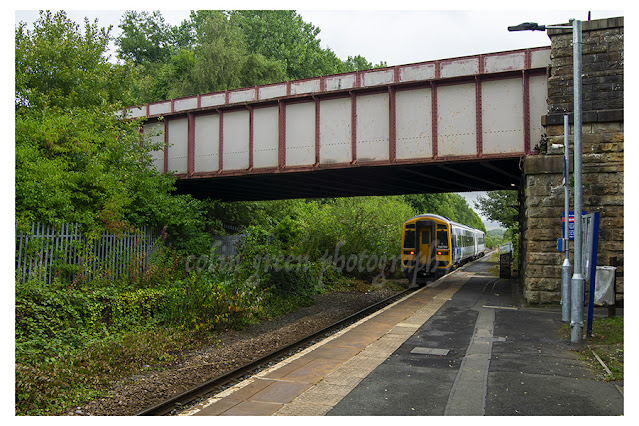
There's a unique thrill in revisiting old 35mm slides. Each one is a frozen fragment of history, offering clues that can unlock the story of when and where it was taken. This particular slide, from my personal collection, instantly grabbed my attention – a serene railway scene at a station clearly labelled "Brocklesby Jn".

Let's dive in and see what we can discover about this intriguing image, starting with the all-important question of when it was captured.

The Key to Dating: The Train Itself

The most significant clue in dating this photograph lies in the train pulling into the station. This is a British Rail Class 142 "Pacer" diesel multiple unit (DMU).

  • Introduction: The Class 142 Pacer units were introduced into service by British Rail between 1985 and 1987.

  • Livery: The train is wearing the distinctive "Sprinter" livery (blue and grey with a yellow front). This livery was standard for British Rail's new generation of DMUs in the mid-to-late 1980s.

Given this information, we can confidently place the photograph sometime after 1985.

Pinpointing the Location: Brocklesby Junction

The station sign, proudly proclaiming "Brocklesby Jn", makes the location unambiguous.

  • Brocklesby Junction Station: Located in Lincolnshire, England, this station has a fascinating history. It's a junction where the line from Grimsby splits, with one branch heading towards Lincoln and the other towards Barton-on-Humber.

  • Architectural Features: The station buildings themselves are quite distinctive, with ornate gables and prominent chimneys, suggesting a Victorian era construction. They stand as a testament to the grander days of railway architecture. The building on the left, with the large multi-paned window, appears to be the main station building or perhaps a waiting room. The building on the right looks like the opposite platform's waiting room or building.

The "Pacer" Era at Brocklesby

The Pacer trains were designed as a low-cost solution for rural and branch lines, utilizing bus body technology. They became a very common sight on lines like those serving Brocklesby Junction.

  • Operation at Brocklesby: Class 142s regularly operated services on the Grimsby to Barton-on-Humber line and the Grimsby to Lincoln line, both of which pass through Brocklesby Junction.

  • Decommissioning: The Class 142 Pacers were eventually withdrawn from service between 2019 and 2020 as part of fleet modernization plans.

The "Feel" of the Image

Beyond the technical details, the photograph exudes a particular atmosphere:

  • Clear, Bright Day: The lighting suggests a clear day, possibly morning or late afternoon, given the shadows.

  • Quiet Station: There's a sense of tranquillity; no passengers are visible on the platforms, giving the impression of a quiet rural station between trains. This is very characteristic of smaller junction stations during the Pacer era, especially outside of peak commuting times.

  • Well-Maintained but Classic: The station buildings, though clearly older, appear well-maintained. The platforms look tidy, and the track is clear.

Putting it All Together

Based on the evidence:

  • Train Type: British Rail Class 142 "Pacer" DMU.

  • Train Livery: British Rail "Sprinter" livery.

  • Station: Brocklesby Junction, Lincolnshire.

This photo was almost certainly taken sometime between 1985 (when the Pacers were introduced) and the early 1990s. By the mid-90s, the privatised railway companies started to introduce new liveries, making it less likely to see a Pacer in full BR "Sprinter" colours much beyond that point, although some did last. A safer bet would be the late 1980s, perhaps 1987-1990.

It's a wonderful capture of a specific era in British railway history, showcasing both the functional, modern (for its time) rolling stock and the enduring, historical architecture of the railway network. These images truly are little time capsules!

Clicking the image below should open a link in another window to my Colin Green Photography store on Zazzle.

Please take a moment to share this post, follow me on social media, and explore my work on Clickasnap and Photo4Me using the links below. Your support means a lot.


Friday, 12 September 2025

The Subterranean Secret of Holmfield: A Glimpse into Queensbury Tunnel

Deep within the verdant landscape near Holmfield, a submerged secret lies hidden beneath a seemingly ordinary field. The Queensbury Tunnel, a monumental relic of Victorian engineering, is a testament to the ambition of the railway age and a captivating glimpse into a world now lost to time and water. These photographs, captured in July 2015, offer a rare and fascinating look at a section of this extraordinary structure, revealing both its forgotten surface features and its silent, waterlogged entrance.


The first image captures a curious concrete disc, a solitary manhole cover in the middle of a sun-drenched, grassy field. The long grass sways around it, creating a natural camouflage that would easily allow it to go unnoticed by the casual observer. This disc is no ordinary cover; it's a cap over one of the tunnel's ventilation shafts. These shafts were a vital part of the tunnel's design, providing much-needed air and allowing smoke from the steam locomotives to escape. In its quiet existence, this concrete cap is a powerful symbol of the colossal effort that went into building this tunnel. It speaks of a deep, unseen world, a world of iron and steam, that lies directly below. It’s a literal and figurative lid on history, hinting at a vast, dark space that has been sealed off from the world above for decades.


The other two images transport us to a different scene, one of profound stillness and mystery. Here, the tunnel's entrance is not a grand, arched portal but a tranquil, flooded chasm. The water, a striking shade of turquoise, reflects the sky and the surrounding foliage, creating a deceptive sense of serenity. Looking closer, we see the remnants of the tunnel's mouth. Two rusty pipes, possibly part of a former drainage system, emerge from the brickwork, their corroded ends facing the glassy water. The brick lining, discoloured and weathered by time, forms the backdrop to this aquatic scene. The water level is high, completely obscuring the track bed and swallowing the entrance in a liquid embrace.

These two photographs, seemingly identical but for the subtle shifts in light and reflection, capture a moment of perfect stasis. The tunnel is no longer a path for roaring trains but a calm, silent pool, a final resting place for its industrial past. The small trees and shrubs that have taken root around the entrance are a powerful symbol of nature's relentless reclamation. They are weaving themselves into the man-made structure, blurring the line between the natural world and the engineering marvel that once existed here. The reflection in the water adds a ghostly dimension, mirroring the overgrown surroundings and creating an ethereal portrait of a place in transition.

Together, these images paint a compelling picture of the Queensbury Tunnel at Holmfield. The concrete disc in the field and the flooded entrance at the hillside's edge are two sides of the same coin—one represents the hidden infrastructure on the surface, while the other reveals the silent, submerged reality of the tunnel itself. They are not merely pictures of a forgotten place but an invitation to contemplate the passage of time, the power of nature, and the fascinating stories that lie just beneath our feet. The Queensbury Tunnel, in its quiet, waterlogged state, continues to hold its secrets, inspiring a sense of wonder and curiosity about a remarkable chapter in our industrial heritage.

I took these pictures with a Polaroid is2132 camera on the 5th July 2015, clicking any of them should open a link in another window to my Colin Green Photography store on Zazzle.

Please take a moment to share this post, follow me on social media, and explore my work on Clickasnap and Photo4Me using the links below. Your support means a lot!


All the pictures remain the copyright of Colin Green.

Saturday, 20 August 2022

Burnley Barracks: A Hidden Gem on the East Lancashire Line

Ever heard of a request stop? It's a bit like an old-fashioned bus stop, but for trains. You have to actively let the driver know you want to get on or off. That's exactly the kind of place Burnley Barracks is—a small, unassuming station on the East Lancashire Line, but one with a surprisingly rich history.

The station, which opened way back in 1848, was originally known as Burnley Westgate and served as the temporary terminus for the line. It was only meant to be a short-lived stop, but the rapid development of the area, including a new army barracks, led to its reopening in 1851. Renamed Burnley Barracks after the nearby military base, the station became a local hub, serving passengers while the larger stations at Rose Grove and Bank Top (now Burnley Central) handled the freight.

Today, Burnley Barracks is a simple affair. As you can see from the photos, the station has a single platform, a basic shelter, and a card-only ticket machine. It offers step-free access and relies on on-street parking, but its charm lies in its simplicity. It’s a quiet spot, often overlooked, but it's a vital link for the local community.

The station's history is written in its very structure. The old eastbound platform, which was taken out of use when the line was singled in 1986, is now largely overgrown and hidden from view. It's a subtle reminder of a busier past, a time when the station had two platforms and a footbridge connecting them.

While passenger numbers have fluctuated over the years—dropping significantly after the army barracks closed in 1898 and local slum clearances in the 1960s and 70s—they've been on the rise in recent years. This is thanks to new housing developments and a growing trend of people opting for public transport over their cars.

Burnley Barracks is more than just a stop on the line; it’s a living piece of local history. It's a testament to the changes in the area, from its military past to its modern residential communities. On my recent visit, it was the busiest of the eight stations I visited on the East Lancashire Line, with several passengers boarding and alighting the train.

There's a proposal to close the station should the line be upgraded, but for now, Burnley Barracks remains a quiet, functional, and fascinating part of the railway network. It’s a small station with a big story, a true hidden gem just waiting to be discovered.

So next time you're on the East Lancashire Line, why not make a request stop at Burnley Barracks? You might just find yourself stepping back in time.

The pictures were taken with a Nikon d3300 on the 19th August 2022, clicking any of them below should open a link in another window to my Colin Green Photography store on Zazzle.

Colne bound training just leaving. It would 45 minutes before another train passed through the station.
There is 1 train in each direction approx. every hour.

The entrance sign to the station

The station looking west from the end of the platform. Despite Junction Street Bridge (Foreground)
and Padiham Road Bridge (Background) passing over the station, the 2 platforms were connected
by a wooden passenger bridge sighted between the 2. I assume this was removed when the line
was singled in the 1980's, but it may have been earlier as there is evidence on another site entrance
just off Junction Street Bridge.


The station looking eastward (towards Colne) from the end of the platform. The stations only
facilities are the shelter seen before the bridge and a ticket machine to my right
just out of shot.

Please take a moment to share this post, follow me on social media, and explore my work on Clickasnap and Photo4Me using the links below. Your support means a lot!


All the pictures remain the copyright of Colin Green.

Sunday, 18 November 2018

Vintage Railway Posters of the World.

Currently sorting through my collection of images that I have acquired over the years trying to find stuff to do with them and found over 200 vintage railway posters. I have taken an initial 26 from them and turned them in to a slideshow - video, which can now be viewed both here and on YouTube. The posters are mainly from the United Kingdom but there are also posters from other parts of the world.

I purchased many of my images copyright free and as far as I am aware that is the case with these. if I am misinformed I will remove them if asked by the copyright holder.

Thanks for looking, please take a moment to share and follow me on social media.

Tuesday, 26 December 2017

Ribblehead: A Station Reborn in the Shadow of Giants

The Yorkshire Dales, a landscape sculpted by time and nature, holds many hidden gems. One of the most captivating is Ribblehead Railway Station. Nestled a stone's throw from the iconic Ribblehead Viaduct, this station tells a story of resilience, restoration, and the enduring allure of the Settle to Carlisle line.

Imagine arriving at Ribblehead. The sheer scale of the viaduct, its 24 arches stretching across the valley, is breathtaking. But turn your gaze, and you'll find a station steeped in history, a testament to the railway's enduring impact on this remote corner of England.

Opened in 1876, Ribblehead was a vital stop on the Settle to Carlisle Railway, connecting communities and facilitating trade through the rugged terrain. For nearly a century, passengers alighted here, their journeys framed by the dramatic backdrop of the Dales. However, as with many rural stations, the rise of the motor car led to a decline in passenger numbers. In May 1970, Ribblehead Station closed its doors, seemingly consigned to history.

The station's fate seemed sealed. The north platform was demolished to make way for a transfer siding, and the southern platform succumbed to the relentless march of time, falling into disrepair. Yet, the story doesn't end there.

The Settle to Carlisle line, a feat of Victorian engineering, held a special place in the hearts of railway enthusiasts. In 1986, a glimmer of hope emerged when British Rail reopened the southbound platform to passenger traffic. This marked the beginning of Ribblehead's remarkable revival.

The momentum continued. In 1993, a brand-new northbound platform was constructed and opened, restoring the station's functionality. But the restoration didn't stop at the platforms. The station buildings, once derelict, were meticulously restored, a labour of love completed in 2000.

Today, Ribblehead Railway Station is operated by the dedicated volunteers of the Settle and Carlisle Trust. Their passion has breathed new life into this historic site, transforming it into a welcoming hub for visitors.

Stepping onto the platform, you can almost hear the echoes of the past, the steam whistles, and the bustle of Victorian travellers. The restored buildings offer a glimpse into the station's former glory, while the surrounding landscape remains as awe-inspiring as ever.

Whether you're a railway enthusiast, a history buff, or simply seeking a scenic escape, a visit to Ribblehead Railway Station is a must. It's a place where history and nature intertwine, a testament to the power of preservation, and a reminder of the enduring magic of the Settle to Carlisle line.

The pictures were taken on the 4th April 2015 with a Polaroid is2132 bridge camera. Clicking any image below should open a link in another window to my Colin Green Photography store on Zazzle.


Thanks for looking, please take a moment to share and follow me on social media and check out my portfolio on Photo4Me via the link below.


All the pictures remain the copyright of Colin Green.

Great Scots, Part V: The Final Ten—Reformers, Field Marshals, and Polar Pioneers

We've reached the end of our exploration into the captivating 1933 Mitchell's Cigarettes "Great Scots" collection. This f...