Sunday, 12 July 2020

Todmorden's Unique Guillotine Lock

Nestled near the heart of Todmorden, adjacent to the Golden Lion Bridge (Bridge 30), lies Lock 19 on the Rochdale Canal. This distinctive lock, often referred to as Todmorden Lock or even Library Lock, holds a fascinating secret: it's a guillotine lock.

What makes it a guillotine lock? Unlike traditional canal locks with swinging gates, the eastern gates of Lock 19 were replaced with a guillotine mechanism. This unusual modification was necessary due to their close proximity to the bridge, making conventional gates impractical.

Here are some glimpses of this unique piece of engineering:

The first three pictures, captured on July 11, 2020, showcase the lock in recent times. You can see the intricate workings of the guillotine gate and its seamless integration with the surrounding canal architecture.

For a different perspective, an additional image from November 9, 2013, offers a view eastwards, clearly illustrating the guillotine lock and the adjacent bridge. It's a testament to the enduring presence of this historical waterway feature.

Lock 19 is more than just a functional part of the Rochdale Canal; it's a small but significant piece of engineering history, reflecting the adaptive solutions employed to navigate the challenges of canal construction. Next time you're in Todmorden, take a moment to appreciate this unique lock!

Lock 19, Rochdale Canal, Todmorden

Artwork at Todmorden Lock 19, Rochdale Canal

Rochdale Canal Lock 19, Todmorden

The following picture is the November 2013 image of the lock, it was taken using a Samsung Galaxy tablet,

Todmorden Guillotine Lock

Please take a moment to share this post, follow me on social media.

All the pictures remain the copyright of Colin Green.

Sunday, 5 July 2020

A Glimpse into the Past: Unposted Vintage UK Postcards

There's something truly special about holding a piece of history in your hands, especially when it offers a window into a bygone era. We're excited to share a recent find: a set of six vintage postcards, each approximately 80 to 90 years old, all from the UK and, fascinatingly, all unposted. While their unposted nature makes precise dating a challenge, their charm and historical significance are undeniable.

Let's take a closer look at each one:

Flatford Bridge, Essex

Our first postcard features the picturesque Flatford Bridge, a well-known landmark situated about 13 miles northeast of Colchester, Essex. This charming bridge gracefully crosses the River Stour. The card itself was published by Judges LTD, Hastings, a prolific postcard publisher of the era.

Flatford Bridge, Colchester, Vintage Postcard

Guy's Cliff Bridge and Waterfall, Warwickshire

Next up is a beautiful scene of Guy's Cliff Bridge and Waterfall, where the River Avon flows past Saxon Mill in Warwickshire. This card was published by W.A. Lenton of Leamington Spa, capturing a serene moment in the English countryside.

Guy's Cliff Bridge and Waterfall, Warwick, Vintage Postcard

North Gate, Totnes, Devon

The third postcard transports us to the Devonshire town of Totnes, showcasing its iconic North Gate. This gateway holds historical importance, being a Grade II listed structure. This particular card is part of the Sepiatype Series by Valentine's, known for their distinctive sepia-toned images.

Northgate, Totnes Vintage Postcard

Bristol Cathedral

Moving on, we have a postcard depicting the grand Bristol Cathedral. This architectural marvel stands as a testament to centuries of history in the heart of Bristol.

Bristol Cathedral - Vintage Postcard

Montgomery from Kerry Road, Powys, Wales

Our penultimate postcard offers a view of Montgomery as seen from Kerry Road. The name "Montgomery" is an English translation of "the town of Baldwin," and this town holds a unique position as a border town in Powys, Wales.

Kerry Road, Montgomery - Vintage Postcard

Temple Speech Room, Rugby

Finally, our set concludes with a postcard of the Temple Speech Room in Rugby. This impressive building is a notable feature of the historic town. This card, like the North Gate one, was also published by Valentine's, this time from Leamington Spa.

Temple Speech Room, Rugby - Vintage Postcard

Please take a moment to share this post, follow me on social media.

A Glimpse into the Past: My Vintage Glasgow Cathedral Postcard

As a keen collector of vintage postcards, I'm always thrilled to uncover a piece of history. One recent find that particularly stands out in my collection is a beautiful card depicting Glasgow Cathedral, dating back to the early 20th century, likely even before the First World War.

This particular postcard was produced by J.M & Co. LTD, a company founded in Edinburgh in 1903. It's part of their renowned Caledonian Series of cards, which captured various Scottish landmarks. What makes this card even more special is that it's in pristine condition—unwritten and unposted, offering a clear window into its original state over a century ago.

Glasgow Cathedral itself is a fascinating subject. While officially a Church of Scotland place of worship, it's also widely known as the High Kirk of Glasgow, St Kentigern's, or St Mungo's Cathedral. Its historical significance runs deep, as it's built on the very site where Patron Saint Mungo is believed to have established his church. Before the Reformation, this magnificent edifice served as the seat of the Archbishop of Glasgow and was a vibrant centre of Roman Catholic worship.

Holding this postcard, you can't help but feel a connection to the past, imagining what Glasgow was like at the turn of the 20th century and the journey this little piece of cardstock has taken.

Glasgow Cathedral - Vintage Poscard.

Please take a moment to share this post, follow me on social media.

Saturday, 4 July 2020

The Salvage Archive: Journey Back to 70's: 35mm Slides

As a passionate collector of 35mm slides, I've spent years acquiring a fascinating array of photographic history. Now, I'm embarking on an exciting journey to digitize this collection, preserving these moments for years to come. What makes this particular endeavour even more special is that with each purchase, the copyright was assigned to me, allowing me to share these hidden gems.

Sadly, one of the challenges with these collections is the often-limited information available. Many slides come with little more than a place name and sometimes a date, leaving much to the imagination. However, the mystery only adds to the allure, inviting us to piece together the stories behind the images.

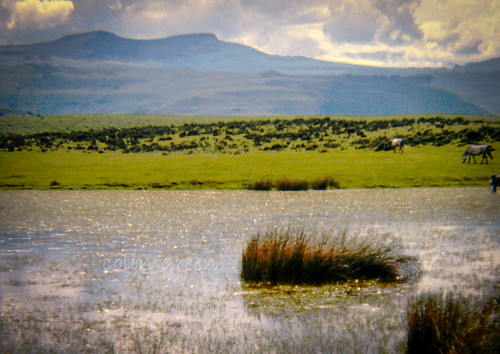
Among them is this stunning shot, captured in the breath taking Brecon Beacons, Wales, in July 1974. Just imagine the scene: the rugged peaks, the sweeping valleys, all bathed in the summer light of nearly fifty years ago. While we might not know the exact story of the person behind the camera, the image itself speaks volumes about the enduring beauty of this Welsh landscape.

The Brecon Beacons 1974

Take a step back in time with these two captivating images from July 1973, both captured at the stunning Farne Islands, Northumberland, England.

These snapshots perfectly encapsulate the bustling atmosphere as visitors gathered, either preparing to embark on a boat trip away from the islands or perhaps heading towards them – the exact destination remains a delightful mystery!

The Farne Islands, a cluster of islands off the Northumberland coast, have long been a haven for wildlife and a popular destination for nature lovers. It's fascinating to imagine the excitement and anticipation of those preparing for their island adventure over 50 years ago.

What do you think they were setting off to see? The famous puffins, seals, or perhaps the historic lighthouse?

Farne Islands Boat Trip 1973

Boat Trip Departing at Farne Islands 1973

Sometimes, a single image can transport you back in time, offering a window into how places once were. We recently came across a fascinating photograph that does just that, capturing the serene beauty of the Lake District almost 50 years ago.

The fourth image in our collection, dated October 1978, presents a breath taking aerial view of Buttermere and Crummock Water reservoirs. From this elevated perspective, you can truly appreciate the dramatic landscape of the Lake District, with the two bodies of water nestled amidst the fells.

It's incredible to see how much, or how little, some of these iconic natural spaces have changed over the decades. While the surrounding infrastructure and visitor numbers may have evolved, the core majesty of Buttermere and Crummock Water, as seen in this 1978 shot, remains timeless.

This photograph serves as a wonderful reminder of the enduring appeal of the Lake District and the power of historical images to connect us with the past.
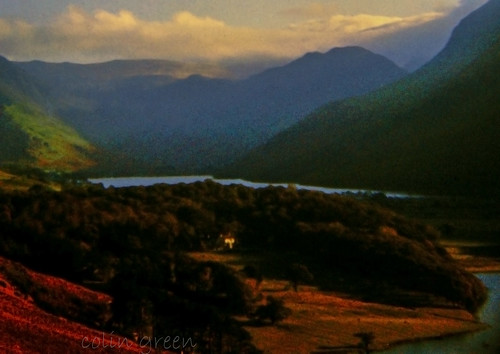
Buttermere & Crommack Oct 1978

Today, we stumbled upon a real gem in the archives – a photograph simply titled "Sussex Farm Dog." The image itself is striking, capturing a moment frozen in time from 1977.

But beyond that date and its evocative title, there's a beautiful mystery. We have no other information about this particular picture. Who was this dog? What was their name? What kind of life did they lead on that Sussex farm?

Looking at the photo, you can almost feel the sun on your face and smell the earth. Was this dog a working animal, diligently helping with the daily chores, or a beloved family pet, a loyal companion to a farmer or their children? Perhaps they were both. Their expression seems to hold a quiet dignity, a testament to a life lived close to the land.

This lack of information, rather than being a hindrance, actually sparks the imagination. It allows us to wonder, to create our own stories about this anonymous canine. The "Sussex Farm Dog" becomes more than just a picture; it becomes a symbol of rural life in England during the late 70s, and a reminder of the enduring bond between humans and their animal companions.

Sussex Farm Dog 1977

Please take a moment to share this post, follow me on social media.

Copley's Gem: The Lesser-Known Viaduct with a Rich History

When you think of railway viaducts in Copley, West Yorkshire, your mind probably jumps to the impressive, sprawling 23-arch structure. But just a few meters south lies an older, equally fascinating piece of engineering that often gets overlooked: the Manchester & Leeds Copley Viaduct.

Opened in 1840, a full 12 years before its more famous counterpart, this 3-arch viaduct holds a significant place in railway history. It was built by none other than the legendary George Stephenson, a name synonymous with pioneering railway development. Its historical importance was officially recognized on July 19th, 1988, when it was granted Grade II listed status.

The line crossing this historic bridge served passengers until 1970, coinciding with the closure of Brighouse Station. While passenger services officially ceased on September 1st, 1986, the line continued to see use for goods transport and occasional diverted passenger services between 1970 and May 2000.

There were discussions in the 1980s about potentially single-tracking the line over the 23-arch viaduct and completely closing the 3-arch viaduct. While this might have created a fantastic walkway stretching from Milner Royd Junction to Greetland, Elland, and Brighouse, many, myself included, believe a railway line serves a far more valuable purpose.

The Manchester & Leeds Copley Viaduct stands as a testament to early railway innovation and the enduring legacy of engineers like George Stephenson. Next time you're in Copley, take a moment to appreciate this unsung hero of the railway world.

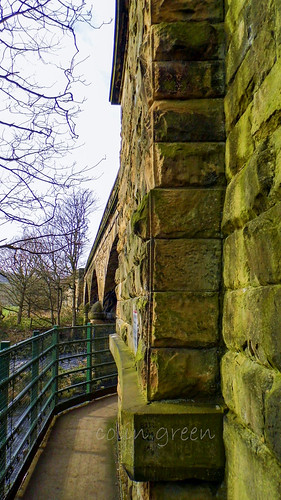
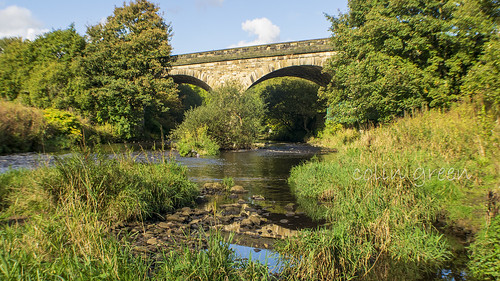
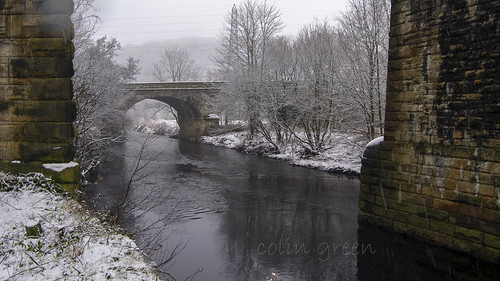
Copley Railway Bridge

The following video features the images and can be seen here and on YouTube. Please take a moment to subscribe to my channel.


Summer and the Calder at Copley Railway Bridge

Copley Railway Bridge Through the Pillars

Copley Railway Bridge Arch

Please take a moment to share this post, follow me on social media.

All the pictures remain the copyright of Colin Green.