Sunday, 21 October 2018

Beneath a Halifax Sunrise: A Stroll Across Savile Park

 The air was crisp, carrying the faint scent of damp earth and the promise of a new day. Yesterday morning, under the soft glow of the nascent sun, I found myself wandering across the familiar expanse of Savile Park in Halifax. Or should I say, The Moor? Skircoat Moor? Skircoat Common? This beloved green lung of our town answers to many names, each echoing a piece of its rich tapestry.

More than just a park, Savile Park breathes history with every rustle of leaves. As I walked, the stories embedded in this land seemed to rise with the morning mist. Imagine, this very ground, now a haven for runners and dog walkers, was once the vision of the Savile Family, who wisely decreed it should forever remain open, a gift of green to the community. Their foresight has gifted us generations of open space, a place where the spirit of Halifax has played out in countless ways.

Think of the roar of the crowds at the Halifax Agricultural Show, the thud of boots during Rugby League and Football matches, the determined strides of Crossley Heath students carving paths across the moor. This land has witnessed celebrations, competitions, and the simple joy of open-air activity.

But the echoes of history run deeper still. My mind wandered back to the dark days of World War II, when this very turf was transformed into a vital "Dig for Victory" garden, feeding a nation facing hardship. It's humbling to picture the dedication of those who turned this recreational space into a source of sustenance.

And then there's the grandeur of the Great Yorkshire Show, which graced this very spot on at least four occasions, bringing the best of the region to our doorstep. It speaks volumes about the scale and importance of Savile Park in the wider Yorkshire landscape.

As I continued my walk, the landmarks that frame this historical haven came into view. To the west, the impressive facade of Crossley Heath School stands sentinel, a long-time neighbour and beneficiary of the park's open spaces. To the east, the manicured beauty of Manor Heath Park offers a contrasting, yet complementary, landscape. And nestled in the north-eastern corner, the elegant Thorp Fountain stands as a silent witness to the park's enduring presence.

These fleeting moments, captured through the lens of my trusty Nikon D3300 back on the 20th of October 2016, are more than just pretty pictures. They are glimpses into a place that has been shaped by generations, a place where the echoes of the past mingle with the present-day rhythms of life.

Savile Park, whatever name you choose to call it, is more than just grass and trees. It's a living testament to community, resilience, and the enduring power of open spaces. It's a place to walk, to breathe, to remember, and to appreciate the rich history beneath our feet, especially when bathed in the soft light of a Halifax sunrise.


The Twin Towers of King Cross, to the right is Wainhouse Tower, and the clocktower to the left is part of the Crossley Heath School Building.


To the north east corner of Savile Park is the Thorp Fountain, the Grade II listed drinking fountain was given to the people of Halifax by Joseph Thorp and unveiled in July 1869, Thorp also donated a drinking fountain which can be found in the grounds of the nearby People's Park. The fountain which is no longer in use bears the inscription "Thank God for water - water is best" and was designed by Levi Gill a stone mason who was born in Pateley Bridge before moving to Halifax. The Fountains Grade II listed status was granted on the 23rd November 1973. The fountain can be seen below.


St Jude's Church can be seen in the background.

Thanks for looking, please take a moment to share and follow me on social media.

All the pictures remain the copyright of Colin Green.

Sunday, 14 October 2018

The Puzzle Hall Inn - Awaiting its Next Chapter

In the heart of our community, standing silent yet full of untold stories, lies the Puzzle Hall Inn. More than just bricks and mortar, this familiar landmark has witnessed generations of laughter, camaraderie, and the clinking of tankards. For those of us who call this place home, the sight of its weathered facade evokes a sense of history, a tangible link to the past.

Opening its doors in the late 1700s, the Puzzle Hall Inn quickly became a fixture in local life. Imagine the bustling conversations that echoed within its walls, the warmth of the hearth on a cold evening, and the lively atmosphere fueled by its very own brews. Yes, for a significant period after its inception, this wasn't just a place to drink beer, it was a place where beer was born. The very air would have carried the malty aroma of fermentation, a testament to a truly local enterprise.

That era of independent brewing came to a close in 1935 when Ward's of Sheffield took the reins. While the brewery taps may have changed, the Puzzle Hall Inn continued its role as a social hub, a place where friendships were forged and local tales were shared over a pint. For decades, it stood as a reliable cornerstone of our community, a place you could always count on.

Then, in the early 2010s, a hush fell over the Puzzle Hall. The doors closed, the laughter faded, and the familiar glow from its windows was extinguished. For many, it felt like a piece of our local identity had gone quiet. The building stood as a poignant reminder of times past, a puzzle indeed, waiting for its missing pieces to be found.

Fast forward to today, and a spark of hope has ignited. A dedicated community group has stepped forward, their vision set on breathing new life into this beloved landmark. The prospect of the Puzzle Hall Inn once again echoing with conversation and cheer is a truly exciting one. It speaks volumes about the enduring spirit of our community and the deep affection we hold for our local heritage.

These glimpses into the Puzzle Hall's silent slumber were captured on a crisp autumn day, the 2nd of November 2013. Taken with a humble Samsung Galaxy, these photographs offer a snapshot in time, a visual testament to the building's stoic presence during its period of quiet contemplation. They serve as a reminder of what was, and perhaps more importantly, what could be once again.

As the community group works towards their goal, we can all look forward to the day when the Puzzle Hall Inn's doors swing open once more, ready to welcome a new chapter in its long and fascinating history. The puzzle may have been still for a while, but the pieces are being gathered, and the picture of a vibrant future is beginning to take shape. Keep an eye out, this local legend may soon be ready to share its stories once again.


Thanks for looking, please take a moment to share and follow me on social media.

All the pictures remain the copyright of Colin Green.

Saturday, 13 October 2018

A Spire of History: The Haunting Beauty of Halifax's Square Church

Halifax, a town steeped in industrial history, holds a silent sentinel against its skyline: the Square Church Spire. A lone finger pointing towards the heavens, it's a striking reminder of a grander structure, a story etched in stone and fire.

Imagine, if you will, the bustling Square in 1857. Amidst the clatter of horse-drawn carriages and the rhythmic hum of nearby mills, a new beacon of faith rose. The Square Congregational Church, opened on July 15th, a testament to Victorian ambition and religious fervor. This magnificent edifice stood proudly beside the iconic Piece Hall, a symbol of Halifax's prosperity. It replaced the older Georgian Square Chapel, which, in a charming twist of fate, became the church's Sunday school, a passing of the torch from one generation to the next.

For over a century, the Square Church echoed with hymns, sermons, and the quiet prayers of its congregation. It was a place of community, of solace, and of spiritual guidance. But time, as it inevitably does, brought change. The church's doors closed in 1970, marking the end of an era.

Then, tragedy struck. In January 1971, a devastating fire ripped through the main building, leaving behind a charred skeleton. The once proud structure was reduced to rubble, and in 1976, the final act of demolition was carried out. All that remained was the magnificent, Grade II listed spire, soaring 235 feet into the sky.

This solitary spire, a relic of a lost grandeur, now stands as a poignant reminder of what once was. It's a striking juxtaposition against the modern architecture of the Halifax Central Library, into which it is now incorporated. Standing at its base, you can almost hear the echoes of the past, the faint strains of an organ, the murmur of prayers.

The Square Church Spire is more than just a historical landmark; it's a symbol of resilience, a testament to the enduring power of memory. It's a place where the past and present collide, where the echoes of a bygone era mingle with the everyday sounds of a bustling town.

Next time you find yourself in Halifax, take a moment to gaze upon this architectural marvel. Let its silent story resonate with you, and remember the grand church that once stood beside it, a testament to the enduring spirit of Halifax. It's a reminder that even in the face of destruction, something beautiful and enduring can remain, reaching towards the sky like a whispered prayer.

The pictures below were taken on the 27th May 2018 with a Nikon d3300.


Thanks for looking, please take a moment to share and follow me on social media.

All the pictures remain the copyright of Colin Green.

Saturday, 6 October 2018

A Photographic Journey Through Brighouse Railway Station (August 2018)

August 2018. A simple date, a snapshot in time, captured by my trusty Nikon D3300. But within those digital frames lies a story, a whisper of history echoing through the platforms of Brighouse Railway Station. It's a story of change, resilience, and the enduring spirit of rail travel.

Brighouse Railway Station, seemingly just another stop on the line, holds a past far richer than its modern facade might suggest. Did you know it first opened its doors – or rather, its platforms – on the 5th of October 1840? Back then, it was known as "Brighouse and Bradford." A curious name, considering trains couldn't even reach Bradford directly until 1854 when the Halifax line was completed! It also bore the moniker "Brighouse for Rastrick," hinting at its role as a key transport hub for the surrounding areas.

Imagine the scenes: the billowing steam, the rhythmic chugging of locomotives, the bustle of Victorian passengers. It's a stark contrast to the sleek, modern trains that glide through today. However, progress, as it often does, brought change. The original station, a relic of a bygone era, was sadly closed on the 3rd of January 1970. A final, poignant farewell as the 6:53 PM London King's Cross to Bradford service passed through, marking its demise.

And then, silence. The station, a vital artery of the town, was gone, demolished, its history seemingly erased. But the story doesn't end there. Like a phoenix from the ashes, Brighouse Railway Station was reborn, reopening on the 29th of May 2000, at its original location. A testament to the community's desire to reconnect with its past and embrace the future.

However, the tale of Brighouse isn't complete without a mention of its neighbour, Elland. Originally slated to reopen its own station alongside Brighouse, Elland's revival has been a saga of delays. The projected 2022 opening, with a £22 million price tag, highlights the challenges of modern infrastructure projects. "Only 22 years late," you can't help but chuckle, a wry nod to the famed (or infamous) efficiency of old British Rail. "We may be late, but we get there eventually," a sentiment that resonates with the slow, steady rhythm of railway progress.

These photographs, captured on a warm August day, are more than just images. They're a portal to the past, a reminder of the enduring legacy of rail travel. They speak of the generations who passed through these platforms, of the stories etched into the very fabric of the station.

So, the next time you find yourself at Brighouse Railway Station, take a moment to appreciate its history. Listen for the echoes of steam, imagine the bustling crowds, and remember the resilience of a community that brought its station back to life. And perhaps, spare a thought for Elland, patiently waiting for its turn to join the story.


Thanks for looking, please take a moment to share and follow me on social media.

All the pictures remain the copyright of Colin Green.

Sunday, 16 September 2018

A Pennine Gem: Discovering Christ Church, Denshaw

Sometimes, the most enchanting discoveries happen when you least expect them. That's exactly what occurred on a sunny June afternoon in 2016, as I journeyed back from Manchester Airport, weaving my way through the picturesque Pennine landscape. My original plan was to explore the tranquil beauty of Dowry Reservoir, but fate had other plans. As I drove along Huddersfield Road, a striking silhouette caught my eye: Christ Church, Denshaw.

Standing proudly near the heart of the village, Christ Church is a testament to Victorian architectural prowess. Built by Henry Gartside and opened in 1863, this Anglican parish church exudes a sense of timeless serenity. Its solid stone construction and elegant spire pierce the Pennine sky, a beacon of faith and history.

The church's grounds, too, hold a special significance. Just inside the entrance gate, the Denshaw War Memorial stands as a poignant reminder of the sacrifices made by the village's sons. The juxtaposition of the peaceful church and the solemn memorial creates a powerful atmosphere, inviting reflection and remembrance.

It's no surprise that Christ Church was granted Grade II listed status on June 19th, 1967, a recognition of its architectural and historical importance. The intricate details of its exterior, the well-maintained grounds, and the sense of history that permeates the air all contribute to its unique charm.

The photographs I captured on that serendipitous day, June 25th, 2016, offer a glimpse into the beauty of Christ Church. From the majestic spire to the tranquil gardens, each image tells a story of a place where history and community intertwine.

I've included eight of those photos below, showcasing the exterior and grounds of this beautiful church. I hope you enjoy them as much as I enjoyed discovering this hidden gem.

Christ Church, Denshaw, is more than just a building; it's a living piece of history, a place of peace, and a reminder of the enduring beauty of the Pennine landscape. If you ever find yourself travelling through this part of the world, I highly recommend taking a moment to explore this enchanting church and its surroundings. You never know what hidden treasures you might discover.


Thanks for looking, please take a moment to share and follow me on social media.

All the pictures remain the copyright of Colin Green.

Sunday, 19 August 2018

Hebden's Old Bridge (July 2018)

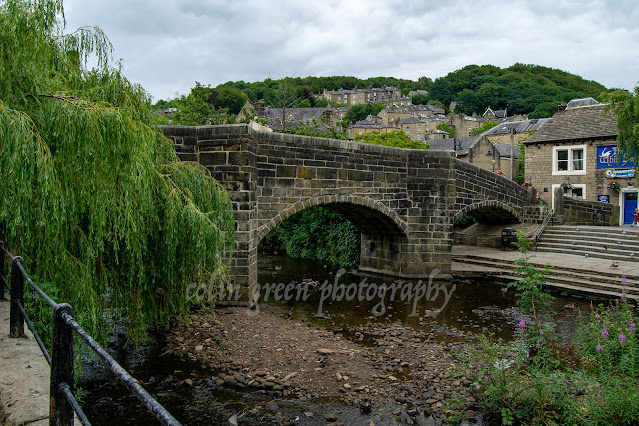
Sometimes, the best adventures are the unplanned ones. Recently, I found myself with a few spare moments in the charming town of Hebden Bridge. Camera in hand, I decided to revisit a familiar and beloved landmark: the ancient packhorse bridge that gracefully spans Hebden Water, right in the heart of town.

This isn't my first encounter with this picturesque bridge. I've shared images of it before, captured with the nostalgic charm of a Polaroid is2132 Bridge Camera and the digital versatility of a Samsung Galaxy Tablet, But this time, I was armed with my trusty Nikon D3300, ready to capture the bridge in a different light.

But this bridge isn't just a pretty face; it's a piece of history. Thought to date back to the early 16th century, it stands as a testament to the resilience and spirit of the local community. Imagine! It nearly fell victim to progress when the new turnpike was built in the 1770s, but thanks to the determined residents of Heptonstall, it was spared.

Over the centuries, the bridge has undergone numerous renovations, adapting to the changing times while retaining its historical charm. One of its most distinctive features is the jutting parapets, designed to create passing places due to its narrow width. It's a clever and practical design, a reminder of the bridge's original purpose as a vital crossing point for packhorses carrying goods.

And, of course, the bridge is where the town gets its name: Hebden Bridge. A fitting name for a town that proudly embraces its heritage while looking towards the future.

These few minutes spent capturing the essence of Hebden Bridge served as a gentle reminder of the beauty that can be found in the everyday. It's a reminder to slow down, appreciate the history that surrounds us, and capture those fleeting moments that make a place truly special. Whether it's through the nostalgic lens of a Polaroid or the crisp detail of a DSLR, every image tells a story. And the story of Hebden Bridge, with its ancient packhorse bridge at its heart, is one worth telling.


Thanks for looking, please take a moment to share and follow me on social media.

All the pictures remain the copyright of Colin Green.

Echoes of Industry: Rust, Cobbles, and the Mystery of Siddal's Brickworks

April 2017. A crisp spring day, and I found myself perched above the village of Siddal, near Halifax, West Yorkshire, exploring the remnants of what I was told was Savile's Brickworks. The place had a haunting beauty, a silent testament to industrial might and the passage of time.

Armed with my trusty Nikon D3300 SLR, I captured the stark, weathered beauty of the brickworks. The textures were incredible – the rough, aged brick, the rusted metal, the tenacious weeds pushing through cracks in the concrete. Each shot seemed to tell a story, whispering of the workers who once toiled there, the roar of machinery, and the fiery kilns that once dominated the landscape.

But there was a mystery to the place. Was it truly abandoned? I'd heard conflicting stories. Some said a recycling centre operated there, breathing new life into the old site. Others insisted it was completely deserted, a ghost of its former self. As an HGV driver myself, I couldn’t help but shudder at the thought of navigating a 44-ton lorry up (or down!) the steep, cobbled slope leading to the yard. That alone seemed a daunting task, regardless of whether the place was active or not.

The photos, taken on April 9th, 2017, reveal a landscape of industrial decay, yet there's a strange allure to it. The sheer scale of the site, the echoes of its past, and the uncertainty of its present all contributed to a captivating experience. If you're interested in grabbing a print of these photos, clicking on any of the images will take you to my Colin Green Photography store on Zazzle.

There's something deeply fascinating about industrial ruins. They offer a tangible connection to the past, a glimpse into the lives and work of those who came before us. Savile's Brickworks, with its mix of decay and resilience, is a perfect example.

Whether it's a bustling recycling centre or a silent monument, the site continues to hold a certain magic. The cobbles, the bricks, the rust – they all whisper tales of a bygone era, leaving us to wonder about the stories they could tell.


Thanks for looking, please take a moment to share and follow me on social media.

All the pictures remain the copyright of Colin Green.

Saturday, 18 August 2018

Exploring Allan Park, Sowerby Bridge

Nestled on the slopes of the Norland hillside, a stone's throw from Sowerby Bridge Railway Station, lies Allan Park. It's a charming public space, a green oasis carved into the landscape, and a place where history whispers from every level. But this isn't just your average park; it's a story etched in terraces, bowling greens, and the silent passage of forgotten railways.

My visit, captured on a crisp March 18th, 2018, with my trusty Nikon D3300, revealed a park of surprising depth. What strikes you first is the tiered nature of the landscape. Allan Park isn't a flat expanse; it's a series of levels, a testament to the effort it took to tame the hillside. This unique topography lends the park a sense of intimacy and discovery as you wander from one section to the next.

The story behind Allan Park is as intriguing as its layout. It was once the grounds of Allan House, a grand residence purchased by the council in 1922. The original vision was ambitious: a public swimming pool. Imagine the bustling sounds of swimmers echoing through the valley! However, those plans never materialized. Instead, Allan House found a new purpose, transforming into a clinic, serving the community in a different way.

And the grounds? They were reborn as a public park, a space for recreation and relaxation. A bowling green, a playground filled with the laughter of children, and tranquil woodland walking areas emerged, creating a diverse space for all to enjoy. It's a testament to how a space can evolve, adapting to the changing needs of a community.

But perhaps the most fascinating secret lies beneath our feet. Underneath the serene park grounds, the Scar Head Tunnel quietly exists, a relic of the Rishworth Branch Railway Line. Imagine the rumble of steam trains echoing through the hillside, a stark contrast to the peaceful atmosphere of the park today. It's a hidden layer of history, a reminder of the industrial past that shaped this region.

Walking through Allan Park, you can't help but feel a connection to the past. The echoes of Allan House, the dreams of a swimming pool, the forgotten railway line – they all contribute to the park's unique character. It's a place where history and nature intertwine, offering a moment of tranquility amidst the everyday.

The photos I took on that March day capture a snapshot of this hidden gem. The subtle textures of the stonework, the vibrant green of the bowling green, the quiet beauty of the woodland paths – all speak to the park's unassuming charm.

If you find yourself near Sowerby Bridge, take a moment to explore Allan Park. It's more than just a park; it's a journey through time, a glimpse into the past, and a peaceful escape into nature. You might just discover a hidden history of your own.


Thanks for looking, please take a moment to share and follow me on social media.

All the pictures remain the copyright of Colin Green.

Tracing the Ghost Tracks: A Walk Along the Rishworth Branch Line

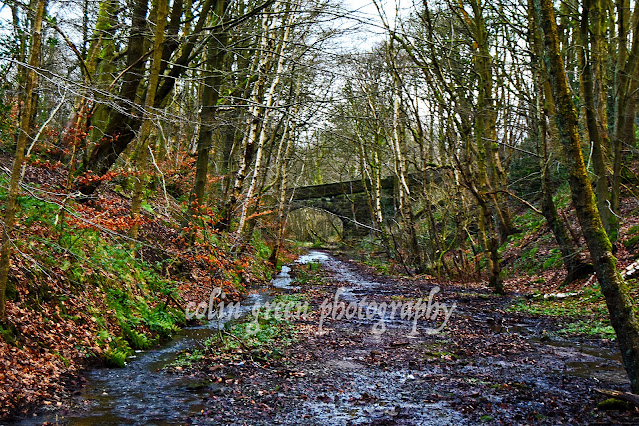
The Ryburn Valley, a picturesque slice of West Yorkshire, holds secrets whispered on the winter wind. On a crisp January day in 2016, armed with my Nikon D3300, I set out to explore a fragment of its forgotten past: the Rishworth Branch Line. This railway, a vital artery in its time, once snaked its way up the valley from Sowerby Bridge, connecting Watson's Mill Crossing, Triangle, and Ripponden before reaching its final destination in Rishworth.

Though the last train rattled along these tracks in the 1950s, the remnants of this once-bustling line remain, etched into the landscape. My journey, a roughly half-mile trek, took me from the echoes of Watson's Mill to the quiet village of Triangle. And what a journey it was!

The air was sharp and cold, the ground firm underfoot, as I followed the ghostly path of the former trackbed. The silence was profound, broken only by the occasional rustle of winter-bare trees and the distant murmur of the Ryburn River. It was easy to imagine the steam engines, their rhythmic chugging echoing through the valley, the shouts of passengers and the clatter of cargo.

What struck me most were the bridges. These sturdy stone structures, silent witnesses to a bygone era, still spanned the former trackbed, their arches framing snippets of the valley's beauty. They stood as testaments to the engineering prowess of the past, their weathered stones bearing the marks of time and the elements.

The photographs I captured on that day, the 30th of January 2016, tell a story of quiet resilience. The stark beauty of the winter landscape, the skeletal trees against the pale sky, the weathered stones of the bridges – all combined to create a sense of timelessness.

Walking along the Rishworth Branch Line was like stepping into a historical photograph. It was a journey through time, a glimpse into a world where steam engines ruled the rails and communities were connected by the iron horse.

It's a reminder that even when progress moves forward, the echoes of the past remain, woven into the fabric of the landscape. The Rishworth Branch Line, though silent, continues to tell its story, a story of connection, community, and the enduring beauty of the Ryburn Valley. If you ever find yourself in the area, take a walk along these ghost tracks. You might just hear the whispers of history on the winter wind.


Thanks for looking, please take a moment to share and follow me on social media.

All the images remain the copyright of Colin Green.